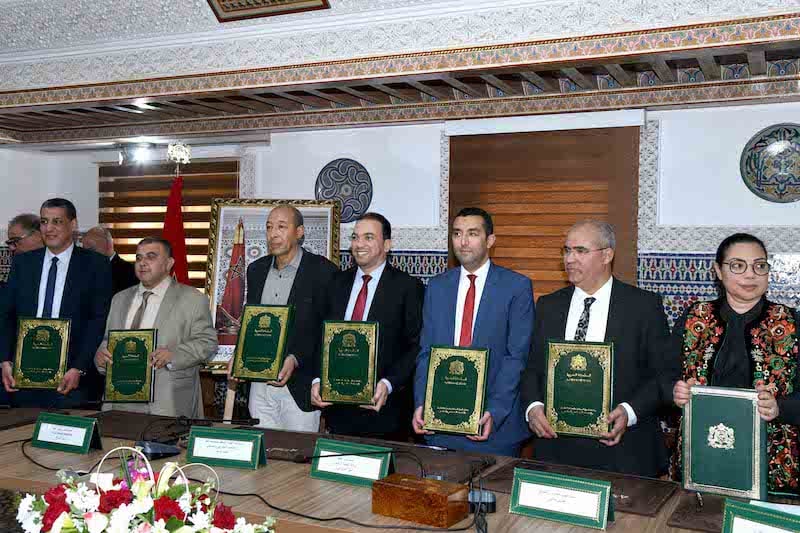
Morocco on Wednesday signed a series of partnership agreements aimed at implementing provisions of a framework agreement designed to support and strengthen the country’s handicrafts chambers and their national federation.
The signing ceremony, chaired by Lahcen Saadi, secretary of state in charge of handicrafts and the social and solidarity economy, was held in Rabat and attended by several officials, including the director-general of the Digital Development Agency, the head of SMAP Events, presidents of regional handicrafts chambers and the director-general of the Maison de l’Artisan.
One agreement, signed between the secretary of state’s office, the handicrafts chambers and their federation, and the Digital Development Agency, seeks to accelerate the rollout of the support program through a range of digital services for the sector. These include the introduction of a professional artisan card and the activation of a national handicrafts registry.
An investment envelope of 36 million dirhams (approximately $3.6 million) has been allocated to finance the initiative, which officials described as a major step in the digital transformation of the handicrafts sector. The effort aims to improve governance within the chambers and bring services closer to artisans through a modern and integrated approach.
A second partnership agreement brings together the secretary of state’s office, the Federation of Handicrafts Chambers and SMAP Events. It aims to promote and market Moroccan handicraft products, particularly to visitors attending trade fairs, including members of the Moroccan diaspora in France and Belgium and participating real estate developers.
The two agreements are reinforced by a 2026 program contract signed between the secretary of state’s office and 12 regional handicrafts chambers, along with the Maison de l’Artisan. The program provides funding to implement an action plan focused on structuring and organizing artisans into professional bodies, continuing the rollout of the national registry, expanding health coverage and improving production quality and output.
Saadi welcomed the signing of the agreements, describing them as another step in the integrated and inclusive development of the handicrafts sector, both in terms of organization and professional support.
He said the renewed focus on the sector reflects its economic, social and cultural importance, particularly its role in job creation and value generation, as well as the need to adapt to national changes and international developments.
Saadi added that organizing and modernizing the sector has been a priority for his department, in response to demands from professional stakeholders, especially the Federation of Handicrafts Chambers.
The agreements implement provisions of the February 2025 framework contract aimed at supporting and strengthening the chambers and their federation, particularly measures related to restructuring, digitalization and the creation of a new-generation professional card for artisans.
Saadi said the 36 million dirham allocation will also support an assessment of the sector’s capacities, the simplification of administrative procedures for professionals and the equipping of handicrafts chamber offices with digital tools.
“The sector must move forward and create more wealth and jobs,” he said.




add your comment
Terms of publication : Not to offend the writer, people, sacred things, or attack religions or the divine self, and refrain from racist incitement and insults.