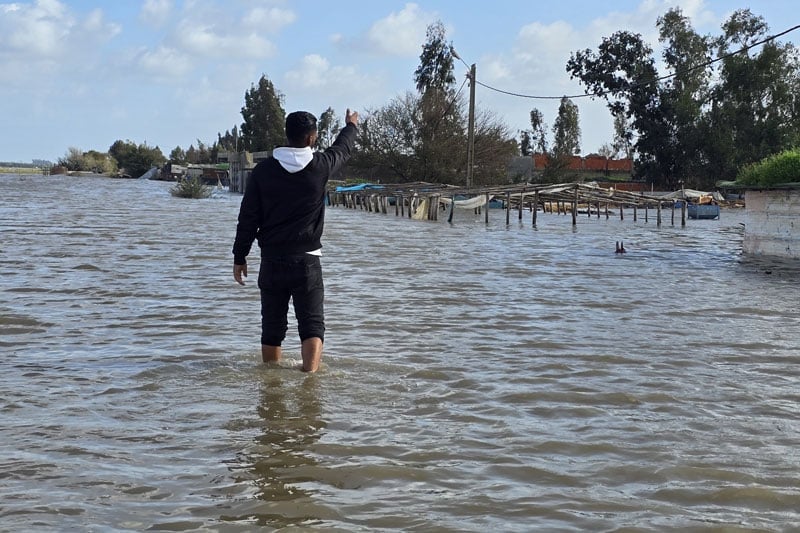
Misleading and digitally manipulated videos claiming to show catastrophic flooding in Morocco have been circulating widely on social media, amplifying fear among users, according to a DW investigation.
The investigation found that several viral videos, particularly on TikTok, depict streets and neighborhoods submerged in floodwaters, with currents sweeping cars and damaging homes.
Voiceovers in Arabic accuse Moroccan authorities of failing to provide timely information and allege that officials deliberately released dam waters to cover up the disaster.
Closer analysis revealed that many of these videos are fabricated using artificial intelligence. In one widely shared clip, supposedly showing a reporter wading through knee-deep water, the microphone had two cables instead of one, shadows appeared unnaturally on her clothing, and portions of the street and buildings changed inconsistently.
DW investigators also noted visual glitches typical of AI-generated content, such as water droplets and disappearing objects at certain timestamps.
Other popular clips were traced to previous flood events in foreign countries. One video showing dozens of sheep being swept away actually originated from a 2020 flood in Turkey’s Ergish city, appearing on Facebook pages in June and July of that year.
Despite being unrelated to Morocco’s current floods, the footage garnered over six million views on TikTok.
DW noted that the TikTok accounts sharing these clips often host multiple AI-generated videos, a phenomenon confirmed by research from the Spanish fact-checking organization Maldita.es, which found many users produce such content to increase views and generate income.
The spread of false and misleading material is occurring alongside real-life floods that have affected tens of thousands in Morocco.
Heavy rains in December 2025 and storms “Leonardo” and “Marta” in late January 2026 caused flash floods and forced the temporary displacement of 188,000 people.
In response, Moroccan authorities have launched phased return programs and emergency relief measures in several provinces, including Kenitra, Sidi Kacem, Sidi Slimane, and Larache, while also resuming in-person classes in schools where conditions have improved.
Authorities have warned the public to rely on official sources and exercise caution on social media, noting that some content is intentionally designed to provoke panic or spread misinformation.
According to DW, distinguishing genuine reports from AI-manipulated videos is crucial for public safety during ongoing recovery operations.





add your comment
Terms of publication : Not to offend the writer, people, sacred things, or attack religions or the divine self, and refrain from racist incitement and insults.