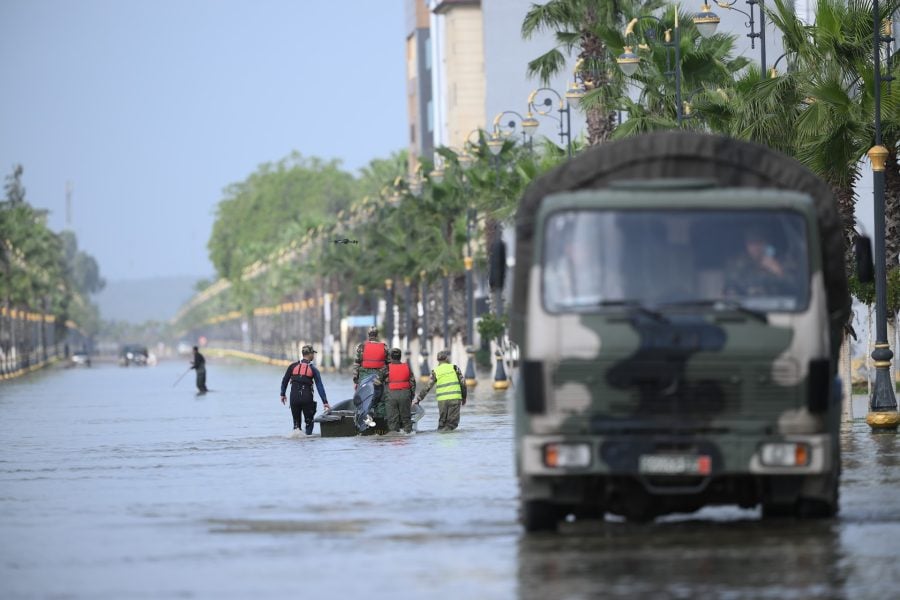
Organizations working on migration and asylum issues have reported an increase in irregular migration attempts toward Spain as northern Morocco remains on high alert following floods caused by severe weather.
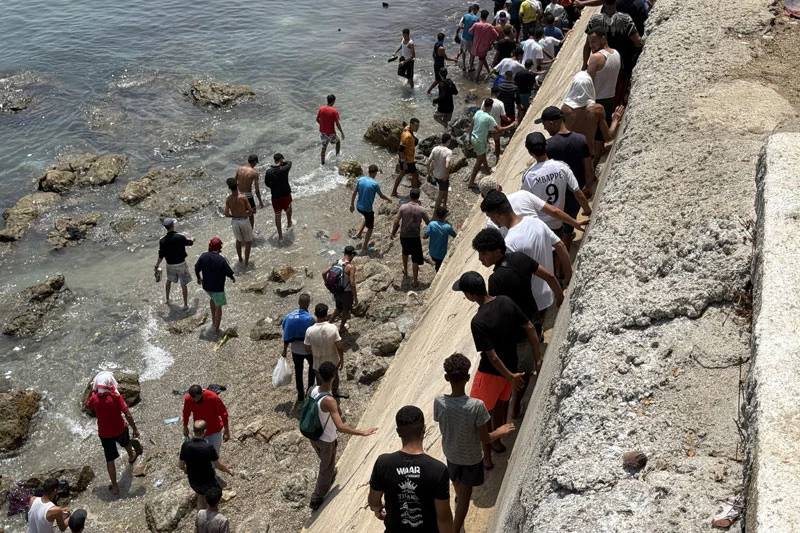
The Moroccan Association for Assisting Migrants in Vulnerable Situations said that 25 sub-Saharan African migrants crossed irregularly into the Spanish enclave of Ceuta in recent days after breaching the double border fence. The group said the migrants took advantage of harsh weather conditions brought on by storms.
“Migrants mainly operate based on opportunity,” said Hassan Amari, president of the association. “They are constantly waiting for any security or natural emergency that could create a chance to cross.”
Amari told Hespress EN that poor weather conditions create what he described as a “golden opportunity” for smugglers and intermediaries, who plan crossings while authorities are preoccupied with disaster response. He said the redeployment of security forces — including the gendarmerie and auxiliary forces — to flood-affected areas such as Ksar el-Kebir, Chefchaouen and Tangier created gaps that migrants were able to exploit.
He cited the aftermath of the Al Haouz earthquake as a previous example, noting a surge in migration attempts during the first 48 hours following the disaster, when state institutions and civil society were focused on rescue and relief operations, leading to reduced routine border surveillance.
Amari warned of the dangers posed by smuggling networks operating during extreme weather, saying attempts made during storms significantly increase the risk of death. He compared migrants’ decisions under such conditions to “playing a final match, putting everything on one side without regard for the risks.”
Migration researcher Hassan Bentaleb said migrants closely monitor exceptional circumstances — including holidays, earthquakes and floods — to attempt crossings, particularly those whose earlier efforts failed.
Bentaleb told Hespress EN that migration research shows migrants adapt quickly to changing conditions on the ground. He pointed to Frontex data from 2024 indicating reduced pressure on eastern and central migration routes, alongside increased activity on the western route linking Morocco to Spain. Increased surveillance in northern Morocco, he said, has redirected some flows toward the Canary Islands.
He stressed that Morocco maintains strict border controls and rejected what he called exaggerated narratives in parts of Europe about mass migration surges during crises. Such portrayals, he said, sometimes serve to justify requests for additional European funding by invoking an imminent threat.
Bentaleb added that data from conflict and famine-affected Sahel countries show most displaced people initially seek refuge in neighboring states, with only a small number reaching Morocco. Studies, he said, indicate that about 80% of human mobility occurs within Africa, while only 20% involves movement toward Europe.
He concluded by calling for a more realistic understanding of irregular migration, saying that while crises may be exploited tactically, Moroccan security forces continue to exercise firm control over border crossings under all conditions.







add your comment
Terms of publication : Not to offend the writer, people, sacred things, or attack religions or the divine self, and refrain from racist incitement and insults.