
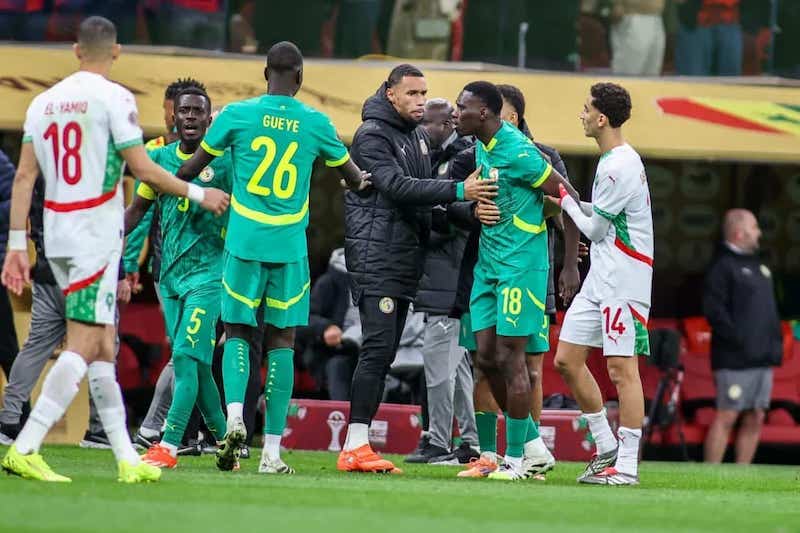
The Tijaniyya Sufi Order has stepped into recent tensions between Morocco and Senegal following the 2025 Africa Cup of Nations final, urging calm and warning against allowing sporting rivalries to undermine centuries-old spiritual and historical ties between the two countries.
In a statement, the Tijaniyya Order said the dispute does not reflect the depth of the relationship between Morocco and Senegal, stressing that no football match should weaken bonds rooted in faith, shared values and family ties.
The order said the connection between the two nations goes beyond geography or politics, describing it as a relationship built over generations through religious scholarship, cultural exchange and mutual respect. It also cautioned against attempts to exploit sports events to promote division, extremism or violence, calling instead for forgiveness, restraint and compassion.
The Tijaniyya Order urged both countries to move past what it described as a temporary moment of tension and to continue cooperation across political, economic and cultural fields. It said Morocco and Senegal remain examples of African solidarity under the leadership of King Mohammed VI and Senegalese President Bassirou Diomaye Faye.
Who are the Tijaniyya?
The Tijaniyya is one of the most influential Sufi orders in Africa and has played a central role in shaping religious and spiritual ties between Morocco and West Africa, particularly Senegal.
The order was founded by Sheikh Ahmed Tijani, born in 1737 in Ain Madhi, in present-day Algeria. He later settled in the Moroccan city of Fes, where he established the order’s main zawiya and where he is buried. That zawiya remains the spiritual center of the Tijaniyya today.
The teachings of the Tijaniyya are rooted in the Quran and the Sunna and emphasize core Islamic values, including regular remembrance of God, blessings upon the Prophet Muhammad, Quran recitation and collective prayer.
During the 19th century, the order spread rapidly through the disciples of Sheikh Tijani across North and West Africa, particularly in Morocco, Algeria, Mauritania and Senegal, as well as Nigeria, Mali, Niger, Chad and beyond. Over time, it expanded throughout sub-Saharan Africa and later into Europe and other parts of the world.
The Tijaniyya Order has long been a bridge between Morocco and Senegal. Its scholars and zawiyas helped establish networks of learning, faith and cooperation linking cities such as Fes and Dakar. Followers from Senegal and other African countries regularly travel to Fes to visit the main zawiya, reinforcing the enduring spiritual connection.
Moroccan religious authorities have previously highlighted the order’s role in strengthening Morocco’s religious and cultural ties with African countries. Beyond its historical legacy, the Tijaniyya continues to symbolize shared spiritual identity and cross-border religious unity between Morocco, Senegal and much of Africa.







add your comment
Terms of publication : Not to offend the writer, people, sacred things, or attack religions or the divine self, and refrain from racist incitement and insults.