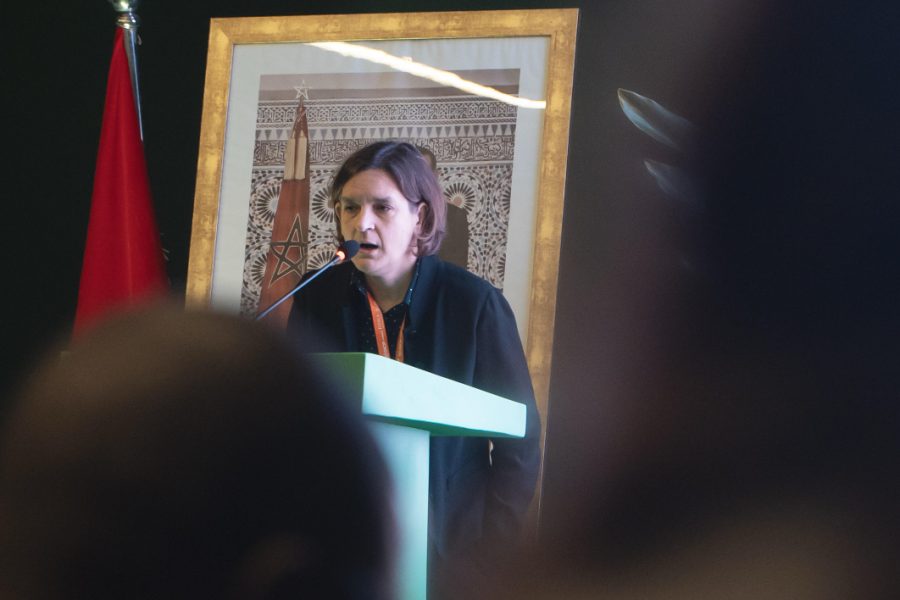
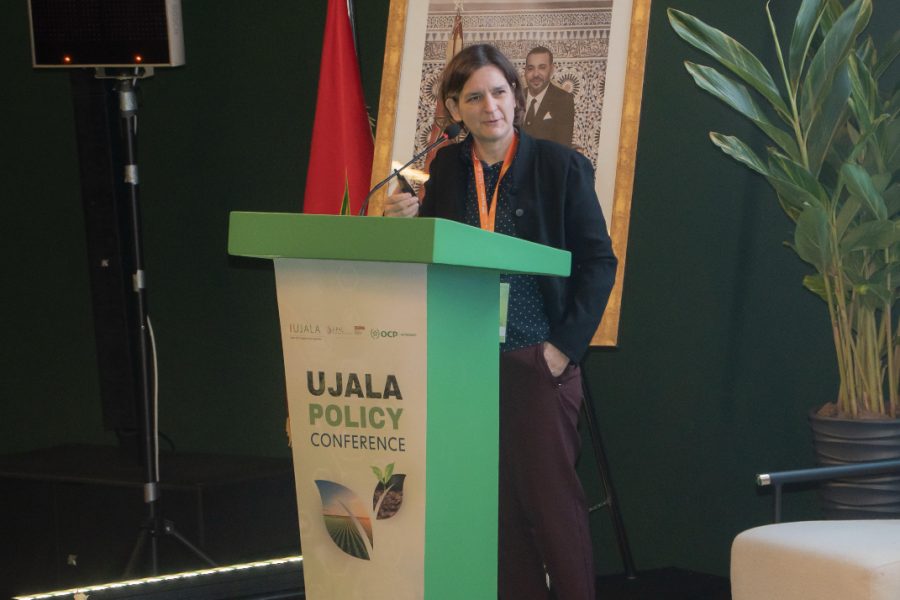
Morocco is becoming less dependent on rainfall for its agriculture, but major challenges remain as climate change intensifies, Nobel Prize-winning economist Esther Duflo said on the sidelines of the Ujala Policy Conference at UM6P in Rabat.
Duflo, who won the 2019 Nobel Memorial Prize in Economic Sciences for her work on poverty, told Hespress English that Morocco has made significant progress in irrigation, reducing its reliance on rain-fed farming.
“There has been a big effort to irrigate,” she said, adding that the country is no longer as dependent on rainfall as it once was.
Still, she warned that agriculture that continues to rely on rain is increasingly vulnerable to rising temperatures and prolonged droughts. “Finally, we have water now, but you have had a drought for seven years,” she said, highlighting the strain farmers have faced in recent years.
Duflo said extended droughts have been especially damaging for livestock farmers. “People who were raising sheep, and the sheep used to be eating whatever little grass there was, if there is a drought for seven years, there is no grass,” she said.
As a result, farmers must turn to irrigation not only for crops but also to sustain animal feed. However, she stressed that irrigation systems must be designed to withstand climate change and mounting pressure on water resources.
Asked whether small farmers can be part of a more climate-resilient agricultural future, Duflo said they can, noting that even modest productivity gains can determine whether a household remains viable.
She pointed to technologies such as solar-powered pumps that can be used even on very small farms, while emphasizing the need for institutional support to help farmers adopt new tools.
Duflo said Morocco’s future agricultural policies should prioritize water management and innovation. While the country has abundant solar energy and access to seawater, it has limited groundwater reserves, she said.
That reality, she added, makes it essential to improve water storage, harvesting and reuse, while exploring options such as desalination. “There are a lot of options that will require innovation, but there is also a lot of potential,” she said.
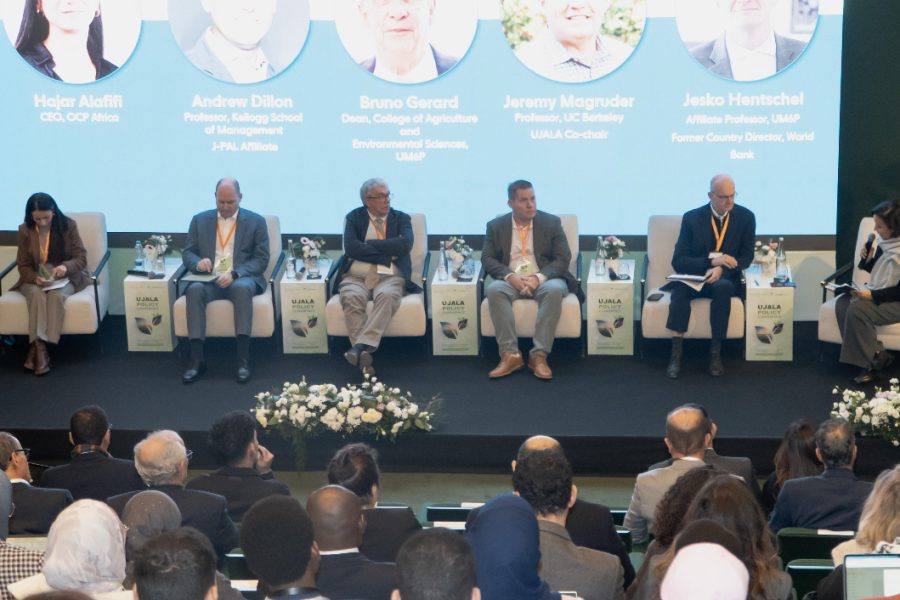
Speaking at the Ujala Policy Conference, Duflo described the intersection of climate change and agriculture as the most urgent challenge facing the African continent.
An MIT professor and co-founder of the Abdul Latif Jameel Poverty Action Lab, known as J-PAL, Duflo has spent decades using randomized controlled trials to test which poverty-reduction policies actually work. She brought that evidence-based approach to her remarks in Rabat.
She said agricultural policy must move beyond developing improved seeds to understanding the full chain of how innovations reach individual farmers and whether they can realistically adopt them.
Duflo also highlighted what she called the “double inequality” of climate change: African countries have contributed the least to global carbon emissions but are bearing some of the most severe consequences.
One of the biggest barriers to progress, she said, is the extreme uncertainty climate change adds to farmers’ lives. Unpredictable weather makes farmers reluctant to invest in fertilizers or improved seeds for fear that droughts or floods could wipe out their entire investment.
To address this, Duflo said researchers and policymakers must consider the “whole life” of the farmer, including access to credit and insurance.
She cited a study in Zambia showing that when farmers receive credit during difficult months, they spend more time working their own fields instead of seeking wage labor for survival, leading to higher yields later.
Duflo also discussed the “half-moon” technique used in Niger, where farmers dig semi-circular pits to capture and retain rainwater in degraded soil.
Her research found that simply training farmers in the technique led to an 84% adoption rate and a 12% increase in crop production. The results were strong enough that Niger’s Ministry of Agriculture continued the program even after external funding ended and political leadership changed.
However, she cautioned that agricultural solutions must remain adaptable. A technology designed to address drought, she said, may become ineffective if climate patterns shift toward flooding.
Duflo was also candid about failures in traditional agricultural programs. She cited a project in Rwanda where training so-called “model farmers” unintentionally reduced productivity among neighboring farmers after the trained group stopped sharing labor and resources.
Currently, Duflo is working with OCP Nutri Crops on several projects across Ghana, Côte d’Ivoire and Tanzania. In Ghana, researchers are testing “bundled” services that combine soil testing, credit and training to determine whether comprehensive support works better than isolated interventions.
In Kenya, she is studying how bio-fertilizer technologies developed for large industrial farms in the United States can be adapted for small-scale plots.
“These projects represent a new generation of research,” Duflo said, one that is flexible, localized and closely tied to farmers’ realities.


add your comment
Terms of publication : Not to offend the writer, people, sacred things, or attack religions or the divine self, and refrain from racist incitement and insults.