
Moroccan international freight truck drivers are calling on authorities to urgently repair a deteriorated stretch of road linking southern Morocco to Mauritania, warning that its poor condition is disrupting trade flows toward African markets and causing repeated damage to vehicles.
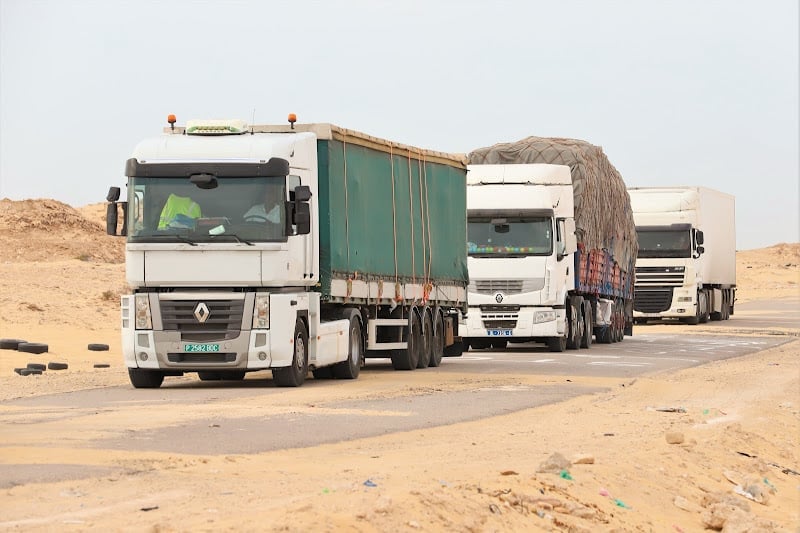
In a statement, professional organizations representing Morocco’s road freight transport sector said the road connecting the Guerguerat border crossing to Mauritania, commonly known among drivers as the “Kandahar road”, has become a major obstacle due to potholes, muddy sections and standing water.
The road, which stretches for about three kilometers, is a critical passage for Moroccan trucks heading toward West African markets. Drivers say its degraded condition leads to frequent mechanical failures, including tire blowouts and refrigeration breakdowns.
Mbarek Essafi, speaking on behalf of the sector’s representative bodies, said the road has suffered from years of neglect despite its strategic importance.
“This section was previously under United Nations supervision before being secured by the Moroccan army,” Essafi said. “Today, it has become nearly impassable because of swamps and rough terrain that cause serious mechanical damage to trucks.”
He added that some drivers are forced to take long detours to avoid the damaged route, increasing costs and transit times. Essafi criticized what he described as a lack of coordination and initiative by the relevant authorities, calling the situation “unbearable” for transport professionals.
Beyond infrastructure concerns, drivers also report administrative and legal difficulties on the Mauritanian side of the border. Essafi said Moroccan drivers face visa requirements, repeated accidents and arrests following traffic incidents, even when they hold Moroccan insurance policies that are supposed to cover travel across African countries.
According to Essafi, Mauritanian authorities require Moroccan trucks to pay additional local insurance fees of around 500 Moroccan dirhams (about $50) upon entry. However, he said the coverage often fails to protect drivers in the event of accidents, leaving them exposed to strict legal proceedings that can include detention.
“These logistical and administrative challenges require urgent intervention to ensure smoother movement and better protection for professionals,” Essafi said.
Sector representatives also pointed to difficulties accessing Morocco’s fleet renewal support program, citing delays, limited grants and procedures they say are out of step with market realities and the needs of the national trucking fleet.
Separately, Mustapha Chaaoun, secretary-general of the Democratic Organization for Multimodal Transport and Logistics, said the current border zone still lacks adequate infrastructure despite improvements carried out by Morocco in parts of Guerguerat.
He said a proposed alternative route through the Amgala crossing could offer a long-term solution. The route would significantly shorten distances, placing the crossing about 180 kilometers from the southern city of Laayoune and allowing trucks to use expressways stretching from Tiznit to Dakhla.
Chaaoun said the Amgala corridor would avoid areas prone to tensions and protests by some Mauritanian tribes, while also reducing security risks linked to extremist groups operating in the Sahel region.
He described the route as an African Union–recognized international corridor that could improve safety, reduce costs and shorten transit times, noting that its activation depends on bilateral agreements between Morocco and Mauritania, as well as broader security conditions in the region.




add your comment
Terms of publication : Not to offend the writer, people, sacred things, or attack religions or the divine self, and refrain from racist incitement and insults.