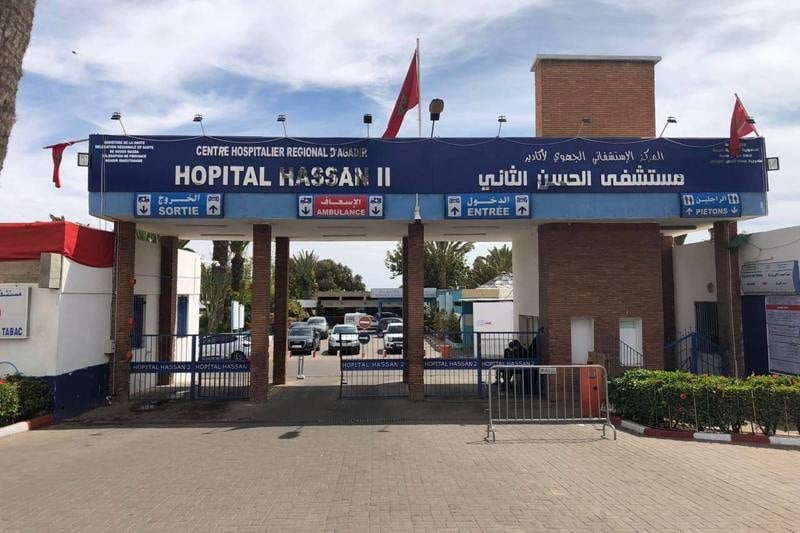
Moroccan health authorities have reinstated six medical staff members who were previously placed on precautionary suspension following a series of maternal deaths at the Hassan II Regional Hospital in Agadir, a source familiar with the matter told Hespress.
The staff members were among health professionals temporarily seconded to the regional hospital and were returned to duty at the Mohammed VI University Hospital Center in Agadir, according to the source.
Those reinstated include two senior obstetricians, two resident doctors specializing in obstetrics and gynecology, and three midwives, the source said.
They had been suspended alongside 11 other professionals working at the Hassan II Regional Hospital as part of ongoing judicial and administrative investigations.
The source said the precautionary suspension was lifted for staff who had been temporarily assigned to the regional hospital at the time of the incidents, allowing them to resume their original posts at the university hospital.
The Health and Social Protection Ministry earlier ordered the precautionary suspension of 17 health professionals pending the outcome of investigations into maternal deaths at the Agadir hospital. The ministry said the measure would remain in effect until judicial and administrative inquiries were completed.
The suspended staff included two anesthesiologists, two obstetricians, four anesthesia and intensive care nurses, and nine midwives, according to union sources. The suspensions followed the deaths of eight pregnant women at the hospital over the course of one month. The death toll later rose to nine after the suspensions were announced.
The cluster of maternal deaths sparked widespread public anger in Agadir and beyond, prompting street protests in the Souss capital and online mobilization, particularly among younger Moroccans.
Demonstrators and activists called for accountability, improved oversight, and urgent reforms to maternal healthcare services.
Morocco has faced recurring scrutiny over maternal health outcomes, particularly in overstretched regional hospitals, with civil society groups and professional unions citing staff shortages, equipment gaps, and systemic pressure on emergency services.







add your comment
Terms of publication : Not to offend the writer, people, sacred things, or attack religions or the divine self, and refrain from racist incitement and insults.