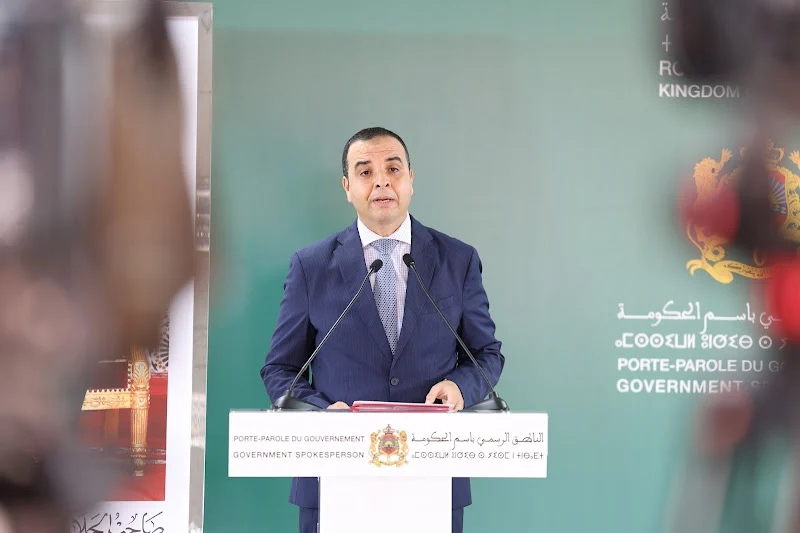
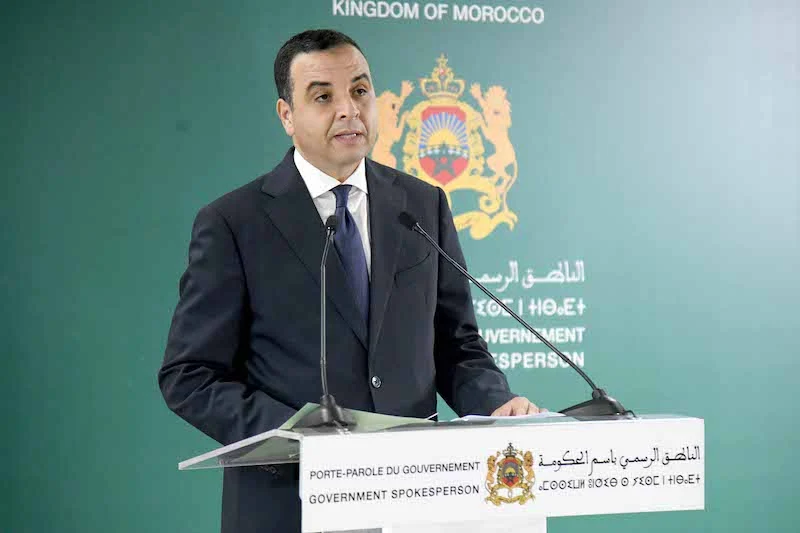
Government spokesman and minister delegate for relations with parliament Mustapha Baitas said Thursday that the government will not launch a parallel inquiry into the alleged “flour and paper” scandal, stressing that the case is now in the hands of the judiciary.
Speaking at his weekly press briefing after the cabinet meeting, Baitas confirmed that “the Public Prosecution has already acted,” referring to the decision by the Attorney General at the Rabat Court of Appeal to open a judicial investigation into allegations that paper had been mixed with subsidized flour intended for low-income households.
“There is an ongoing judicial process that must take its course,” he said, adding that government departments will refrain from interference.
The probe follows controversial remarks by Ahmed Touizi, head of the Authenticity and Modernity Party’s parliamentary group, who accused some mills of “grinding paper” and selling it as subsidized flour consumed by poor citizens.
The statement triggered widespread public outrage before Touizi retracted his comments, clarifying that he was referring to “billing fraud” within mills benefiting from state subsidies, and not literal contamination.
Baitas’s intervention sought to calm speculation after the scandal sparked demands for government accountability and greater transparency in Morocco’s costly flour subsidy system, which consumes roughly 16 billion dirhams annually.
The official emphasized that legal authorities will determine the veracity of the claims.
Beyond the controversy, Baitas also presented figures highlighting the government’s engagement with parliamentary oversight, noting it has responded to over 5,560 oral questions and 23,200 written ones since October 2021,an unprecedented volume compared to previous terms.
He also cited robust public investment levels projected at 380 billion dirhams for 2026 and economic growth of 4.6 percent despite agricultural drought, arguing these indicators reflect “resilient performance and fiscal reform outcomes.”
Why it matters:
The “flour and paper” controversy has spotlighted Morocco’s fragile subsidy oversight and the enduring problem of weak traceability in state-backed flour distribution, and mounting public scrutiny over fraud risks within essential goods programs that support millions of low-income Moroccans and strain the national budget.






add your comment
Terms of publication : Not to offend the writer, people, sacred things, or attack religions or the divine self, and refrain from racist incitement and insults.