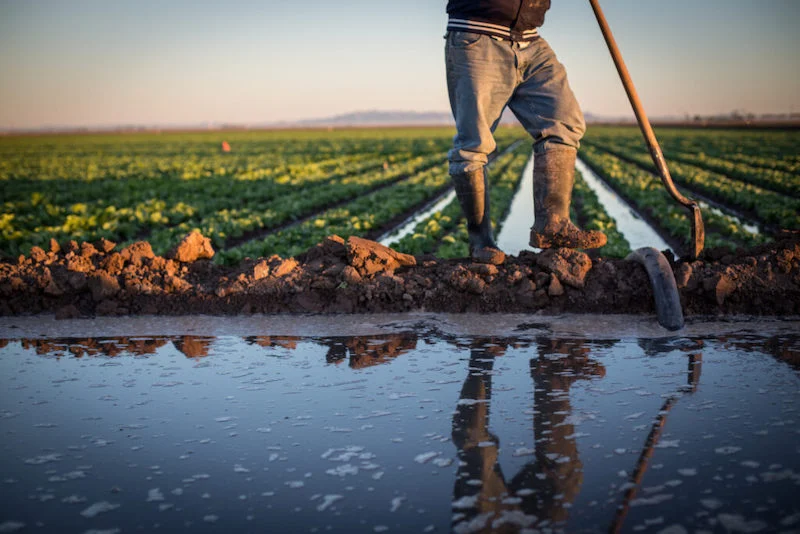
Morocco has made progress in modernizing its agriculture and strengthening local production, but the country still faces serious food security challenges as climate change and water scarcity intensify, according to a new report by the International Food Policy Research Institute (IFPRI).
The Global Food Policy Report 2025 says Morocco is one of the few countries in the Middle East and North Africa that relies largely on domestic agricultural production to feed its population, unlike many Gulf nations that depend heavily on imports.
However, this same reliance on local production makes Morocco vulnerable. Agriculture remains heavily dependent on rainfall and limited water resources, and as droughts become more frequent and rainfall less predictable, the pressure on farmers, especially smallholders, continues to rise.
Despite these challenges, Morocco has built one of the region’s most advanced irrigation systems, helping maintain relatively stable output. Yet declining rainfall in recent years has increased food insecurity in rural areas.
The report notes that the government’s response has been multi-layered, focusing on investments in water infrastructure, agricultural value chains, and smallholder support through national programs such as Green Generation and the National Water Plan.
One of Morocco’s most notable reforms, according to the report, involves water pricing. Local researchers, in collaboration with IFPRI, found that adjusting irrigation water prices to reflect its true economic value can improve efficiency without reducing overall production, provided small farmers receive financial and technical support to transition to more efficient systems.
The report describes this policy as a model for how developing countries can balance economic growth with environmental sustainability.
It also links Morocco’s food security challenges to global disruptions such as the war in Ukraine, which pushed up global grain and wheat prices. In response, Morocco has worked to stabilize local supplies by subsidizing key food items and promoting sustainable farming practices.
Programs like Plan Maroc Vert (Green Morocco Plan) have transformed the country’s agricultural landscape by attracting private investment and boosting exports.
Still, the report warns that Morocco’s long-term food security will depend on continued support for small farmers and vulnerable rural communities, which remain the backbone of domestic food production.
The report calls for greater investment in climate-smart agriculture, research, technology transfer, and water-saving innovations to prepare for hotter and drier years ahead.
Encouraging young people to participate in modern farming and agribusiness, it says, will also be essential to revitalizing rural areas and sustaining agricultural growth.






add your comment
Terms of publication : Not to offend the writer, people, sacred things, or attack religions or the divine self, and refrain from racist incitement and insults.