
From afar, the scenes in Morocco echo a pattern familiar to the Global South: angry youth, fading trust, and collapsing governments. International coverage tucked Morocco into that narrative, grouping the Kingdom with a “Gen Z wave” toppling regimes from Lima to Kathmandu.
Major international outlets have cast Morocco’s unrest as part of a wider wave of youth uprisings. But the analogy collapses under scrutiny. In Nepal and Peru, coalition breakdowns forced abrupt transfers of power. In Morocco, such a vacuum cannot exist, with a monarchy that acts like a built-in shock absorber that operates before collapse.
Morocco’s youth-led protests entered a second week after days of unrest that spread from peaceful rallies to rioting across major cities. The movement, mobilized online as “Gen Z 212,” began with calls for reform in health and education but turned political, with crowds demanding the resignation of government.
Police detained dozens on the first night in Rabat and Casablanca as demonstrators chanted against corruption and inequality.
By midweek, violence flared in Agadir, Inezgane and Ait Amira, where shops were looted, cars set ablaze and three protesters died in clashes that injured more than 260 security officers.
The government has since adopted a listening posture, with ministers pledging dialogue and announcing more public engagements.
Morocco’s political order is built on a dual logic. An elected government that manages daily affairs, and a monarchy that steps in when the machinery jams.
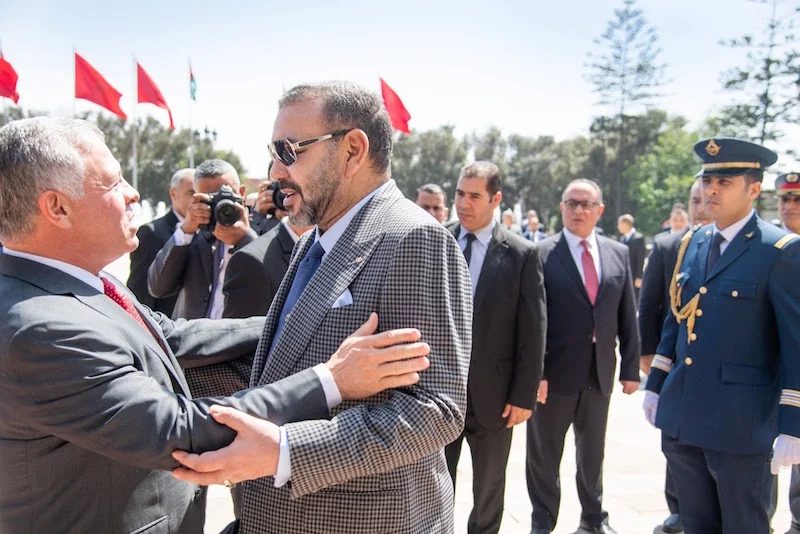
Under the 2011 Constitution, adopted after the Arab Spring, the king retains control over security, religion, and key appointments while acting as the final arbiter when institutions reach paralysis.
Political scientist Mohamed Tozy describes the Moroccan monarchy as “a system of adjustment,” designed to anticipate and defuse crises before they erupt. In his view, royal intervention is preventive, not acquisitive, a way to avert collapse rather than seize power. Western observers, he has argued, often mistake such recalibration for rupture.
When pressure builds, over corruption, prices, or elections, the palace absorbs the shock, rebalances the political field, and then withdraws. Cabinets fall, ministers reshuffle, new consultative bodies appear, but the structure remains intact.
Tozy calls this “une monarchie d’équilibre,” a monarchy of equilibrium, a power that survives not by standing firm but by moving first.
Tozy is part of a broader Moroccan intellectual current that has spent decades studying how the monarchy adapts. Scholars such as Mohamed Madani, Béatrice Hibou, and Abderrahim El Maslouhi converge on the idea that royal authority endures by mediating conflict, not suppressing it.
Madani calls the post-2011 order “an administered democracy,” where elected institutions exist to channel participation. Hibou describes Morocco as “a regime of flexibility,” its legitimacy renewed through perpetual reform rather than structural change. And El Maslouhi frames the crown’s role as arbitrage institutionnel, constitutional arbitration that restores equilibrium when the system jams.
The logic, as Tozy and his peers describe it, is anticipatory: power acts before crisis, a mechanism has kept Morocco stable through regional turmoil.
When the Arab Spring reached North Africa in 2011, the monarchy moved first, rewriting the constitution, calling early elections, and absorbing the streets’ anger before it hardened into revolt.
When Islamist parties gained momentum, the crown integrated them into the system rather than pushing them underground, appointing Abdelilah Benkirane of the Justice and Development Party as head of government after his party’s victory.
When Benkirane later stalled in forming a coalition, the king dissolved his mandate and replaced him with the more compliant Saad Eddine El Othmani.
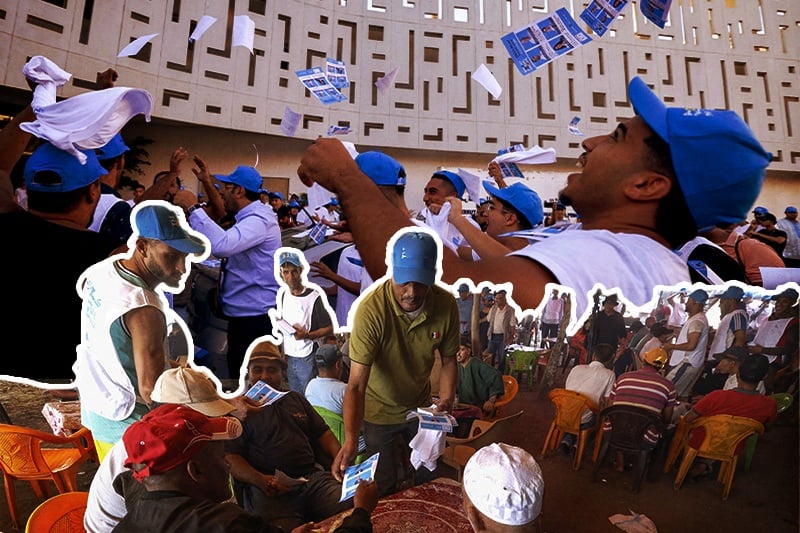
The pattern repeated after the 2021 elections, when voters punished the Islamists and handed power to the National Rally of Independents.
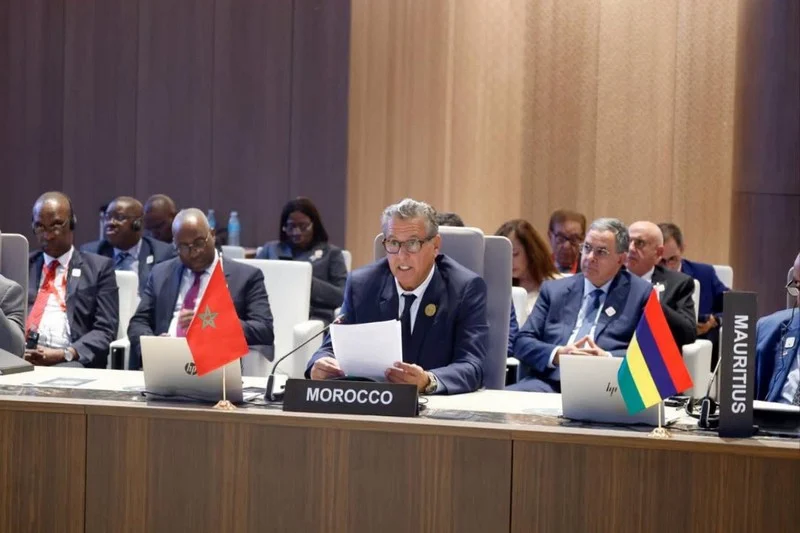
Head of government Aziz Akhannouch came to office promising managerial competence; when his government’s silence during protests fueled discontent, speculation over another royal reshuffle began to circulate.
In Morocco, that expectation is instinctive. Protesters, pundits, and ordinary citizens alike await a royal gesture long before any statement comes from the government.
Over years of repetition, the logic of anticipation has become less a constitutional principle than a social reflex, with crises now measured by how long it takes for the crown to intervene.
That reflex is what distinguishes Morocco from the wave of Gen Z uprisings elsewhere.
In Peru, months of street battles ended only after the president’s impeachment and the implosion of Congress. In Nepal, student-led demonstrations toppled successive prime ministers as parties and the army fought for control. In both cases, authority fractured because no neutral center existed to absorb the shock.
But international coverage has placed Morocco among countries in turmoil, describing it as “another Gen Z uprising,” a comparison that says less about Morocco than about how crises in the Global South are still read.





add your comment
Terms of publication : Not to offend the writer, people, sacred things, or attack religions or the divine self, and refrain from racist incitement and insults.