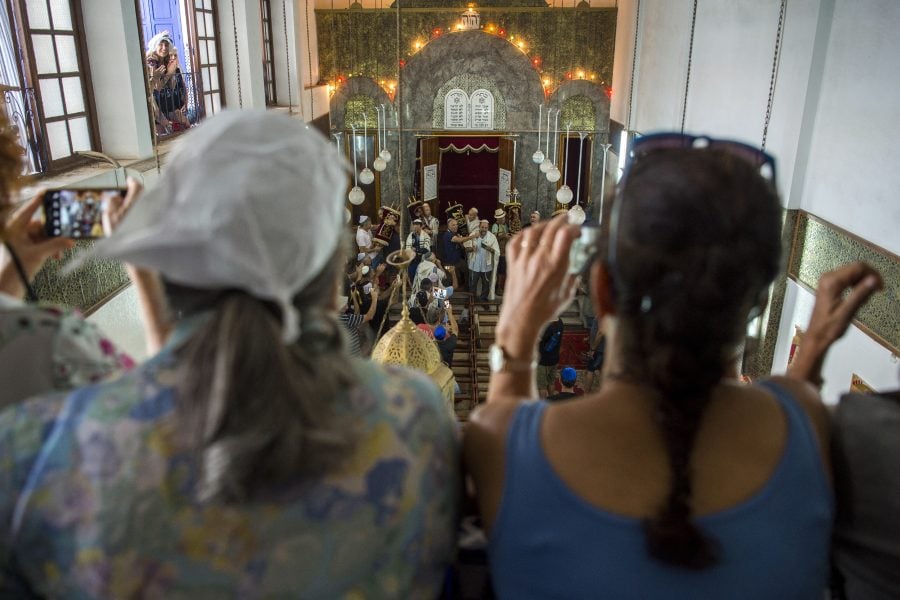
Allegations that prayers were offered for the Israeli army at this year’s Hiloula pilgrimage in Essaouira have sparked sharp debate – and swift denials among Moroccan Jewish leaders and political observers.
The report , published by Kikar Hashabbat, a site covering ultra-Orthodox communities, alleged that Rabbi David Hanania Pinto, the spiritual leader presiding over the ceremony, invoked blessings for Israeli soldiers and the return of hostages before a crowd that included Morocco’s local governor, and the head of Israel’s liaison office in Rabat.
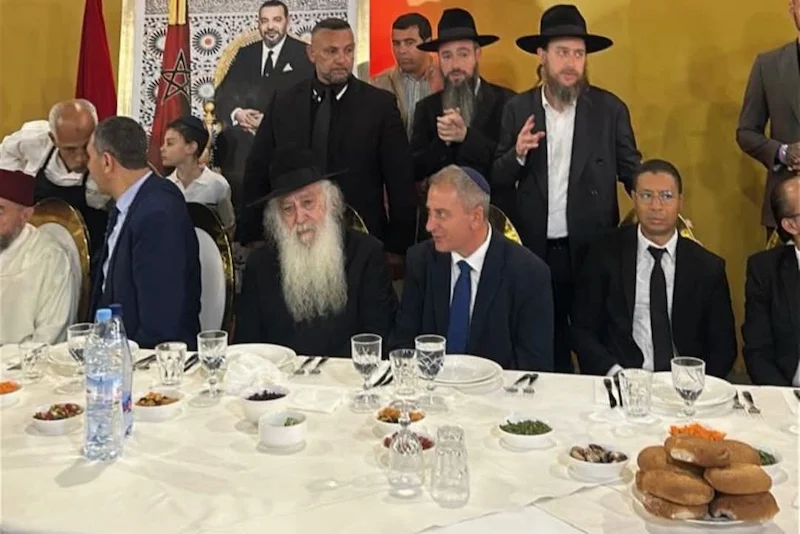
The news quickly spread on social media, provoking outrage in a country where pro-Palestinian demonstrations have filled the streets every week since Israel’s October 7 offensive.
Moroccan Jewish leaders have pushed back againt the alligation with Serge Berdugo, head of the Council of Jewish Communities, calling the claims “lies and slander,” insisting that Moroccan Jews “have no link with the State of Israel or its actions.”
Jackie Kadosh, leader of the Jewish community in Marrakesh-Asfi, offered a more nuanced explanation: prayers were made “for peace for all, not for war,” he told Hespress.
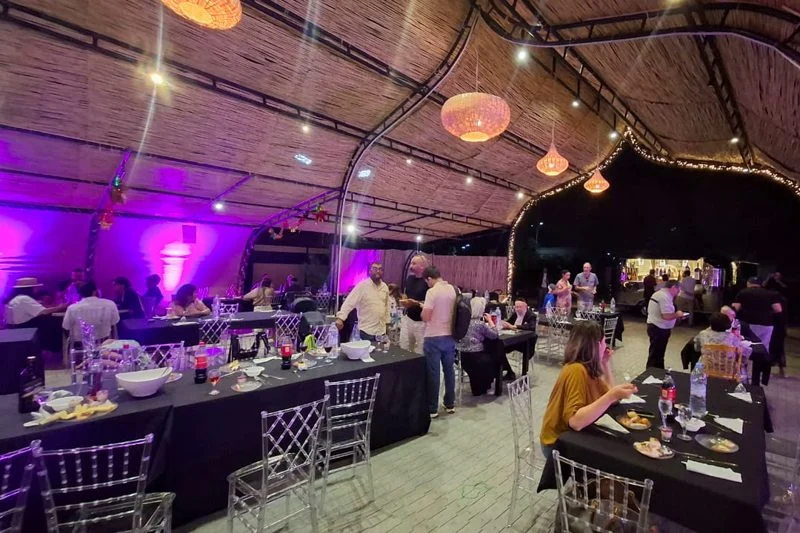
The annual Hiloula has long been a showcase of Morocco’s Jewish heritage, once numbering 250,000 people and today fewer than 2,500 residents, and in recent years, officials have used it to underscore Morocco’s reputation for coexistence and tolerance.
Except for a 2023 suspension, every September, thousands travel to Essaouira, a coastal city once home to a thriving Jewish community, to light candles, chant psalms and seek blessings at the rabbi’s tomb.
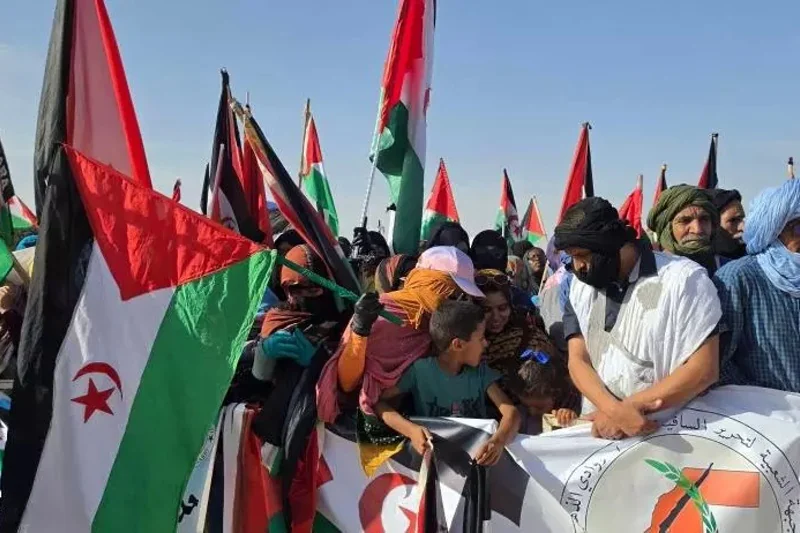
Moroccan authorities have faced pressure from both sides: to maintain the normalization deal with Israel, seen in Rabat as crucial for U.S. recognition of Moroccan sovereignty over the Sahara, and to respond to a public that overwhelmingly supports Palestinians. .
For Morocco’s Jewish community, the controversy is especially fraught. “Our concern is Moroccan Jews only,” Berdugo said.



add your comment
Terms of publication : Not to offend the writer, people, sacred things, or attack religions or the divine self, and refrain from racist incitement and insults.