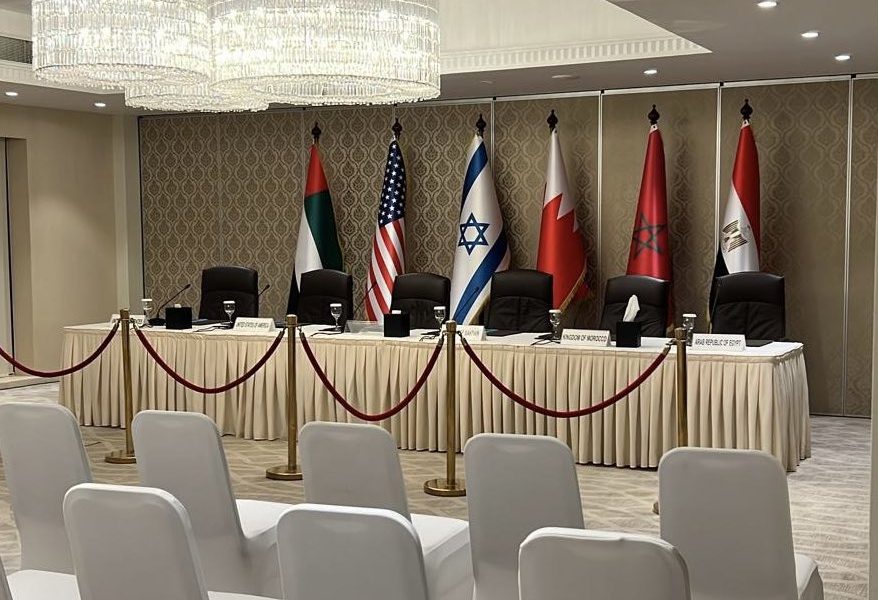
The Abraham Accords, the U.S.-brokered agreements that normalized Israel’s relations with four Arab states in 2020, have survived five years and the Gaza war but remain fragile and threatened by annexation risks and rising public hostility, the Israeli Institute for Regional Foreign Policies (Mitvim) said in a report Friday.
Launched under the Trump administration, the accords brought the United Arab Emirates, Bahrain, Morocco and later Sudan into formal diplomatic ties with Israel, reshaping the region’s diplomatic map and widening U.S.-aligned security cooperation.
Mitvim said the agreements created “a functional normalization” driven by state interests in trade, defense and U.S. backing, but warned that without deeper ties between peoples they risk stagnation.
The think tank noted that despite Arab outrage over Gaza, no signatory has cut relations with Israel.
Channels in diplomacy, commerce and security remain active, often quietly, even as governments issue symbolic protests. Yet Mitvim pointed to growing skepticism among Arab publics , particularly younger generations, which is widening the gap with political elites and raising the political costs of normalization.
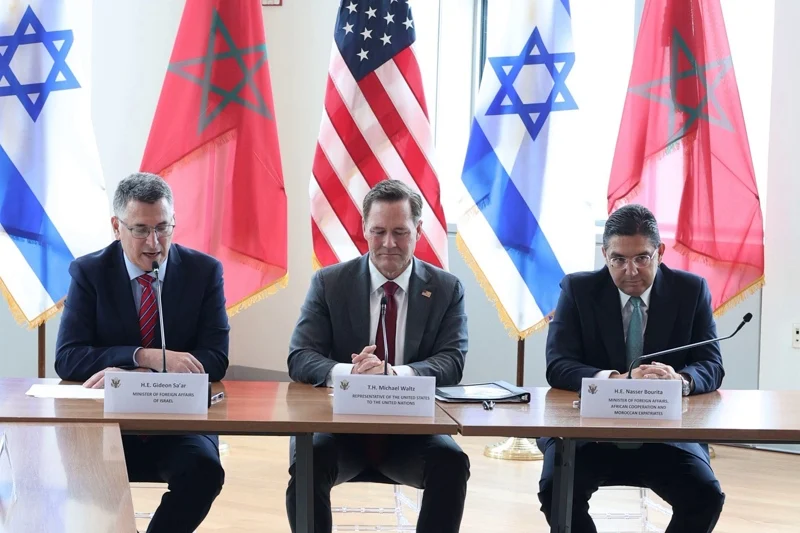
Morocco’s case is partly distinct, the report said, drawing on historical and cultural ties with Israel, but public unease remains evident.
The UAE reaffirmed its commitment but warned that any Israeli annexation of the West Bank would be a “red line” undermining regional integration.
Saudi Arabia, once viewed as the likeliest next entrant, has grown cautious, tying any potential agreement to tangible progress toward Palestinian statehood or concrete steps under a two-state solution.
Mitvim stressed that Riyadh’s position as guardian of Islamic holy sites gives it leverage to slow or block normalization without concessions on Palestine.






add your comment
Terms of publication : Not to offend the writer, people, sacred things, or attack religions or the divine self, and refrain from racist incitement and insults.