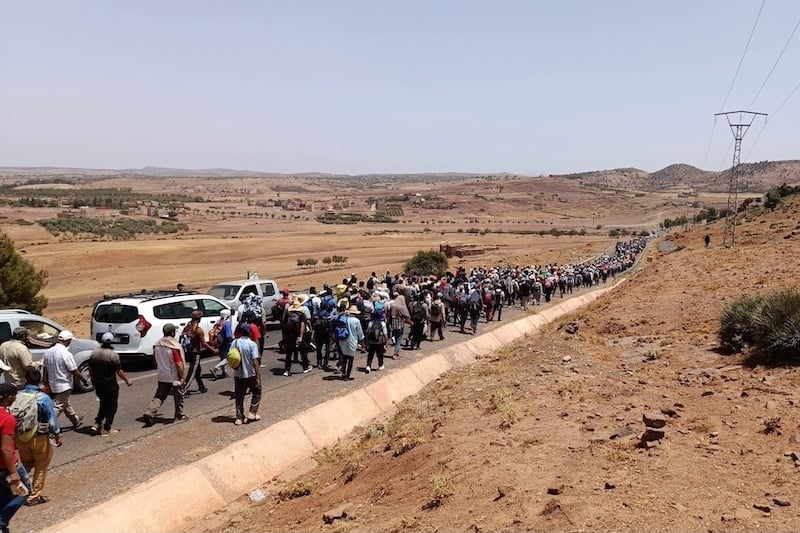
Residents across several villages in Morocco’s central Azilal province have staged near-daily peaceful protests in recent weeks, demanding better access to roads, health care, schools, water and electricity.
Hundreds of villagers from mountain communities such as Aït Bouguemez, Tizi, Aït Farraj, Tabachkout and Ourir have marched to local government offices, accusing authorities of neglect and calling for urgent solutions to long-standing problems of isolation and underdevelopment.
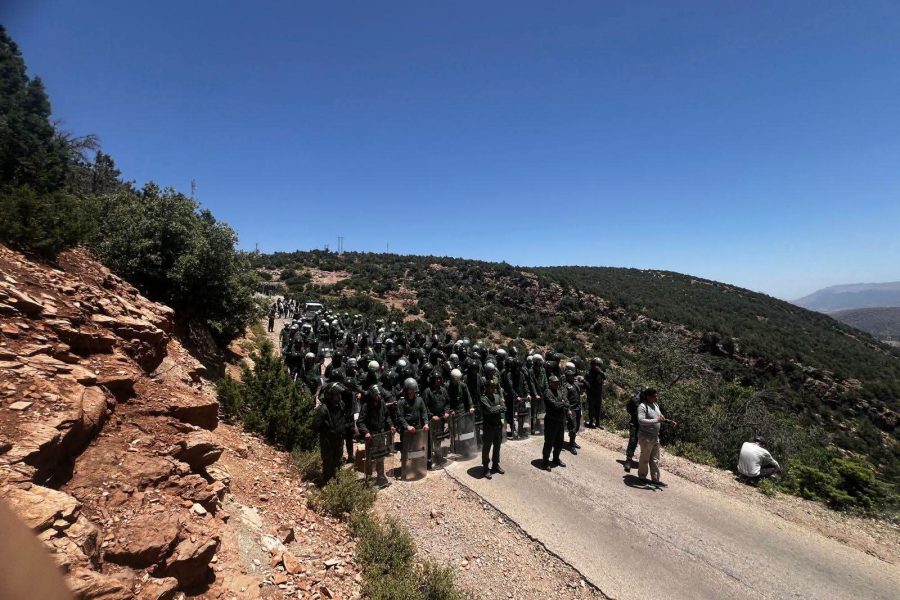
The demonstrations, including marches by women, children and students, echo a history of social movements in the region. Past mobilizations include the 1999 Aït Bilal march to Marrakesh, which drew more than 1,400 people, and a 2009 march by residents of Aït Abdi who walked 80 kilometers to demand bridges, roads, health centers and electricity. Smaller protests continued through the 2010s, often met with police intervention.
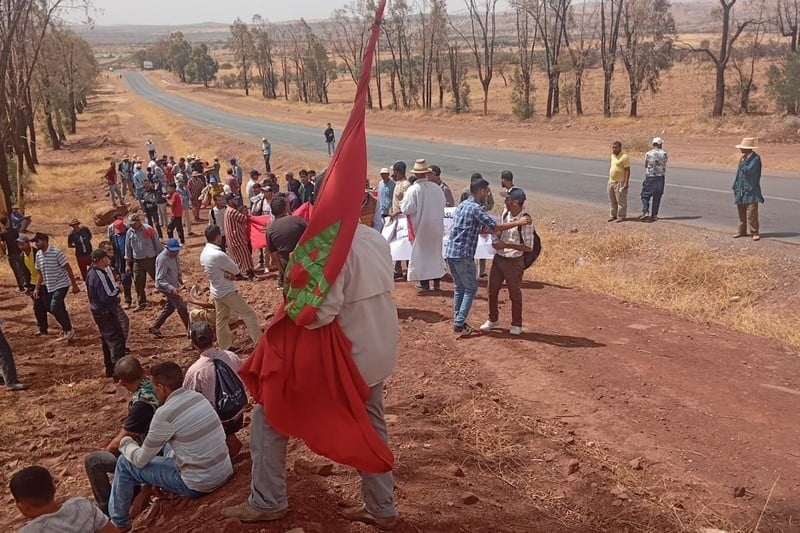
The latest wave was sparked July 9, when residents of Aït Bouguemez marched on the Beni Mellal-Khénifra regional headquarters. They demanded urgent repairs to key regional roads, including routes 302 and 317, and improvements to health care, mobile coverage and internet access. Protesters also asked for sports facilities for local youth.
Since then, actions have spread across the province. In Beni Ayat, a sit-in over flood-damaged classrooms escalated into a student march. In Télouet and Aït Abbas, villagers pressed for paved roads, drinking water, electricity and new schools. Residents of Iskssi demanded easier building permits and electrification, while in Tennant, villagers called for essential infrastructure and services.
The Moroccan League for the Defense of Human Rights issued a statement expressing concern, warning that the persistence of poor infrastructure and lack of basic services threatens social stability. It urged authorities to address “deep development gaps” in rural and mountain areas and called for sustainable programs rather than what it described as “empty ceremonial spending.”

The group also demanded the adoption of a long-discussed “mountain law” to support disadvantaged regions, stressing accountability for local officials. “These are constitutional and human rights,” the statement said, “and delaying solutions risks deepening social tension.”
Analysts say the protests highlight the urgent need for a comprehensive rural development strategy that prioritizes roads, schools, health care and utilities to ensure equitable development across Morocco’s remote areas.





add your comment
Terms of publication : Not to offend the writer, people, sacred things, or attack religions or the divine self, and refrain from racist incitement and insults.