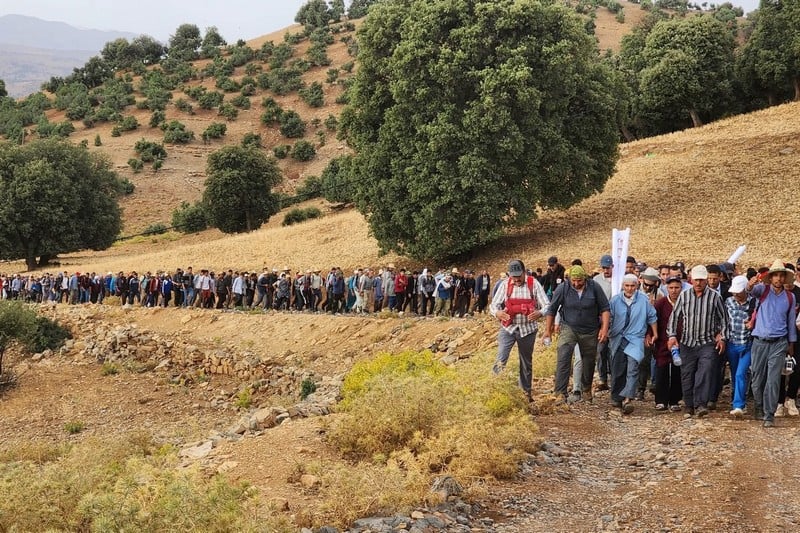
A peaceful march held by the residents of Aït Bouguemez in Azilal province has turned into a broader cry from Morocco’s mountain regions, especially the southeast, calling for an end to urban-style construction regulations in rural villages lacking basic infrastructure.
The protest, joined by villagers of all ages, condemned the enforcement of urban planning laws requiring expensive architectural designs and building permits in isolated mountainous areas.
“How can they ask us for engineered blueprints when we don’t even have sewage systems?” said Abdellah Aït Baha from Amsmrir in Tinghir province. “These rules are not organizing our lives, they’re making them harder.”
What began as a local protest has now echoed across rural Morocco, particularly in the High Atlas and Draa-Tafilalet regions. Activists insist the protest is not a rejection of order but a call for developmental priorities: infrastructure first, regulation later.
A local official in the Draa-Tafilalet region, speaking anonymously, acknowledged the legitimacy of the grievances but explained that local authorities are bound by national laws issued by the Interior Ministry.
“There’s a deep gap between the legal texts and the reality on the ground,” he said, noting that peaceful actions like the Aït Bouguemez march could accelerate awareness in Rabat and push for adapted legal frameworks for rural Morocco.
In the villages of Tinghir, young people echoed the sentiment. “We’re being asked to pay thousands of dirhams for an engineer and technical office to build a single room,” said Ydir from Ouzighimt.
“Meanwhile, we still use pit latrines and fetch water on foot. We’re not against the law,we’re against injustice.”
For many, the message is now clear: infrastructure must precede bureaucracy. As the Interior Ministry faces mounting pressure from rural communities, there’s growing demand to suspend mandatory building permits in remote villages until they are equipped with roads, drinking water, and sewage networks.








add your comment
Terms of publication : Not to offend the writer, people, sacred things, or attack religions or the divine self, and refrain from racist incitement and insults.