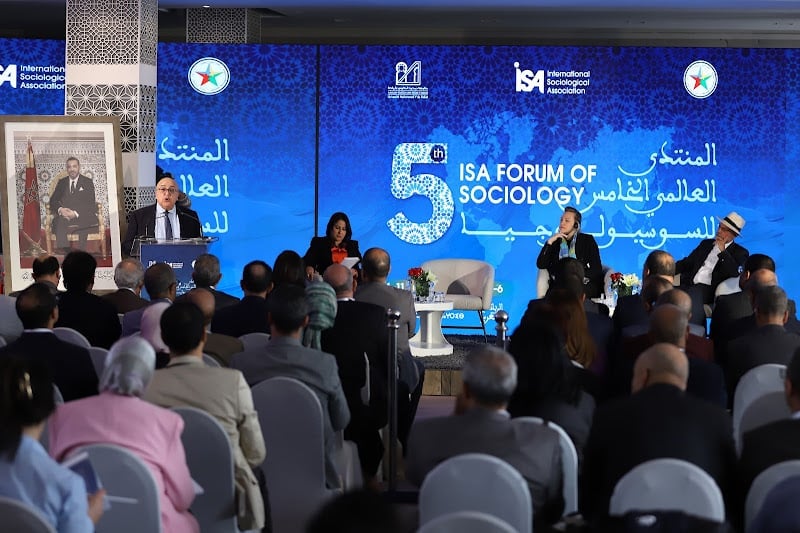
The International Sociological Association (ISA) has suspended the membership of the Israeli Sociological Society following mounting pressure from Moroccan sociologists and global civil society in response to Israel’s ongoing war in Gaza.
The decision came after widespread outrage over Israel’s participation in the fifth ISA forum held at Mohammed V University in Rabat. In a statement released this week, the ISA declared that the move reflects its institutional stance against what it described as the “genocidal acts committed against Palestinians in Gaza,” and cited the Israeli association’s failure to condemn the ongoing humanitarian crisis.
“As part of our public opposition to the genocide of Palestinians in Gaza, we maintain no institutional ties with Israeli public institutions,” the statement read.
“We regret that the Israeli Sociological Society has not issued a clear condemnation of the tragic situation in Gaza. In response to the extraordinary severity of current events, the Executive Committee has decided to suspend the collective membership of the Israeli association.”
The decision followed sustained advocacy by Moroccan academics and human rights organizations, including the Moroccan Campaign for the Academic and Cultural Boycott of Israel (MACBI). The campaign had earlier urged the Moroccan Sociological Association to withdraw invitations extended to Israeli academics, asserting that their participation legitimized institutions complicit in what they described as apartheid and settler colonialism.
Moroccan scholar Issam Rajwani accused the ISA of double standards, pointing out that while the association had suspended Russia’s membership following the war in Ukraine, it initially refrained from applying similar measures against Israel despite what he called the “institutional ties between Israeli sociology and military-intelligence circles.”
The Moroccan Association of Sociology issued its own statement condemning the violence against Palestinian civilians and rejecting any collaboration with Israeli institutions, even under the guise of academic events.
Sociologist Mohamed El Bekali stressed that neutrality in the humanities is a myth, stating, “Human and even exact sciences are inseparable from values. Researchers complicit in crimes cannot hide behind scientific objectivity.” He argued that many Israeli sociologists work in institutions that serve military agendas and warned against legitimizing participants who remain silent on war crimes.
Not all voices agreed with the boycott, however. Sociology professor Jamal Faza described calls for exclusion as an ideological overreach. “Dragging science and scientists into political and ideological battles undermines the purpose of sociology,” he said.
The debate has exposed deeper divisions over academic freedom, ethical responsibility, and the boundaries of engagement in times of war. Critics of Israeli participation argued that the presence of individuals from institutions tied to military operations in Gaza violated principles of justice and international law.
The Moroccan faction of the National Union of Higher Education also expressed “deep concern” over what it described as the university’s complicity in allowing representatives of a “settler-colonial and apartheid regime” to attend a major international academic event. They rejected what they saw as an attempt to portray Moroccan academia as supportive of war crimes.
As protests mount globally over Israel’s conduct in Gaza, this episode marks a significant shift in academic diplomacy, with leading international bodies beginning to reckon with the political implications of institutional affiliations — and the responsibilities that come with them.




add your comment
Terms of publication : Not to offend the writer, people, sacred things, or attack religions or the divine self, and refrain from racist incitement and insults.