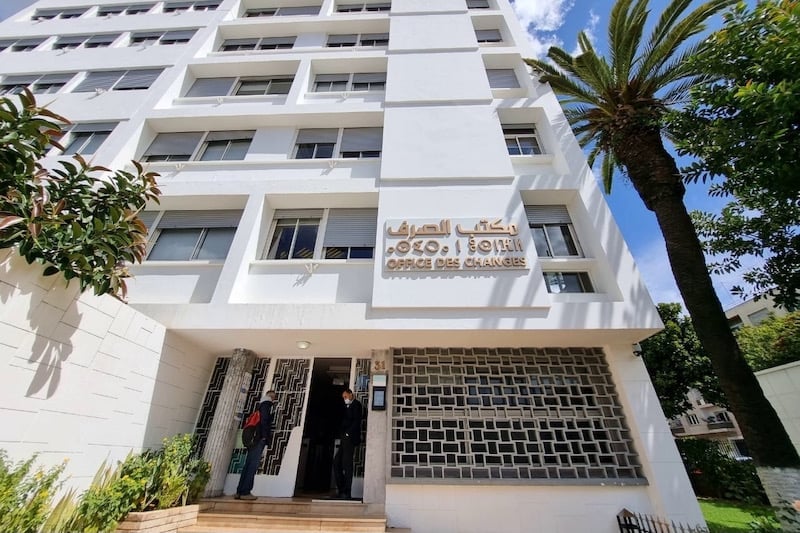
The Moroccan Exchange Office has ramped up investigations into a suspected network involved in laundering large sums of money abroad through import-export operations run by companies registered under the names of foreign nationals, primarily of French and Turkish origin, sources with direct knowledge of the matter told Hespress.
According to those sources, financial monitoring agents received detailed intelligence revealing that certain foreign “investors” were being used by members of the network.
These individuals were granted stakes in existing companies or had new ones opened under their names. They were also given full banking authority to manage the businesses, allowing for the legal disguise of capital transfers abroad in an attempt to bypass financial scrutiny.
Preliminary investigations have identified a concentration of these operations in Tangier, Casablanca, and El Jadida. The businesses in question specialize largely in textiles, clothing, and general import-export activities.
The Exchange Office is working closely with the General Administration of Customs and Indirect Taxes, as well as the General Directorate of Taxes, to determine the identity of the companies and their foreign managers.
Investigators found that the network had succeeded in laundering substantial amounts of money over the past three years while ensuring the legal compliance of their businesses by paying customs duties and taxes within the legally prescribed timeframes.
A key focus of the investigation has been identifying irregularities in export operations carried out by these foreign-managed firms. In several cases, substantial profits generated from exports were not repatriated to Morocco as legally required. Instead, the money was redirected to bank accounts located in offshore tax havens.
The investigation also revealed suspicious practices involving inflated import invoices, executed in collusion with exporters based in Europe, Asia, and South America. These inflated figures allowed for higher amounts to be legally transferred abroad under the guise of import payments, including advance payments of up to 30% of total import costs. The discrepancy was then hidden in foreign accounts.
Sources confirmed that the Exchange Office has begun data-sharing initiatives with the Financial Intelligence Authority as part of efforts to gather more information on the suspect companies and their foreign partners. The goal is to uncover the full scope of the alleged money laundering and track the flow of funds redirected through global trade operations.
These efforts align with Morocco’s broader campaign to curb illicit currency outflows, including through enhanced monitoring of foreign travel expenses. In recent years, the Exchange Office has implemented stricter audit protocols and modern tracking technologies. It also updated its 2022 foreign exchange guidelines to increase allowances for travel-related spending.
The cap for personal travel expenses was raised to 100,000 dirhams annually (from 45,000 dirhams), with a potential 30% top-up based on income tax, up to a ceiling of 300,000 dirhams. Business travel allowances were also increased from 60,000 to 100,000 dirhams.








add your comment
Terms of publication : Not to offend the writer, people, sacred things, or attack religions or the divine self, and refrain from racist incitement and insults.