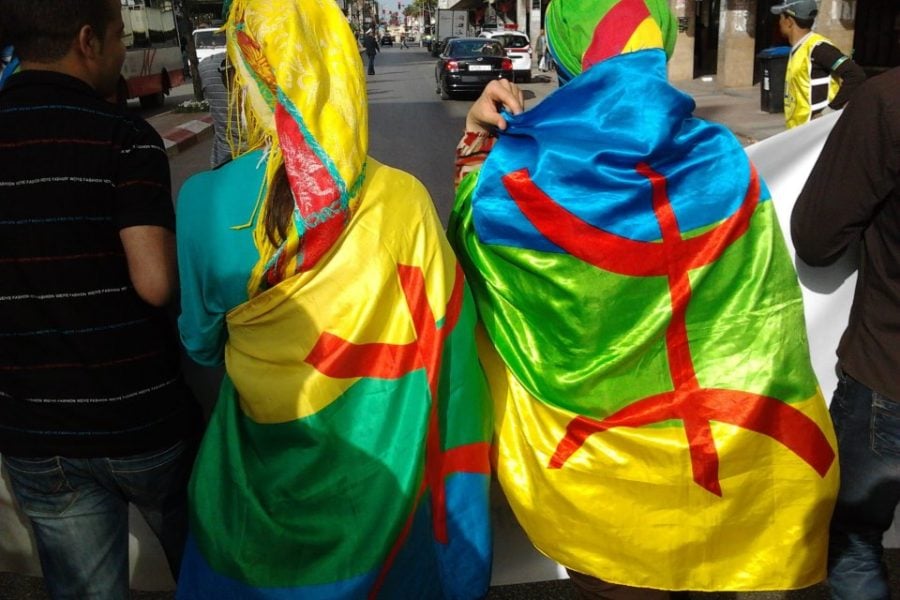
A growing debate is unfolding within Morocco’s political and cultural circles over the possible formation of a political party rooted in Amazigh identity, amid a constitutional framework that officially recognizes the Amazigh language and institutional presence.
The conversation reflects deep divisions among activists and scholars, with some warning that such a move risks narrowing the scope of the Amazigh cause, while others view it as a legitimate political project that could bring balance to the national political landscape.
At the heart of the debate lies a central question: Should Amazigh identity be embraced by all political parties as a national cause, or does it require a distinct political structure to represent its interests? While some advocate for the “Amazighization” of existing parties from within, others are pushing to create a new political force grounded in Amazigh values and aspirations.
National Cause or Political Fragmentation?
Amazigh activist Rachid Behdouz expressed skepticism over repeated discussions of an “Amazigh party” emerging during election cycles, suggesting that the issue has become more of a media talking point than a serious political agenda. Behdouz emphasized that Amazigh identity is inherently Moroccan, and that limiting it to a single party would diminish its national importance.
“All Moroccan parties are Amazigh to the extent that they belong to a shared national identity,” Behdouz told Hespress. He warned that isolating Amazigh issues within a single party would absolve others from responsibility, reducing it to a sectarian concern rather than a national obligation.
While acknowledging the constitutional right to form a party with an Amazigh reference, Behdouz criticized those who claim they are prevented from doing so yet make no attempt to act. He also pointed out that Amazigh individuals are already well-represented in government and parliament, calling instead for a battle of political awareness: ensuring that existing parties adopt and advocate for Amazigh-related issues in their platforms.
He cited the example of the Authenticity and Modernity Party (PAM), which created an internal Amazigh platform and integrated Amazigh identity into its official narrative. Behdouz concluded that true Amazigh activism lies in transforming existing parties from within, stating, “Amazigh identity belongs to all Moroccans, not just one party or faction.”
Structural Reform and Political Renewal
On the other side of the debate, Abdellah Boushtat, an Amazigh writer and member of the Amazigh Alternative Loyalty Group, argues that an Amazigh political party is not a fleeting idea, but rather a comprehensive civilizational and political project aimed at correcting systemic flaws in Morocco’s party system.
“The crisis of Moroccan partisanship is rooted in its historical foundations,” Boushtat said. “Political parties were built on imported ideologies—Salafism, Arab nationalism, Baathism, Islamism—that do not reflect Morocco’s cultural and social realities.”
In contrast, Boushtat sees the Amazigh political project as a philosophical and political break from these foreign paradigms, striving to reclaim Moroccan identity and re-anchor politics in indigenous values. “We want politics to walk on its feet, not on its head, as it has since 1934,” he said.
Boushtat emphasized that the envisioned party would go beyond advocating for the Amazigh language, offering a broad societal program encompassing spatial justice, equitable wealth distribution, sustainable development, environmental issues, human rights, and political inclusion.
Dismissing concerns about potential fragmentation, Boushtat said it is premature to judge a party that doesn’t yet exist, while noting the shrinking institutional presence of Amazigh culture. He stressed that the new political platform would work within the legal framework and promote dialogue, coexistence, and institutional engagement, aiming to build a more inclusive and culturally reconciled Morocco.

add your comment
Terms of publication : Not to offend the writer, people, sacred things, or attack religions or the divine self, and refrain from racist incitement and insults.