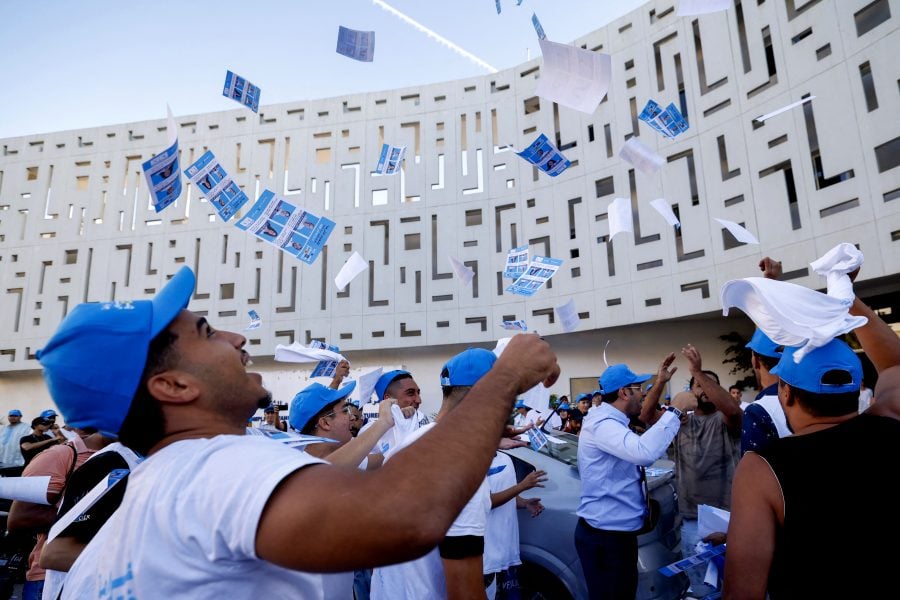
Morocco’s parties have spent September moving between major cities, provincial capitals, small towns and rural communities, but they are not all working from the same electoral map.
RNI has taken senior figures through places including Azilal, Khémisset, Beni Mellal, Sidi Kacem, Essaouira and Midelt, alongside smaller localities such as Mazouda, Imi N’Tlit, Jorf El Melha and Qaria Ba Mohamed.
PAM has been active in Berkane, Bouarfa, Boulemane, Taourirt, Jerada, Tinghir, Zagora and Missour, while also campaigning in Marrakech, Tangier and other major cities.
Istiqlal has concentrated heavily on Larache province, with Nizar Baraka travelling through Larache, Ksar El Kebir, Beni Korfet, Zaaroura and Souk El Qolla, while the PJD has put Abdelilah Benkirane in Salé, Meknes, Tangier, Tetouan, Oujda, Laayoune and smaller places including Rommani, Beni Mellal, Khénifra, Fkih Ben Saleh and Ait Bouguemez.
The parties’ current campaign locations make more sense when you look at how their electoral strength changed between 2016 and 2021. The PJD went from 125 seats in 2016 to 13 in 2021, while RNI jumped from 37 to 102, PAM moved from 102 to 87 and Istiqlal from 46 to 81. Those changes also reshaped where the parties were strongest, particularly between the major cities and the provincial and rural constituencies.
RNI: Keeping the nationwide network it built
RNI’s September campaign combines major urban centers with the smaller constituencies that became central to its breakthrough in 2021.
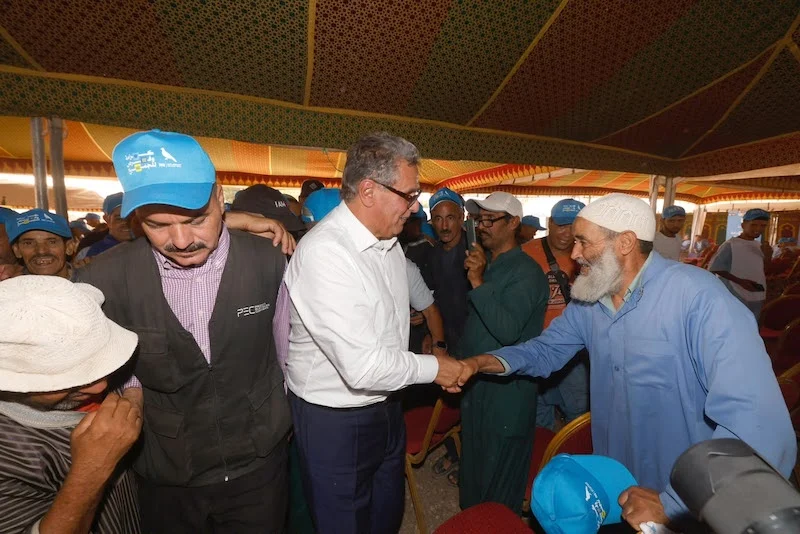
Aziz Akhannouch has appeared in cities such as Rabat, while other senior figures have travelled through Beni Mellal, Khémisset, Azilal, Sidi Kacem, Essaouira and Taroudant and into smaller localities.
That broad coverage follows the strategy RNI developed before the last election. Its “100 cities, 100 days” campaign took the party into urban centers, while it also worked through professional, agricultural and local political networks.
David Goeury wrote in 2021 that RNI had prepared its electoral operation well ahead of the vote and combined its historical local networks with an effort to reach a new urban electorate and the result was a party that could compete in both settings.
RNI received more than 2 million votes in 2021 and came first in 59 constituencies, with particularly strong results in Souss-Massa but also major gains in El Haouz, El Jadida, Kénitra, Sidi Kacem, Taroudant, Settat and Beni Mellal.
Goeury’s post-election analysis described the result as the combination of two different forms of mobilization: RNI’s strength in rural and peripheral constituencies and its heavy use of social media to reach voters in large cities.
Goeury also pointed to the importance of local networks, noting that broad coverage allowed parties to mobilize voters across rural communes.
That helps explain why the 2026 RNI itinerary does not stop at Casablanca, Rabat or other large cities. The party is maintaining the local presence that helped it win across a much wider territory in 2021 while continuing to seek visibility among urban voters.
The approach is also visible in places such as Larache, where RNI has changed its candidate and put forward Abdelhakim Al Ahmadi, a younger local politician who already has a provincial and communal network.
The Larache contest is a combination of “the weight of notables” and political movement between parties, with RNI choosing a locally established younger figure rather than its outgoing MP.
PAM: The territorial machine goes back to work
PAM’s campaign has put particular emphasis on the Oriental and other areas where the party has long relied on local political networks. Berkane, Bouarfa, Boulemane, Taourirt and Jerada are among the places receiving attention, alongside Azilal, Tinghir, Zagora and Missour.
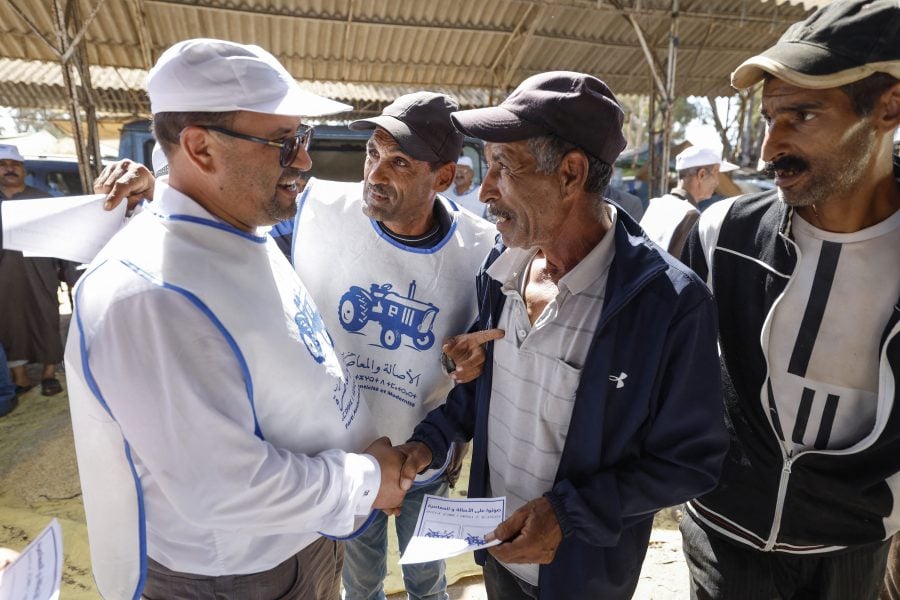
The choice of Berkane is especially clear since PAM held a major pre-campaign meeting there on Sept. 3, bringing senior figures including Fatima Ezzahra El Mansouri, Mohamed Mehdi Bensaid and Fouzi Lekjaa together with candidates and local officials from the Oriental. The party said more than 3,000 people attended.
Berkane is a stronghold for PAM, but the campaign has looked different across the province, with quieter activity in the city and more visible campaigning in the surrounding douars.
The province has three parliamentary seats, and the campaign is being fought through a network of local candidates and established political figures as much as through national rallies.
That territorial emphasis goes back to PAM’s rise before the 2016 election. David Goeury wrote that PAM’s strength outside the major metropolitan areas came from “local notables” with strong territorial roots, while its 2016 gains also benefited from attracting figures from Istiqlal and RNI.
PAM won 102 seats in 2016 and remained a major force in 2021 with 87. Its 2021 electorate exceeded 1.4 million voters, and it retained strong positions in Marrakech-Safi, the Oriental and Tangier-Tetouan.
PAM’s urban performance was less consistent. The party lost voters in Casablanca and other major prefectures between 2016 and 2021, while Marrakech moved in the opposite direction and added more than 16,000 voters.
The current campaign therefore mixes the two sides of PAM’s electoral map. Its senior leadership is returning to the Oriental and other provincial territories where local networks remain important, while the party is also keeping a presence in Marrakech, Tangier, Fez, Rabat and Casablanca.
Azilal is another example of the same strategy. PAM held a large rally there on Sept. 7, with El Mansouri, Bensaid, Lekjaa and other senior figures appearing alongside local officials.
The meeting is part of the party’s campaign across Morocco’s more remote
areas, while the local constituency has three seats and is dominated by candidates with established local networks.
Istiqlal: From Larache’s villages to the major cities
Istiqlal’s campaign has been particularly visible in Larache province, where Secretary-General Nizar Baraka is running for parliament.
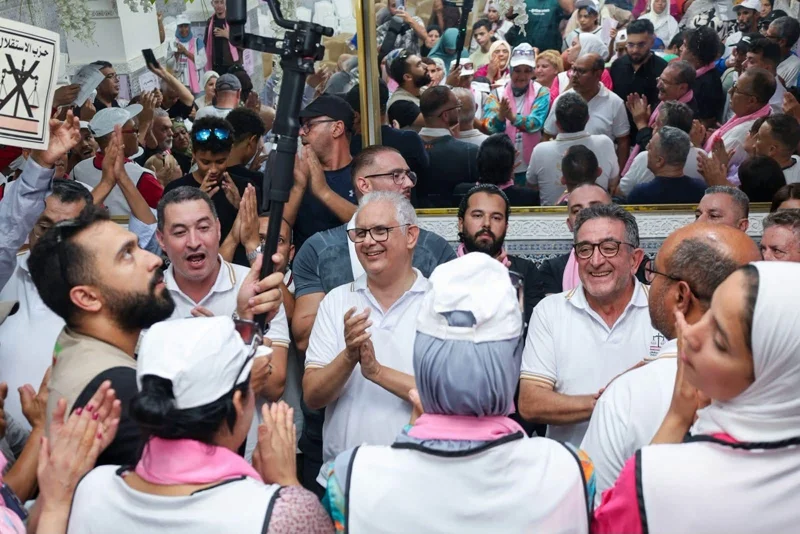
Since the campaign began, Baraka has appeared in Larache and Beni Arouss and travelled through other parts of the province, while the party has also maintained activity in cities including Oujda, Fez and Tangier.
The concentration in Larache is more than a single national rally. Baraka is campaigning across the province alongside local candidates, with the party focusing on roads, water, health, rural development, purchasing power and jobs.
Larache is also a useful example of how national party competition is tied to local political figures. Istiqlal has kept Baraka as its candidate, while RNI replaced outgoing MP Mohamed Simou with Abdelhakim Al Ahmadi and PAM put forward Zineb Simou.
The constituency has four seats, putting senior national figures and locally established candidates into the same contest.
Istiqlal’s current territorial campaign follows a recovery that began before the 2021 election. The party had fallen to 46 seats in 2016, but returned with 81 in 2021 after more than doubling its vote from 620,041 to 1.28 million.
Its recovery was not confined to one type of constituency. Istiqlal remained strong in southern provinces including Laayoune-Sakia El Hamra and Dakhla-Oued Ed-Dahab, while also performing well in rural provinces such as El Hajeb, Guercif, Taroudant and Chtouka-Ait Baha.
The party also rebuilt its urban electorate with its vote in Casablanca increasing by 21% between 2016 and 2021, while its electorate growing sharply in cities including Salé, El Jadida, Meknes, Mohammedia and Marrakech.
That history helps explain the combination of locations in the current campaign. Istiqlal needs the provincial networks that helped restore its parliamentary strength, but it is also campaigning in the major cities where it recovered voters in 2021.
PJD: Returning to the cities that once carried it
The PJD is campaigning from a much weaker position than it held in 2016. Benkirane has returned to Casablanca, Salé, Meknes, Tangier, Tetouan and Oujda, cities that were central to the party’s electoral strength before its collapse in 2021.
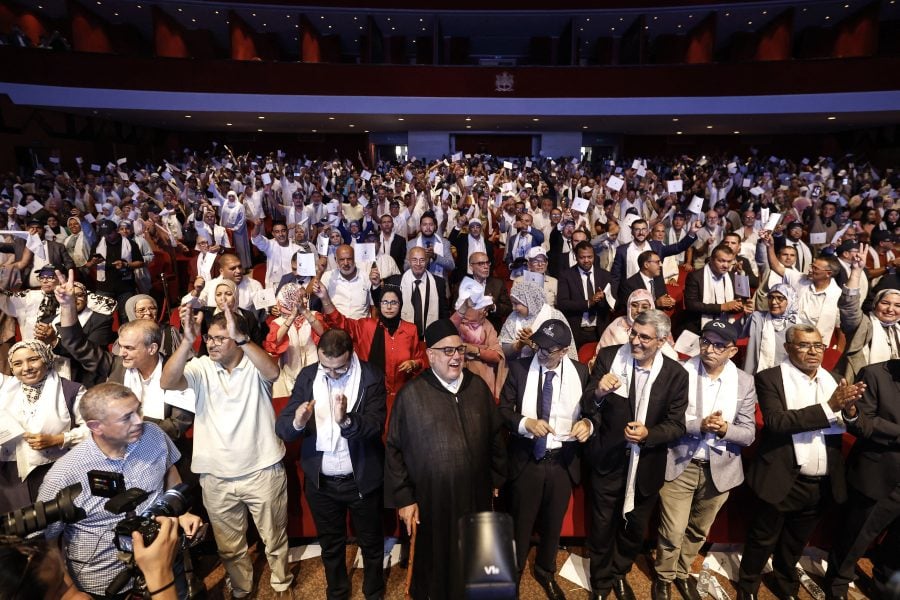
The campaign has also extended into places such as Rommani, Beni Mellal, Khénifra, Fkih Ben Saleh and Ait Bouguemez.
The urban focus reflects the party’s electoral history. In 2016, the PJD won 125 seats and was particularly strong in Casablanca, Agadir, Inezgane, Rabat, Salé, Tangier, Fez, Meknes, Marrakech and Oujda.
PJD had built a large urban electorate over more than a decade and became the largest party in parliament.
Five years later, that base had largely disappeared. The PJD won 13 seats in 2021 and lost about 80% of its voters compared with 2016. In Casablanca, its electorate fell by nearly 90%, while it also suffered huge losses in the other major urban prefectures.
David Goeury’s analysis after the 2021 election focused heavily on the party’s loss of local and urban mobilization. He noted that the PJD had failed to field enough candidates in rural communes and had lost more than 75% of its voters in many of the urban communes where it had previously come first.
Goeury also linked the result to the party’s local record in major cities. The PJD had controlled many urban councils, and he argued that voters were judging the party by what it delivers in their everyday lives rather than only its national political message.
The party’s current campaign therefore combines an attempt to recover its urban presence with efforts to rebuild outside the major centers.
Benkirane’s appearances in Salé, Meknes, Tangier, Tetouan and Oujda put the party back into the cities that once supplied much of its vote, while visits to Beni Mellal, Khénifra, Fkih Ben Saleh and Ait Bouguemez extend the campaign into places where the party’s local organization also needs rebuilding.
The rural problem was already visible before the 2021 vote. Goeury said the PJD’s low level of candidate coverage in rural communes was “an indicator of disaffection,” while the party’s limited local presence made it harder to mobilize voters outside its traditional urban networks.
The 2026 campaign is consequently being fought on two fronts for the PJD: recovering visibility in the large cities where it once dominated and restoring the local networks needed to compete in smaller constituencies.
Why the smaller places matter?
The campaign maps of the four parties show why Morocco’s parliamentary elections are not fought only in Casablanca, Rabat, Marrakech, Tangier and the other major cities.
Goeury wrote before the 2021 election that Moroccan voting patterns could not be reduced to a single national urban-rural divide.
The PJD had strong urban networks, while PAM relied more heavily on territorial notables, and Istiqlal had increasingly depended on medium-sized cities and provincial networks.
The 2021 election reinforced that territorial logic because parliamentary, regional and communal elections were held on the same day.
In his post-election analysis, Goeury said local candidates and networks were crucial to mobilizing voters in rural areas, with parliamentary candidates often relying on local elected officials to reach villages and communities.
That helps put the current campaign stops in places such as Bouarfa, Boulemane, Taourirt, Jerada, Tinghir, Zagora, Ait Bouguemez and Mazouda in the same picture as the large-city rallies.
A major meeting in Casablanca or Rabat gives a party national visibility and access to a large urban audience.
A campaign through a small town or rural commune is more closely tied to the local candidate, the provincial political network and the voters who will decide the seats assigned to that constituency.
The parties also know that the electoral map has changed since 2016. RNI has expanded dramatically, Istiqlal has recovered, PAM has retained much of its territorial strength and the PJD has lost the urban dominance that once made it the country’s largest parliamentary party.
Their September movements reflect those changes as RNI is maintaining the broad territorial network behind its 2021 breakthrough while continuing to campaign in the cities. PAM is leaning on established local networks while defending urban ground. Istiqlal is combining provincial campaigning with the urban recovery it made five years ago. PJD is trying to rebuild both the city-based electorate and the local organization that collapsed between 2016 and 2021.
2021 parliamentary seats by party
Constituencies led by selected parties in 2021




add your comment
Terms of publication : Not to offend the writer, people, sacred things, or attack religions or the divine self, and refrain from racist incitement and insults.