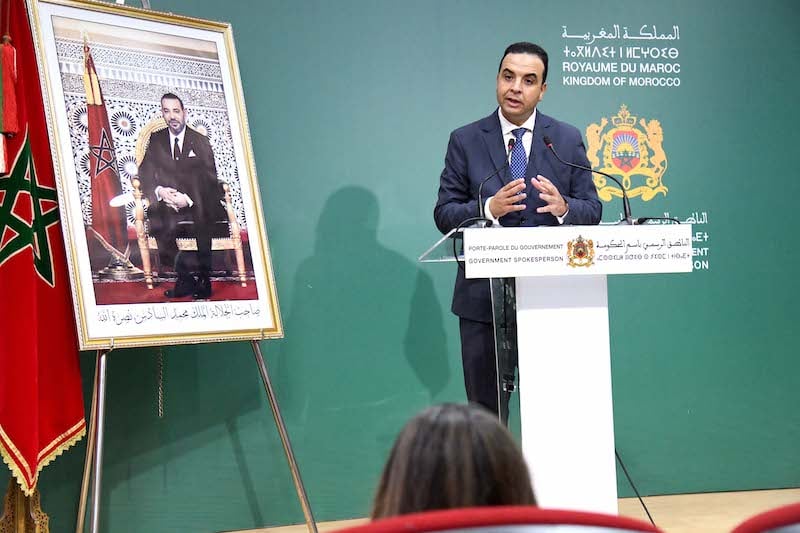
Government spokesperson Mustapha Baitas on Thursday hailed Morocco’s new alternative sentencing project as a “bold and courageous step,” describing it as part of a broader human rights reform led by King Mohammed VI.
Speaking during the weekly government press briefing, Baitas framed the initiative as a response to long-standing calls to reduce overcrowding in Morocco’s prisons and to introduce new judicial tools that promote the reintegration of offenders into society.
“This is a major human rights reform with substantial momentum,” he said, adding that the alternative penalties are aimed at enhancing the rule of law and promoting a culture of human rights in the country.
The measures include community service, electronic monitoring, restrictions on certain rights, mandatory rehabilitation or treatment programs, and daily fines. The spokesperson emphasized that the government did not adopt a “one-size-fits-all” approach, but rather tailored the law to accommodate multiple categories of offenses and offenders.
Baitas also announced that a regulatory decree approved by the government outlines mechanisms to implement these new measures effectively. Among other provisions, it details the roles of the General Delegation for Prison Administration (DGAPR) at both national and local levels in monitoring and enforcing alternative sentences.
Specific prisons will be designated to supervise the execution of these new penalties, particularly in the case of community service, which requires close coordination and monitoring. The decree also covers shared legal provisions for all types of alternative sentences — from the moment a judge issues the order to final execution and report filing — including sentence calculation and the roles of involved institutions.
The system will include a national digital platform to oversee electronic surveillance, while the state will cover operational costs. However, a joint ministerial decision will determine whether offenders can be charged fees for monitoring, to be collected by court clerks.
The decree also defines the responsibilities of sentencing judges, public prosecutors, and monitoring officers, and introduces both fixed-location and mobile electronic monitoring systems.
Baitas concluded by stating that the decree offers a comprehensive framework for the rollout of alternative sentencing—from the initial court request to the completion of penalties—and represents a major step forward in Morocco’s justice reform agenda.







add your comment
Terms of publication : Not to offend the writer, people, sacred things, or attack religions or the divine self, and refrain from racist incitement and insults.