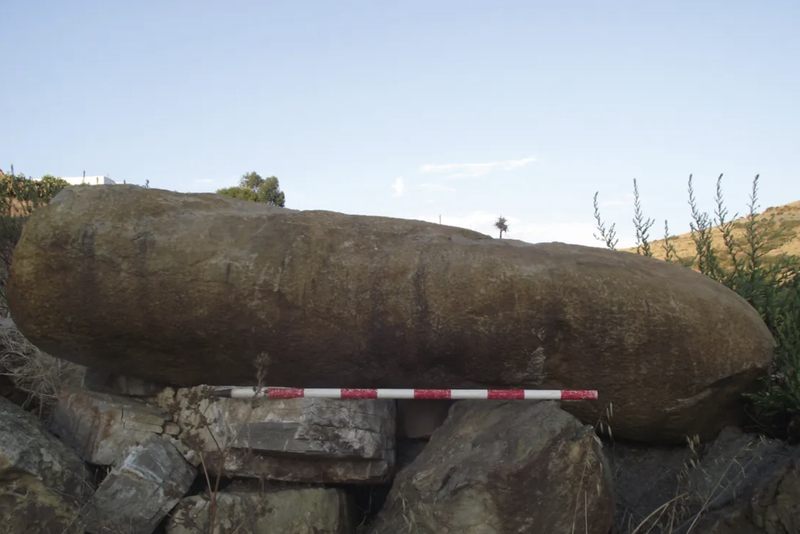
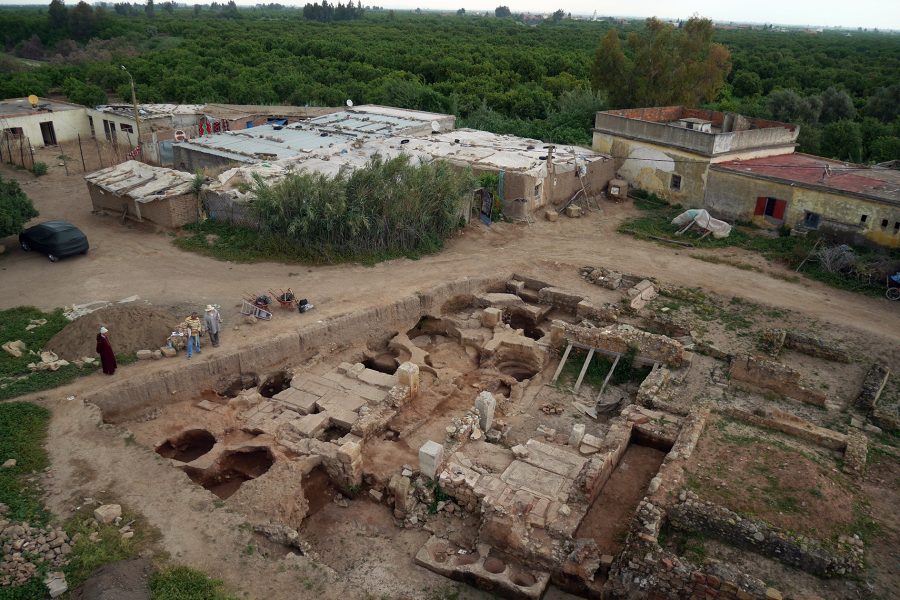
A recent archeological study by the African Archaeological Review journal unveiled three ancient cemeteries and 24 previously undocumented rock art sites in the Tangier Peninsula of northwest Morocco, dating back to the Bronze and Iron Ages.
Grounded in fieldwork, radiocarbon dating, and GIS analysis, the substantial discoveries imply an astonishing level of complexity and prevalence to the ritual landscapes of the region, one far exceeding expectations.
The unearthed burial sites all possess unique characteristics– while Daroua Zaydan consists of a single cist burial, Oulad Zin presents a lone tumulus alongside a group of at least three cists, and Oued Ksiar, the most extensively documented site, features two tumuli and three clusters of cists.
These findings hint at centuries of evolving and multifaceted burial customs in the area, with connections to both southern Iberia and the Sahara. The research paper also establishes the first radiocarbon date for a cist burial in northwestern Africa, specifically at Daroua Zaydan.
The region is described by researchers Hamza Benattia, Jorge Onrubia-Pintado, and Youssef Bokbot as a “rich mosaic of burial traditions”.
They lament how understudied the Tangier Peninsula is, compared to its significant role as a connective gateway between Europe and Africa.
Although Morocco exhibits a rich archaeological heritage, the study notes how its potential is hindered by colonial biases and a Eurocentric mindset.
These findings question long-held assumptions of a culturally secluded prehistoric North Africa, with evidence painting a clear picture of ongoing cultural interactions and shared rituals across the western Mediterranean basin and North Africa.
Such uncoverings pave the way for more constructive scholarly debates on the region’s archaeological landscape.





add your comment
Terms of publication : Not to offend the writer, people, sacred things, or attack religions or the divine self, and refrain from racist incitement and insults.