
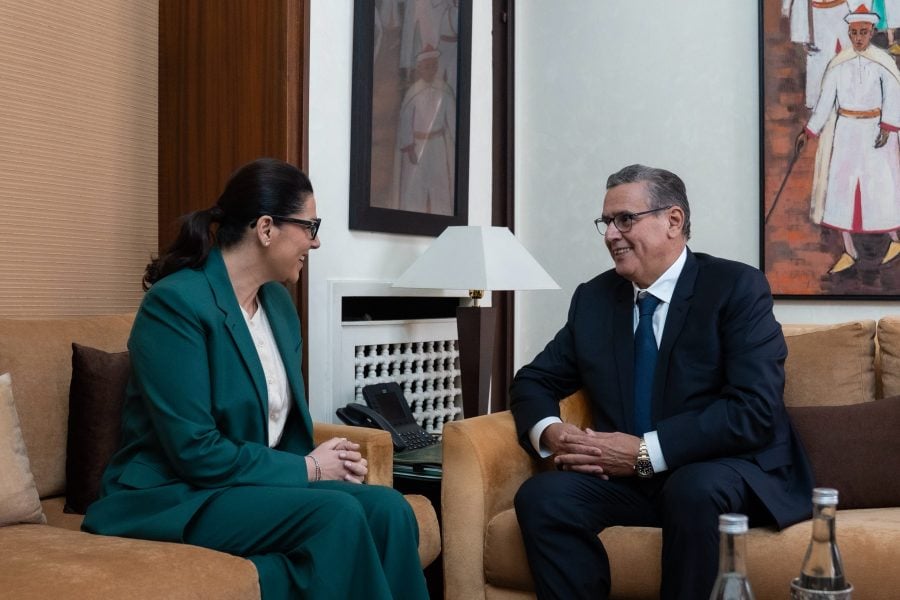
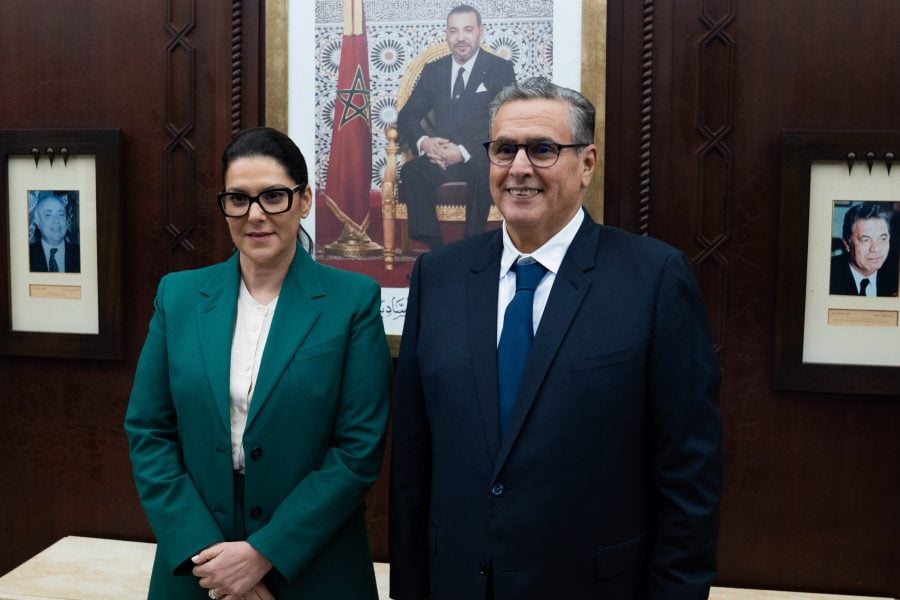
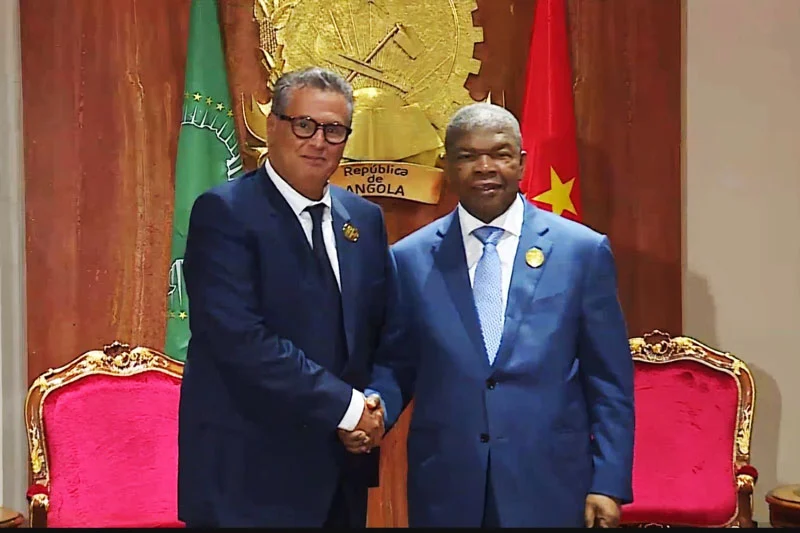
Head of government, Aziz Akhannouch, under rising union pressure, has tightened the screws on his government’s stalled negotiations, ordering ministers to urgently activate and regularize sectoral talks in a bid to salvage credibility and deliver long-delayed reforms.
The directive, issued today after Akhannouch chaired the launch of the April 2025 round of social dialogue, instructs ministers and public agency heads to engage with unions and employers across sectors, resolve outstanding disputes, and provide regular updates on progress.
It follows growing labor unrest over stalled wage negotiations, promotion gridlocks, and unclear timelines for long-promised reforms.
Despite government claims of progress, including across-the-board wage increases, minimum wage hikes in both agricultural and non-agricultural sectors, and expanded pension coverage, many union leaders remain sharply critical.
Ppresident of the National Union of Moroccan Administrators, Fatima Benaddi, described the April talks as “a recycling of old promises,” warning that without detailed roadmaps and intensive negotiations, sectoral grievances will continue to fester.
Unions representing administrators, engineers, technicians, and labor inspectors have repeatedly called for overhauling outdated promotion systems, addressing wage disparities, and improving basic working conditions.
Abdelaziz Amlal of the National Association of Technicians noted that many of their demands date back to 2016, highlighting frustrations over the lack of tangible results. “We’re still waiting for action,” he said.
The government points to several headline measures achieved in recent years: an increase in public-sector wages set to reach an average monthly salary of 10,100 dirhams by 2026, a 15–20% boost in the minimum wage, and new pension access rules that extend benefits to workers with fewer contribution days.
The total social package is projected to cost nearly 46 billion dirhams by 2026.
Yet tensions also reflect deeper structural challenges in Morocco’s labor relations. Youssef Aidi, secretary-general of the Democratic Federation of Labor, criticized the selective nature of social dialogue, saying smaller unions have been routinely excluded, and called for a national union law to guarantee fairer representation and stronger bargaining power.
The government has additionally pledged to push forward reforms to the labor code and unify the minimum wage by 2028, while discussions continue over the status of more than 84,000 municipal workers.
Akhannouch’s directive also calls on public institutions to align their internal talks with this broader push, signaling that ministries are expected to take an active role in resolving sector-specific demands.




add your comment
Terms of publication : Not to offend the writer, people, sacred things, or attack religions or the divine self, and refrain from racist incitement and insults.