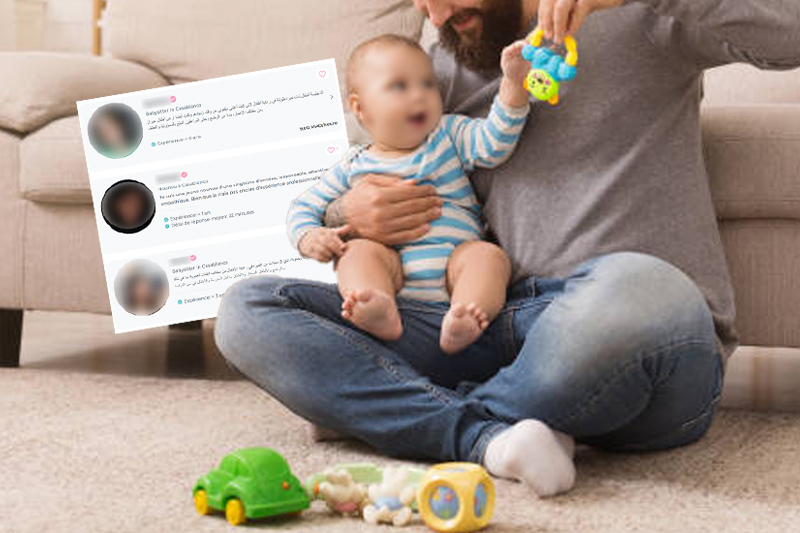
What began as the rise of babysitting apps in Morocco has quickly spiraled into a heated national conversation about gender roles, trust, and the uneasy friction between tradition and modernity.
At the eye of the storm is Babysits, an international platform that allows parents to browse, vet, and hire caretakers for their children based on price, age, and experience.
Babysits includes men as potential babysitters too, a feature that wasn’t received well by many social media users in Morocco, especially after discovering that Moroccan men are among those seeking babysitting opportunities.
Social media platforms have been flooded with alarm and disapproval. Some point to steep hourly rates, reportedly reaching up to 400 MAD, as proof of exploitation; others express anxiety over leaving children with “strangers,” but mostly a widespread discomfort with seeing men step into what many Moroccans view as a women’s domain.
“Only a mother is responsible for her children, no one else can be trusted,” one Instagram user declared.
Another warned ominously, “Now men have entered your field, and you’ve entered theirs—and things got messed up.”
For many, the sight of men offering childcare services doesn’t just challenge expectations; it upends them, shaking long-held beliefs about family and responsibility.
Psychologist Jihane Saadi said that much of this resistance is rooted in how the brain processes difference. “The human mind likes to categorize things, we like to have a box for each person. So when somebody doesn’t conform to that, the brain sees it as a threat,” she told Hespress EN.
Through the lens of Moroccan society, childcare is primarily associated with maternal figures. The unfamiliarity invoked by the concept of male babysitters may be the root of Babysits’ controversy, because it questions people’s deep-seated beliefs.
Jihane Saadi also said that several studies have shown the remarkable benefits of skin-to-skin contact between fathers and their infants, which strengthens the parent-child bond. She argues that kids have two pillars: A mother and a father. “Both parents are important, and it’s all about balance.”


add your comment
Terms of publication : Not to offend the writer, people, sacred things, or attack religions or the divine self, and refrain from racist incitement and insults.