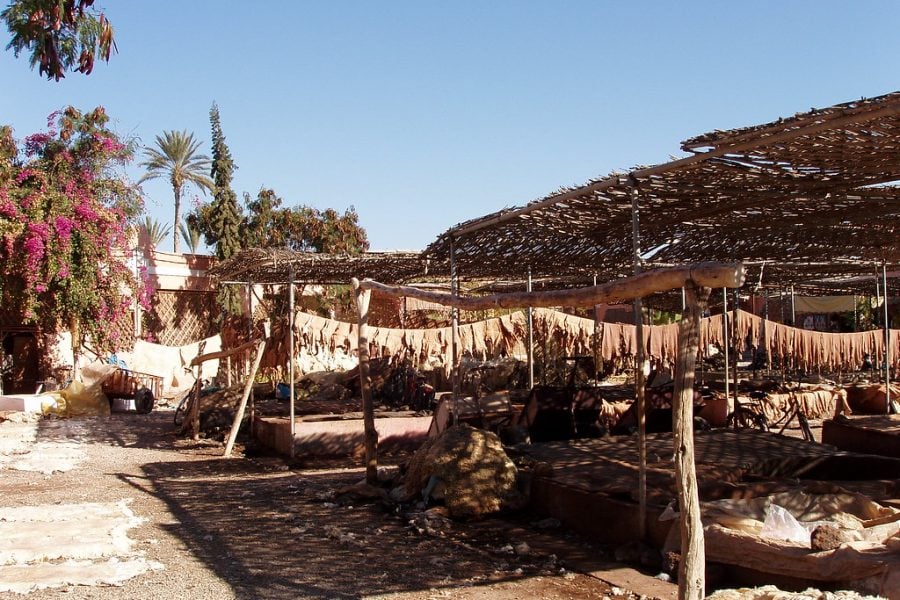
Just 90 minutes east of Agadir, set against the backdrop of the Anti-Atlas, lays Taroudant, often called “Little Marrakech,” which offers a quieter yet charming alternative to the bigger Marrakech, writes Thursday American news channel, CNN.
Often called “Little Marrakech” for its honey-colored sandstone walls and bustling souks, Taroudant “offers much more,” notes CNN in a piece on “The hidden ‘Little Marrakech’ oasis town that most tourists don’t know about”.
Unlike its famous counterpart, where tourists crowd out the residents in the historic center, “Taroudant remains a quieter yet charming alternative, a place where Moroccan life unfolds largely untouched by mass tourism,” according to author, Carlotta Dotto.
Its medina, enclosed by “majestic walls” set against the backdrop of the Anti-Atlas mountains, “is a designated Moroccan national cultural heritage monument,” recalls Dotto, who invites travelers to experience local culture by savoring authentic Amazigh cuisine, sipping tea in family-run shops, and dipping into one of the numerous local hammams.
Taroudant is also “a great base for exploring the arid mountains, camping in the Sahara Desert, or surfing in the Atlantic Ocean,” the article recommends.
Recalling that Morocco welcomed 17.4 million tourists in 2024, “surpassing Egypt to become Africa’s most visited destination,” CNN notes that further growth is expected in 2025, fueled by “new luxury hotels (…) new flight routes (…) and the African Cup of Nations tournament, due to start in December.”
Citing its mountains, its desert and the ocean within easy access, CNN describes Taroudant as “one of Morocco’s most authentic, off-the-radar destinations,” thus escaping “overtourism.”
This multi-century city — it was built in the 11th century CE— is one of Morocco’s oldest, though “its history stretches back to Roman times,” recalls CNN.
It depicts a city where visitors can enjoy exploring souks and kasbahs, discover “some of the most secret and beautiful riads of Morocco, and immerse themselves in the vibrant Berber culture.”
At about 30 kilometers southeast, Dotto notes, lies the oasis of Tioute, “where the ruins of an ancient kasbah overlook lush gardens that have been cultivated for centuries.” Here, she says, locals grow date palms, herbs, oranges, and prickly pears using a traditional irrigation system that relies on gravity-fed underground water channels known as ‘khettaras.’
South of Taroudant lie the Anti-Atlas Mountains, that’s home to “a cluster of charming villages with traditional pink mud-brick houses, slender minarets, and palm-dotted oases.”
CNN underlines that while several destinations grapples with the risks of mass tourism, “places like Taroudant offer a blueprint for a more balanced travel experience — one that could benefit both visitors and local communities alike.”




add your comment
Terms of publication : Not to offend the writer, people, sacred things, or attack religions or the divine self, and refrain from racist incitement and insults.