
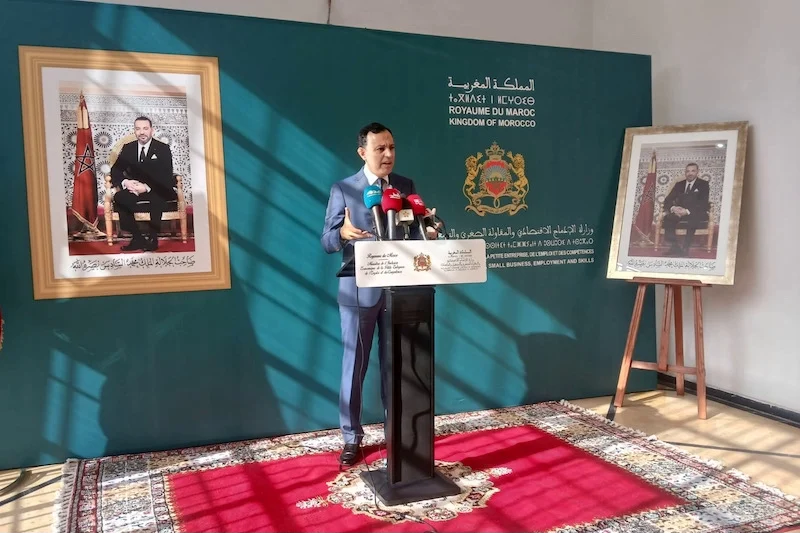
Morocco’s Minister of Economic Inclusion, Small Business, Employment and Skills, Younes Sekkouri, has stated that the number of Moroccan seasonal female workers employed in Spanish strawberry farms reached 15,000 as of April, with no major issues reported regarding their working or living conditions.
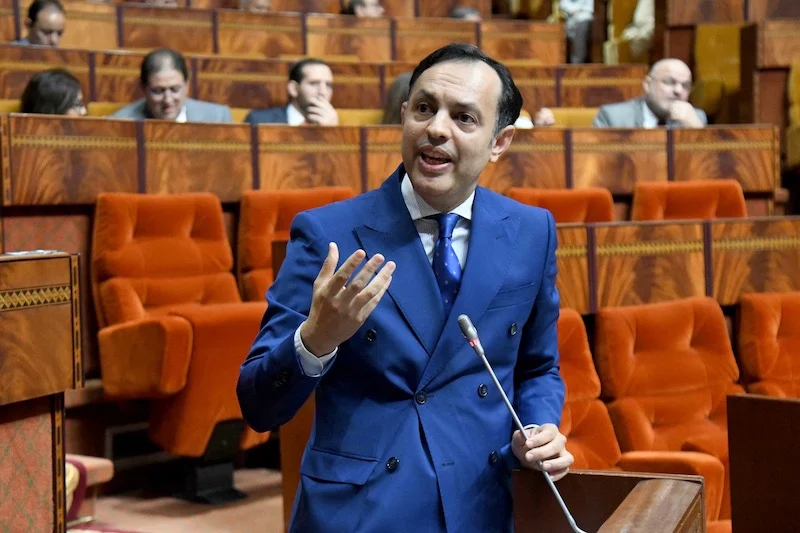
Speaking during a parliamentary Q&A session on Monday, Sekkouri rejected claims of systemic mistreatment of these workers, asserting that “last year’s rumors turned out to be unfounded.” He added that Moroccan and Spanish authorities remain actively engaged in overseeing the program.
The minister detailed a recent breakthrough regarding residence permits for Moroccan seasonal workers in Spain, noting that their validity has now been extended to four years to reduce bureaucratic delays. While acknowledging isolated disputes — involving around 200 workers and a single Spanish employer — Sekkouri said swift intervention in coordination with Spanish counterparts helped resolve the issue.
His remarks came in response to criticism from an opposition MP from the Socialist group, who alleged that some women were living in plastic tents and experiencing abuse without government oversight. She argued the agreements with Spain do not sufficiently guarantee workers’ rights.
“No Link Between Wage Hikes and Elections”
In a separate line of questioning, Sekkouri dismissed accusations that recent wage increases tied to social dialogue efforts were driven by electoral motives ahead of the 2026 elections. “The figures from social dialogue are clear,” he said. “If this was about elections, wage hikes would have been postponed until 2026, not delivered in 2024.”
Sekkouri highlighted the government’s early commitment to engaging unions and resolving long-standing labor issues. He cited a total budget nearing 45 billion dirhams allocated over two years to social dialogue outcomes, including 17 billion for education, 3.5 billion for health, and 2 billion for higher education.
Other achievements included the regularization of 200,000 retirees lacking full social security declarations — a move that cost 10 billion dirhams — as well as raising the minimum wage across agricultural, industrial, and service sectors.
Defending Sekkouri, Ahmed Touizi of the Authenticity and Modernity Party (PAM) insisted the current government’s negotiations with labor unions are “substantive and effective,” unlike what he described as “empty talk” under previous administrations.
Friendly Fire Over Employment Numbers
However, the minister faced pointed criticism not only from opposition lawmakers but also from within the government’s own ranks regarding employment figures. Citing official statistics from the High Commission for Planning, Sekkouri noted a modest drop in the national unemployment rate from 13.7% to 13.4% in Q1 of 2025 and referenced the government’s newly unveiled employment roadmap.
But MP Abderrahim Bouaida of the Istiqlal Party (a government coalition member) questioned the reliability of these numbers, saying they depict “a reality closer to Sweden or Canada than Morocco.” He challenged the government’s pledge to create one million jobs, warning it could turn into “a million unemployed,” and urged greater realism and transparency.
Despite strong numerical defenses, Sekkouri’s presentation laid bare growing tensions over labor market performance — a key metric in a country still grappling with structural unemployment and regional disparities.






add your comment
Terms of publication : Not to offend the writer, people, sacred things, or attack religions or the divine self, and refrain from racist incitement and insults.