
This spring, like every spring, the rose fields of Dades and Mgouna fill with the scent of blossoms and the quiet labor of women bent over the bushes from dawn until midday.
In Tinghir province, where Morocco’s famed rose harvest takes place, hundreds of women work through the season, their hands scratched raw by thorns, their backs aching under the weight of hours spent stooping in the heat.
“We leave before sunrise and come back with dust on our faces and only a few dirhams in our pockets,” says Fatima, 40, who has picked roses for more than eight years. She rubs her face with a sun-browned hand, her fingers rough and marked from the work. “We’re out here for hours, but what we earn barely covers basic needs.”
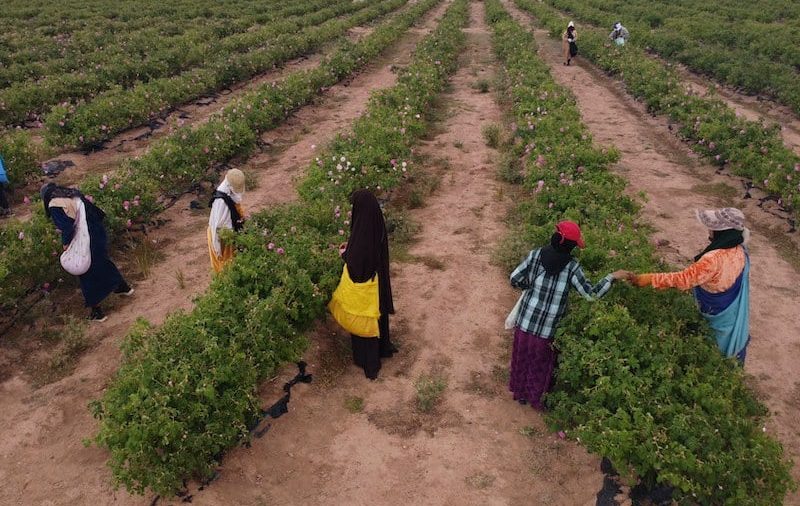
The job is simple but punishing. The women pluck rose after rose from the bushes, their fingers moving quickly despite the cuts and pricks from thorns. There’s no shelter in the fields, no gloves to protect their hands.
By midday, the spring sun is sharp and hot, but the work continues. “We keep bending, picking, bending, picking,” says Fatiha, 55. “It’s all under the sun, no shade, no cold water, and for what? A little money that doesn’t match the effort.”
Many of the women have little choice. Khadija, whose husband is ill and unable to work, says she wakes up every day to head back to the fields despite back pain that has worsened over the years.
“The pay is small, but it’s better than nothing,” she says.
Morocco’s rose products,perfumes, oils, and waters, fetch high prices on local and international markets. Yet the women behind the harvest see almost none of that profit.
“We watch trucks load up the roses, and later we hear about oils selling for hundreds of dirhams,” says Zineb. “We get 80 or 90 dirhams a day if we’re lucky.”
Rights advocates have long called out the imbalance. Mohamed Aabi, a local activist, notes that while rose oil is marketed as a luxury product, the women at the start of the chain have no health coverage, no legal protections, and no voice in shaping their working conditions.
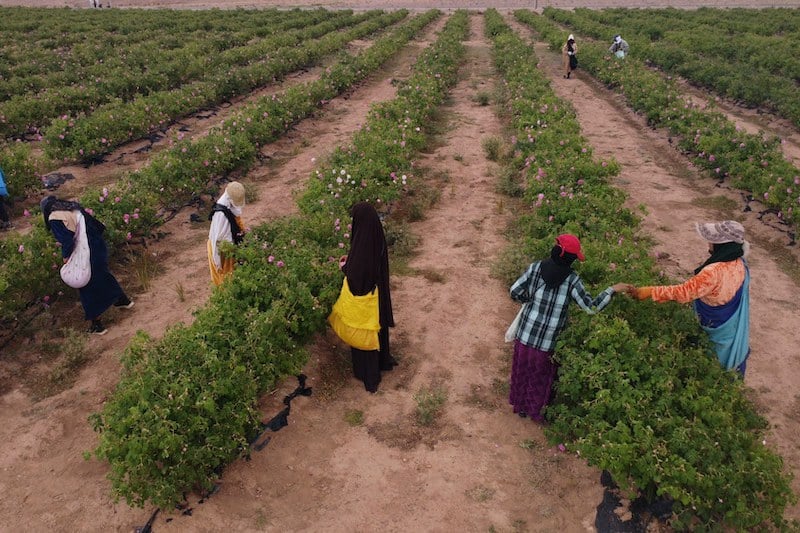
Even the famous Rose Festival, which showcases the beauty of the harvest and draws tourists and photographers, leaves the pickers invisible. “At the festival, they dress girls in traditional outfits and scatter roses over the crowds,” Zineb says.
“But no one thinks about us, the women who actually pick the flowers.”
One picker sums it up: “We wake before the sun, gathering roses with our hands. But the perfume and softness we harvest never belong to us. All we keep are the cuts and the tiredness.”
Calls are growing louder for change, cooperatives to organize the work, legal protections, fair wages, and basic health safeguards. “Every rose tells of their labor,” says community advocate Hamza Ait Ba. “It’s time to give these women their due.”





add your comment
Terms of publication : Not to offend the writer, people, sacred things, or attack religions or the divine self, and refrain from racist incitement and insults.