
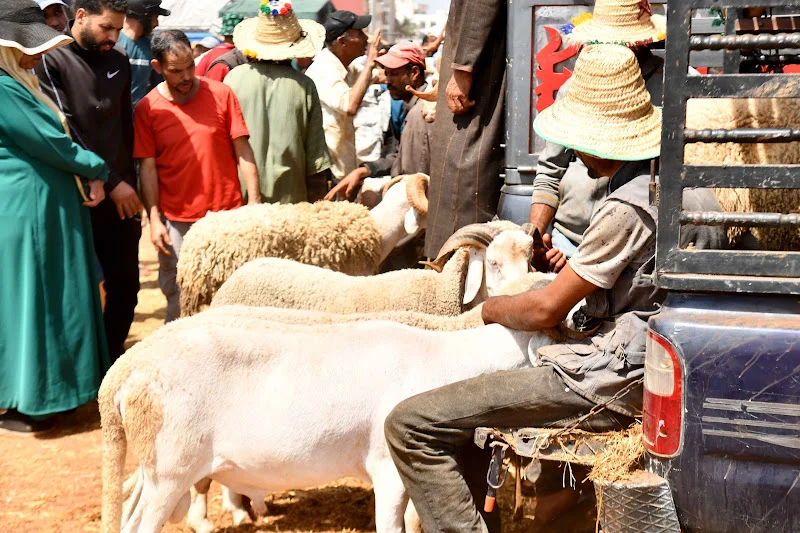
With the cancellation of this year’s Eid al-Adha sacrificial ritual in Morocco, sheep farmers are grappling with a severe financial crisis, marked by plunging prices, mounting debt, and uncertainty over long-promised government support.
Sources within the livestock sector say that, with the Eid approaching and no official market demand, many farmers are nearing default on loans they had taken out in anticipation of the holiday before the royal decree suspending sacrifices was issued.
“We’re reaching the debt repayment deadlines, and there’s no market to sell the animals we raised for the Eid,” said Allaa Echarif El Asri, a sheep farmer from the city of Ksar El Kebir. “Some sheep are now selling for as little as 1,000 dirhams — prices we’ve never seen before.”
According to El Asri, demand remains extremely low, even from slaughterhouses. Most purchases now are limited to family celebrations such as weddings or circumcision ceremonies. “We’re on the verge of bankruptcy,” he warned.
In the absence of immediate government intervention, El Asri and others are calling for the government to allow sheep exports as an emergency measure, arguing that domestic demand has all but disappeared.
However, not all industry professionals agree. Abdelrahmane Majdoubi, president of the National Association of Sheep and Goat Breeders (ANOC), said export would contradict the reasoning behind the royal directive — to protect the national flock and safeguard citizens’ purchasing power.
Majdoubi acknowledged the distress facing farmers and urged the government to accelerate the rollout of financial aid and support programs. “Since March rains, which provided temporary relief, it’s been nothing but hardship,” he said. “Without urgent support, many farmers will be forced to sell their breeding females to cover their losses — a move that would threaten the long-term viability of the livestock sector.”
The government has yet to provide clarity on whether support is forthcoming or if export channels might be considered. Meanwhile, Morocco’s livestock industry continues to suffer the compounded effects of canceled festivities, low consumer demand, and unpaid loans — raising concerns about the future of thousands of rural livelihoods.





add your comment
Terms of publication : Not to offend the writer, people, sacred things, or attack religions or the divine self, and refrain from racist incitement and insults.