
Construction of one of Morocco’s largest seawater desalination plants is progressing steadily, reaching 75% completion, with full operation expected by the end of 2025, according to official sources.
Located approximately 130 kilometers north of the city of Dakhla in the southern desert region, the project aims to produce 37 million cubic meters of water annually, with 30 million cubic meters allocated for agricultural irrigation across a newly developed 5,200-hectare zone. The remaining supply will provide drinking water to the city of Dakhla and service the new Atlantic Port.
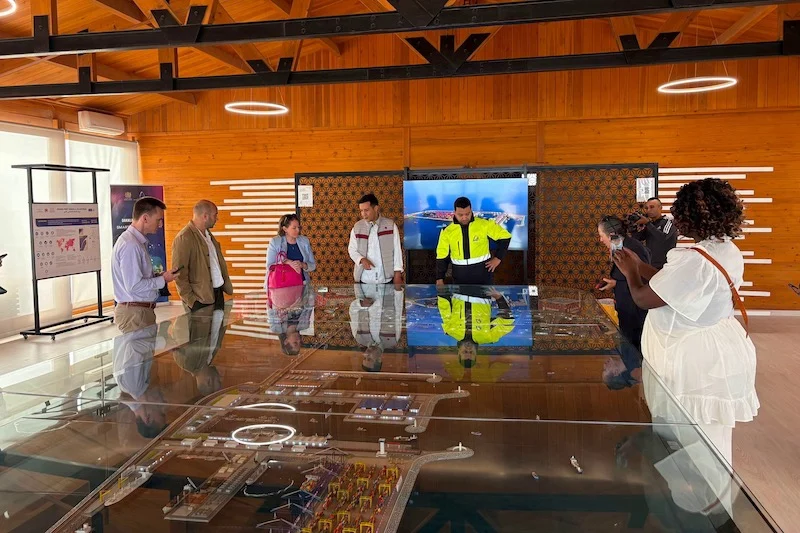
During a site visit on Friday, Agriculture Minister Ahmed Bouari told media outlets that the desalination plant, powered entirely by wind energy, is a key component of a national strategy to support sustainable agriculture and regional development.
“The irrigation project will allow for the production of over 500,000 tons of vegetables annually and is expected to generate more than 1 billion dirhams in added economic value each year,” Bouari said. “It will also create an estimated 25,000 permanent jobs.”
The energy component of the project, including the wind farm and turbine infrastructure, is now fully completed. The renewable power system will supply all electricity required for the desalination process, making it one of the first projects of its kind in the region to rely entirely on clean energy.
Khalid El Yaalaoui, regional director of agriculture in Dakhla–Oued Eddahab, described the initiative as “ambitious, innovative, and built on a strong public-private partnership.” He emphasized the project’s role in expanding agricultural production from the current 105,000 tons to nearly 600,000 tons by 2030.
The number of agricultural workdays in the region is projected to increase sixfold, from 2.5 million to around 15 million annually, thanks to the project’s contribution to job creation and economic stimulation.
The desalination facility employs reverse osmosis technology and includes marine intake structures, water conveyance systems, filtration units, mineral rebalancing stations, and storage tanks. The system also features an 87,000-cubic-meter irrigation reservoir, a 2,500-cubic-meter potable water reservoir, and a 60-megawatt wind farm to meet its energy needs.
Officials said that once operational, the plant will play a vital role in ensuring water security, supporting food production, and promoting economic resilience in southern Morocco.




add your comment
Terms of publication : Not to offend the writer, people, sacred things, or attack religions or the divine self, and refrain from racist incitement and insults.