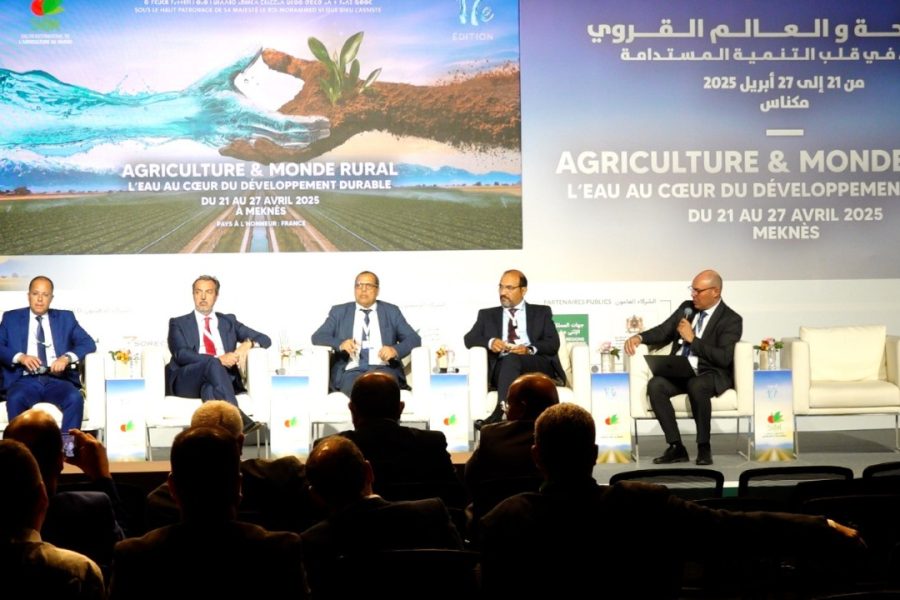
Morocco is stepping up efforts to secure its grain supply as climate change and global market instability threaten food systems worldwide. At the International Agricultural Show (SIAM) in Meknes on Thursday, government officials, researchers, and industry leaders outlined a sweeping set of reforms designed to future-proof the country’s cereal sector.
Bilal Hajjouji, Director of the National Interprofessional Office for Cereals and Legumes (ONICL), opened the conference by highlighting the government’s dual role in regulating and stabilizing domestic grain markets.
“Our mission is to ensure a steady, secure supply of cereals and legumes for the Moroccan people,” said Hajjouji. “Given how dependent we are on rainfall, Morocco must take a proactive stance.”
To mitigate volatility, Morocco has implemented reference prices for key grains, applies import duties during local harvests to protect domestic farmers, and tracks market data in real time to anticipate supply shocks. The country also maintains a strategic reserve and operates quality-control labs to monitor the safety and consistency of imported and locally produced grains.
Omar Yacoubi of the Cereal Professionals Federation (FRCL) stressed the urgency of bolstering resilience against a volatile global wheat market.
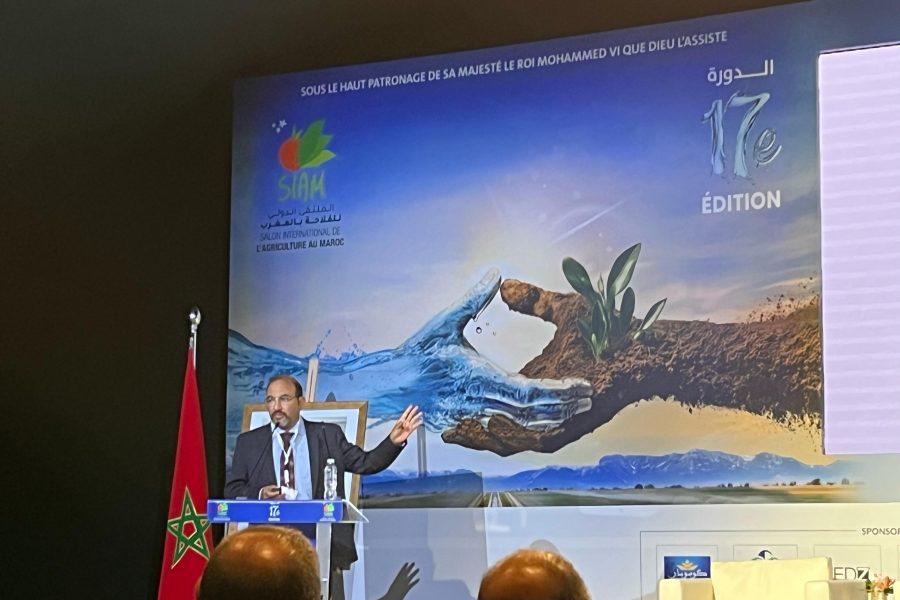
“Since 2008, we’ve faced recurring crises—from droughts in major exporting countries to geopolitical conflicts and extreme weather,” he said. “One delayed shipment can disrupt the entire chain.”
Yacoubi proposed a hybrid public-private grain stock system centered on local wheat. Under the plan, the government would guarantee a purchase price—such as 270 dirhams per quintal—and compensate private suppliers if global prices exceed that threshold. This approach would stabilize farmer incomes while keeping reserves available in emergencies.
He added that while storage and operations would remain in private hands, oversight would be state-led. “This model allows us to leverage private infrastructure while maintaining a national safety net.”
The conversation turned to research-led solutions, with Moha Ferrahi of the National Institute for Agronomic Research (INRA) detailing Morocco’s efforts to develop climate-resilient cereal varieties.
“We’ve released more than 120 new varieties, bred specifically to withstand drought and heat,” said Ferrahi. “Some can boost yields by up to 13% under extreme conditions.”
But Ferrahi noted that success depends on adoption. “We’ve got the science, but without farmers using these seeds, the benefits won’t scale.”
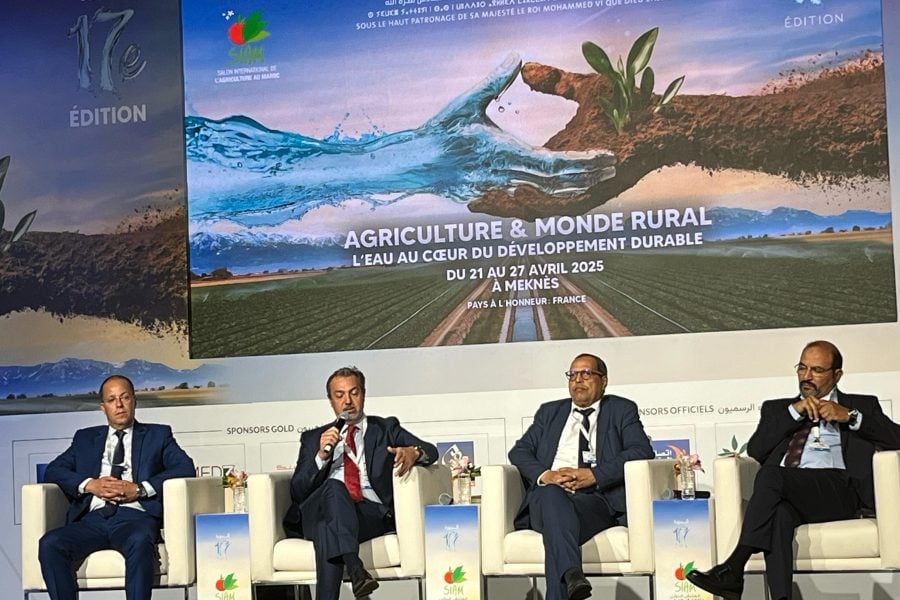
Rachid Moussadek, also from INRA, presented a nationwide push for “direct seeding,” a conservation agriculture technique that skips traditional plowing in favor of planting seeds directly into undisturbed soil.
“Direct seeding reduces erosion, saves water, and cuts fuel costs,” said Moussadek. “We’ve grown from 20,000 to 160,000 hectares under this system and are targeting one million.”
He emphasized that farmers using direct seeding during recent droughts outperformed those using conventional methods. Innovation hubs across the country are helping farmers and researchers collaborate to refine techniques on the ground.
The government is backing the transition with subsidies, access to new machinery, and a national labeling system that would distinguish crops grown through climate-smart methods.
“It’s not just about surviving climate shocks,” Moussadek said. “It’s about building a grain system that can thrive despite them.”
The strategies unveiled at SIAM reflect Morocco’s broader push to balance food sovereignty with global uncertainty, using innovation, investment, and collaboration to secure its agricultural future.



add your comment
Terms of publication : Not to offend the writer, people, sacred things, or attack religions or the divine self, and refrain from racist incitement and insults.