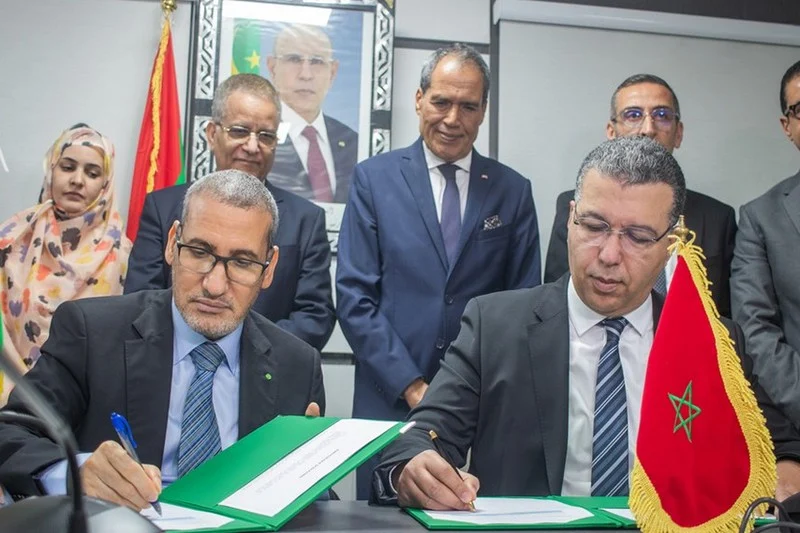
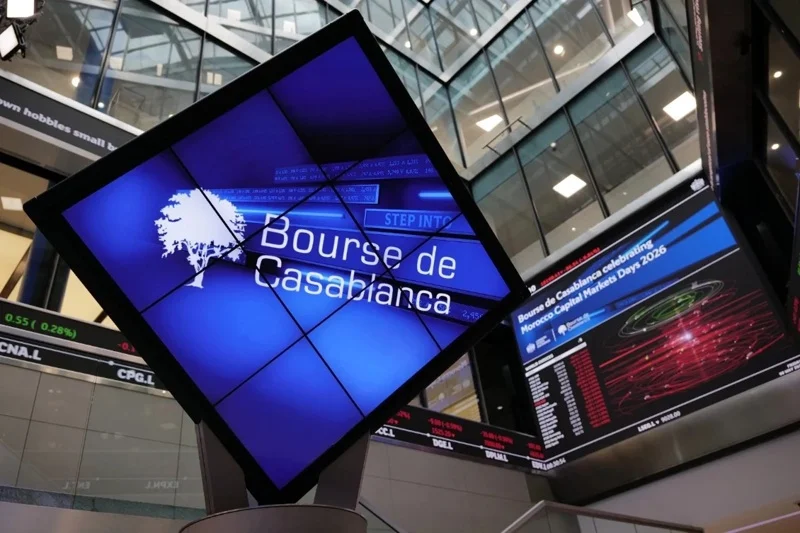
Morocco and Mauritania have taken a significant step toward strengthening bilateral cooperation in finance and business with the signing of a cooperation protocol between the Central Bank of Mauritania and the Casablanca Stock Exchange.
The agreement aims to support the creation of a modern, efficient financial market in Mauritania through the development of the country’s future stock exchange, “La Bourse de Nouakchott.”
According to details released about the initiative, this partnership reflects Mauritania’s commitment to modernizing its economic infrastructure, diversifying its sources of financing, and attracting foreign investment by building a transparent and internationally aligned financial market.
Under the protocol, the Casablanca Stock Exchange will accompany the Central Bank of Mauritania through all phases of the project, providing technical, operational, and strategic support to help lay a solid and sustainable foundation for the Nouakchott stock market. The ultimate goal is to create a developed and inclusive financial market that supports the aspirations of Mauritania’s national economy.
Moroccan economic experts view this move as a strong signal of Nouakchott’s intention to benefit from Morocco’s long-standing financial expertise. They point to the historical depth and accumulated experience of the Casablanca Stock Exchange, particularly in privatization and corporate financing, as a valuable asset for Mauritania.
Khalid Hommas, economics professor at Mohammed V University in Rabat, emphasized that Mauritania’s decision carries historical significance, noting that the Casablanca Stock Exchange has nearly a century of experience and was modernized in 1993. It currently ranks among the top African exchanges.
Hommas added that Morocco’s experience will promote transparency in Mauritania’s economy and open new financing avenues for its companies. He also noted that Moroccan investors already active in Mauritania will be able to list their companies on the Nouakchott exchange, facilitating smoother capital access.
He pointed out that shared linguistic and institutional frameworks—rooted in both countries’ Francophone ties—also played a role in Mauritania’s choice of Morocco as a strategic partner.
The Casablanca exchange’s support for Morocco’s own privatization initiatives was also cited as a model, especially for countries like Mauritania seeking to pursue similar reforms.
Rachid Sari, economist and president of the African Center for Strategic and Digital Studies, said the Casablanca exchange’s nearly 100-year legacy makes it a key player in regional finance. He emphasized that Mauritania’s decision stems from expanding trade and economic ties between the two countries, particularly in finance and banking.
Sari added that Mauritania’s plans for a financial market come amid robust economic growth. The International Monetary Fund projects Mauritania’s economy will grow by over 14 percent this year—the highest rate in the region.
He also pointed to recent developments in the country’s gas sector, especially with joint fields shared with Senegal. These promising projects require a strong financial infrastructure and global investment, which in turn demand greater transparency and integration into formal financial markets.
Rabat, the report concludes, remains committed to supporting Nouakchott in achieving its economic vision and deepening regional cooperation with neighboring nations.







add your comment
Terms of publication : Not to offend the writer, people, sacred things, or attack religions or the divine self, and refrain from racist incitement and insults.