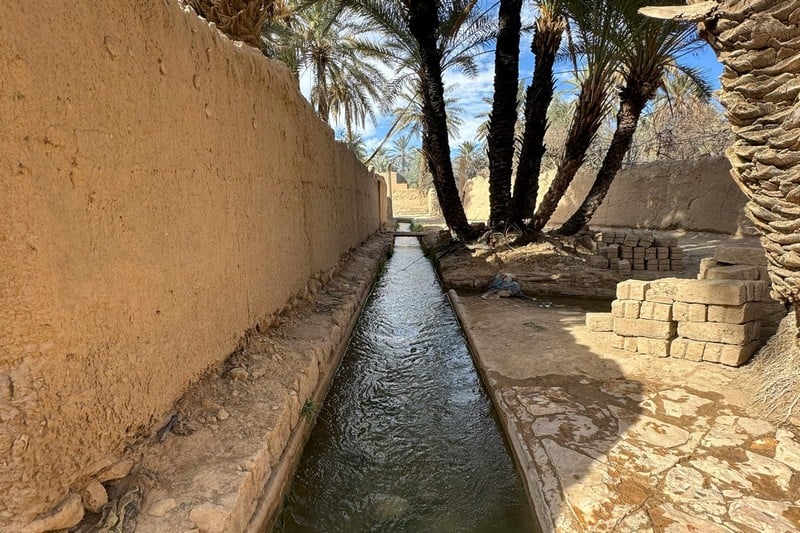
A recent study by the Arab Democratic Center and Hodeidah University has unveiled the complexities of water management and distribution in Figuig, describing it as one of the most intricate systems in the region.
Recognized in 2022 by the Food and Agriculture Organisation (FAO) as global agricultural heritage, Figuig’s irrigation network is “notably more sophisticated than those found in much of North Africa,” according to the study.
This sophistication stems from generations of local knowledge in managing scarce water resources through refined traditional methods of distribution and conservation.
Unlike Algeria’s system, Figuig’s relies on time-based measurements rather than volume, and is complex due to historical management, advanced distribution techniques for underground sources, and its strategic role in supplying water to each palace for agriculture.
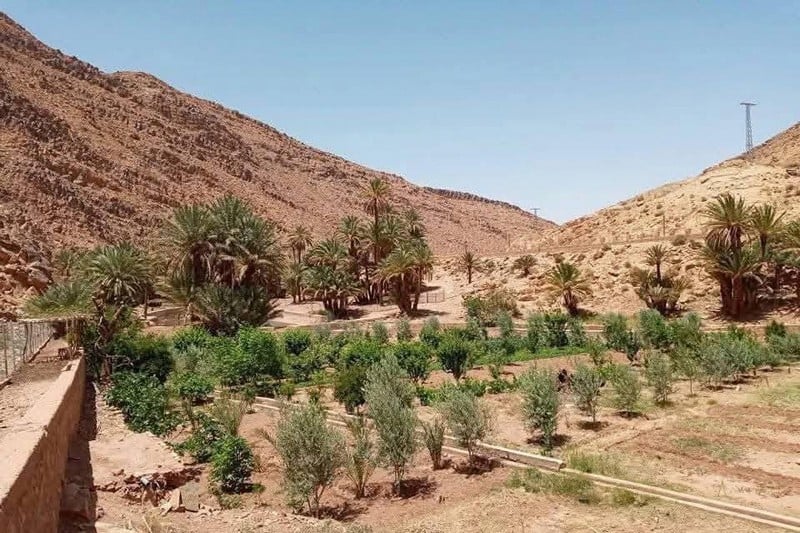
Water emerges from underground springs, expertly tapped using the ancient and complex foggara – a technique for capturing it for irrigation, dating back thousands of years. This oasis thrives thanks to its groundwater and springs, a resource naturally refilling with about 13 million cubic meters yearly across an area of 2,778 square kilometers.
Figuig’s ancient water management system also relies heavily on its 32 khettaras–vital, hand-dug underground channels crucial for distributing scarce water across the oasis.
While these ingenious systems have sustained the region for generations, “some of these channels now face neglect and overuse,” lowering groundwater and making the traditional system no longer work.
The study also reveals that one of these khettaras (channels) was dug over 300 years ago, irrigating vast lands with water rights divided into 1920 shares across 4 channels, alongside a stark decline in the spring’s flow from 88 liters/second in 1987 to 20 liters/second due to unsustainable exploitation evidenced by 300 pumps by 2006.
Constructing these channels required decades of manual labor to create 6-10 meter deep, 0.5-1.5 meter wide tunnels, noted the study.
Surface channels (swaqis) later improved irrigation and reduced disputes between families, but spring output has recently declined due to drought and climate change.
The system also involves underground corridors delivering water to gardens and homes, sourced from Figuig’s aquifer (4.4 Million Cubic Meters), Tserfine–El Arja, an extension of the Figuig Oasis (3.6 Million Cubic Meters), and deeper aquifers (11.5 Million Cubic Meters).
The groundwater is moved from sources through underground tunnels cut into rock–the khettaras. Experts note that this water provision system evolved over centuries, with gradual improvements to the traditional irrigation network.
These enhancements included using cement to line channels and surface waterways, a measure designed to prevent water loss through leakage and evaporation.
As to surface water, it flows into surface channels for immediate irrigation or storage in reservoirs for later use, giving farmers flexibility even when flow stops— a key advantage of Figuig’s irrigation system.




add your comment
Terms of publication : Not to offend the writer, people, sacred things, or attack religions or the divine self, and refrain from racist incitement and insults.