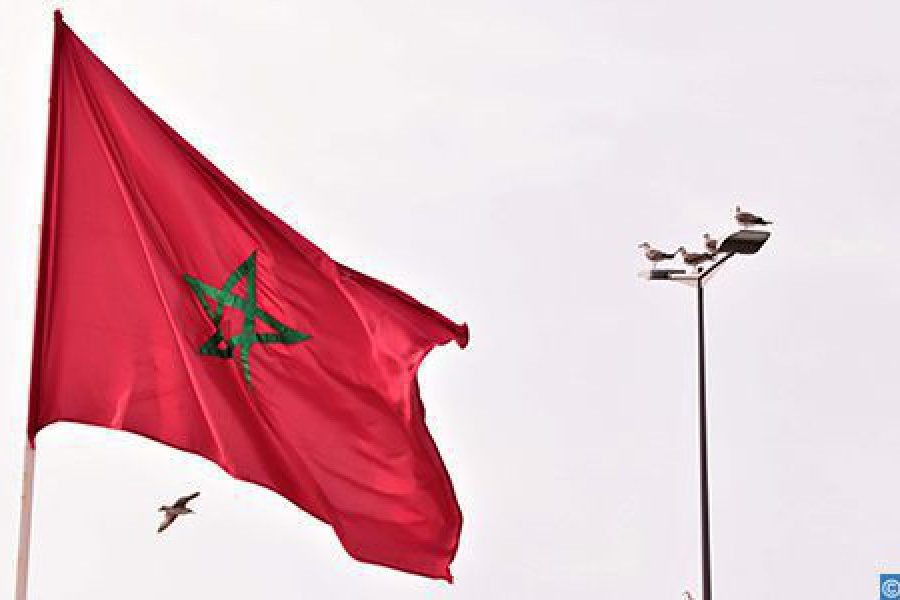
In his speech on the occasion of the 45th anniversary of the Green March, HM King Mohammed VI “focused on the geopolitical issues” of the Moroccan Sahara, said French academic Christophe Boutin, Program Director of the Observatory of Geopolitical Studies (OEG) in Paris.
The first issue is security-related because the area “is still disputed by separatist elements based on Algerian territory,” wrote Boutin on French site Theatrum belli.
Morocco “believes that it is in the context of a multiparty negotiation, also involving the two neighboring states, Mauritania, and especially Algeria, which is particularly implicated in supporting the Polisario, that a solution can emerge,” he noted.
This negotiation, as recalled by the Sovereign, “is intended to take place within the UN framework and to be based on the Moroccan autonomy initiative, a plan of autonomy that would offer these provinces, under the Kingdom, a real consideration for their specificities and means to keep their identity alive within the framework of decentralization,” the expert underlined.
Recalling that this approach was several times described in UN diplomatic documents as “realistic”, Boutin noted that HM the King has deplored certain actions of the Polisario which, for years now, has multiplied provocations in the demilitarized zone between the defense wall and the borders of neighboring states, Mauritania or Algeria, in order to exist on the international scene and retain the few mentors it still has.
For some years now, the Polisario Front has been regularly carrying out blockades in the area between the Moroccan border post of Guerguerat and the Mauritanian border, subjecting vehicles using the road linking Morocco and Mauritania to controls “which are not necessary – even temporarily prohibiting the passage,” he pointed out.
“The Moroccan Sovereign has always refused to respond to such provocations, which have been condemned by the international community, and the only action of the Royal Armed Forces on this crossing in recent years has been to try to improve the road network and remove the carcasses of abandoned vehicles used for various traffic,” Boutin noted, adding that HM the King recalled in his latest speech that it was up to the UN forces present in the area to enforce the ceasefire agreement and intervene to restore order.
While the Sahel is, as we know, an area where trafficking of all kinds and terrorism are mixed, one can be pleased to see its Atlantic coast effectively controlled by Morocco,” said the French expert, who believes that “forbidding the continuation of provocations, which only lead to instability, should be a priority, not only for the UN peacekeeping forces, but also for all the states in the region and all those who have an interest in the region’s stability”.
The second “important point” of the royal speech concerns taking into account the maritime dimension of the south of the Atlantic coast of the Kingdom,” where Morocco plans to create a hub port that will be equivalent to the one set up on the Mediterranean coast, Tangier-Med.
“Bringing clear solutions for the stability and development of a particularly sensitive area, the latest speech of the Moroccan Sovereign – which takes stock of several years of Moroccan Sahara policy and opens up prospects for the future- is that of a long-standing and reliable partner in security matters, and of a Head of State who intends to give every chance to negotiation and dialogue,” he said.
In 2020, such approaches are more than ever needed in a world where conflicts and risks are multiplying,” the expert concluded.


add your comment
Terms of publication : Not to offend the writer, people, sacred things, or attack religions or the divine self, and refrain from racist incitement and insults.