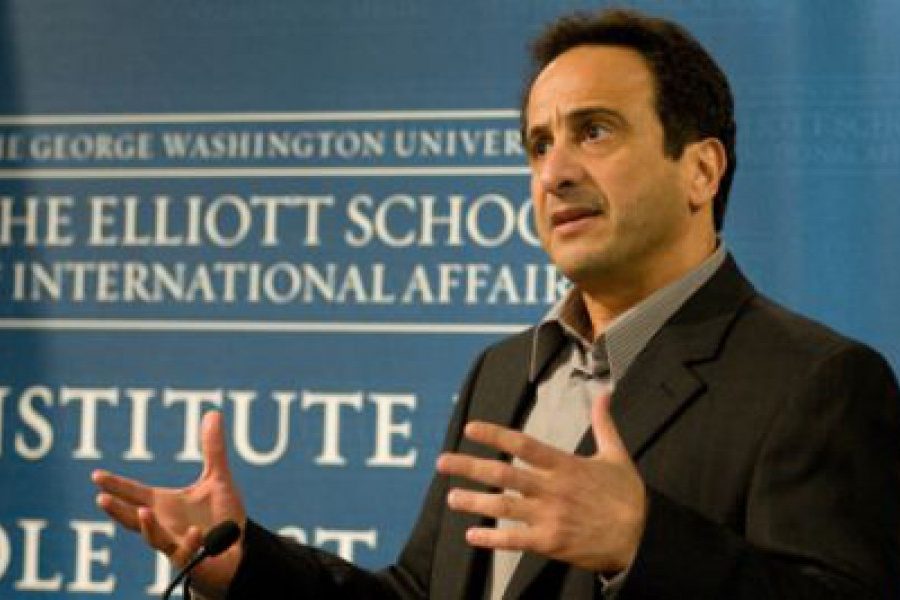
The Moroccan-American academic and vice-president for global affairs at the American University of New England (UNE) Anouar Majid discussed, in an interview with MAP, the latest developments in the Moroccan Sahara issue as well as the content of the Royal speech on the occasion of the 45th anniversary of the Green March.
Majid, who is also director of the Tangier Campus of the University of New England and author of several books in politics and history, underlined that Morocco has made the Sahara a real model of development, and a catalyst for regional and continental integration. He also noted the need for a full and serious involvement of Algeria, as recalled by the UN Security Council once again, in order to speed up the final settlement of the artificial dispute over the Sahara.
– Over the past 45 years, the Moroccan Sahara has undergone significant transformation and development which have made this part of the Kingdom a prosperous and fully integrated regional hub. What is your assessment of these advances?
I do not know of any country in the world which has invested as much in its liberated provinces as Morocco has done in its Sahara. It has always been obvious that for Morocco, the recovery of the Sahara is a question of national sovereignty and territorial integrity.
New roads, schools, ports and airports have connected the Sahara region to the rest of the country, making it an integral part of Morocco’s social and economic fabric.
– In the Royal Speech of the Green March, HM King Mohammed VI expressed the commitment to make the Sahara an engine of economic growth at the regional and continental levels, by highlighting in particular the enormous maritime potential of the region. What is your reaction to this announcement?
The decision to transform the southern provinces of Morocco into a major maritime hub with the construction of the Dakhla Atlantic port, which will be similar to that of Tangier-Med, is really genius. For 45 years, that is to say since the Kingdom’s recovery in 1975 of its southern provinces, Morocco has not ceased to invest in its Sahara, making the process of integrating this region into the mother country a unique model in the world in terms of socio-economic development.
The recovery of the Sahara was the catalyst for a national strategy of governance and autonomous economic development, and the determination of His Majesty the King to promote the sea resources of the region, whether in the field of fishing or in the dynamic transportation sector, can only give the Sahara region a huge boost and transform it – like the city and the region of Tangier – into one of the main economic hubs of the country.
– HM the King also underlined that the autonomy plan is the only normal course of action for the resolution of the regional dispute over the Sahara. What is your point of view, especially since the UN and the international community have definitely buried the idea of a referendum?
For several years now, HM the King has been promoting autonomy in the Sahara within the framework of advanced regionalization in Morocco, and it is time for the government and local authorities to fully put this plan in motion. Autonomy is the only way that allows the inhabitants of the Sahara to manage their local affairs and to invest freely in their community.
Talking about a referendum in the Sahara now, especially in light of the international community’s recognition of Morocco’s sovereignty over its southern provinces, is a dangerous illusion. This kind of demand simply prolongs unnecessary tensions that lead nowhere.
The Sahara region and its inhabitants have everything to gain by being a dynamic economy and a gateway to the rest of Africa. Anyone who truly cares about the Sahara and its inhabitants must adhere to the Royal Initiative immediately. Because too much time has already been wasted.
– Fifteen African countries, in addition to the United Arab Emirates, have inaugurated consulates in the cities of Laâyoune and Dakhla. How do you assess such support?
The African and Arab countries which have opened consulates in the Moroccan Sahara are not only taking a strong diplomatic position, but they are also acting wisely. Because the Moroccan Sahara borders an unstable region, that elements of Al-Qaeda, IS and other terrorist organizations have infiltrated. It will take a lot of concerted effort and cooperation between the countries of the region and Morocco, as well as France and the United States, to keep these evil forces at bay and protect trade routes that are very important for the livelihood of people in the region.
Morocco has proven its prowess in security and the fight against extremism, and its experience in this area could be of great benefit to its neighbors and, indeed, to the whole African continent.
We should bear in mind that Morocco is investing heavily in Africa and has developed strong economic ties with many other African countries. The Kingdom’s partners know that a unified and stable Morocco is essential for the stability of the region and for development throughout Africa and the Arab world.
– In its latest resolution on the Sahara, the UN Security Council once again emphasized the need for all parties concerned, including Algeria, to participate fully and seriously in the political process. How do you read this new approach to Algiers?
Algeria could easily play a key role in resolving the dispute over the Moroccan Sahara. This neighboring country could stop giving refuge to the separatists, stop supporting them and help negotiate their integration into the mother country, Morocco.
A resolution of this conflict is in the best long-term interest of both brotherly countries. As it stands, the conflict is blocking the emergence of a solid partnership that could promote their common future and make the Maghreb one of the strongest economic and political unions in Africa, the Mediterranean and the Arab world.



add your comment
Terms of publication : Not to offend the writer, people, sacred things, or attack religions or the divine self, and refrain from racist incitement and insults.