
Morocco has recently witnessed a frenzied media campaign targeting its sovereign institutions and seeking to undermine its national achievements through spreading rumors and falsifying facts. Some are trying to trivialize the achievements made and undermine the trust between the State and the citizens, in order to create a state of social anxiety and sow doubts about the country’s stability.
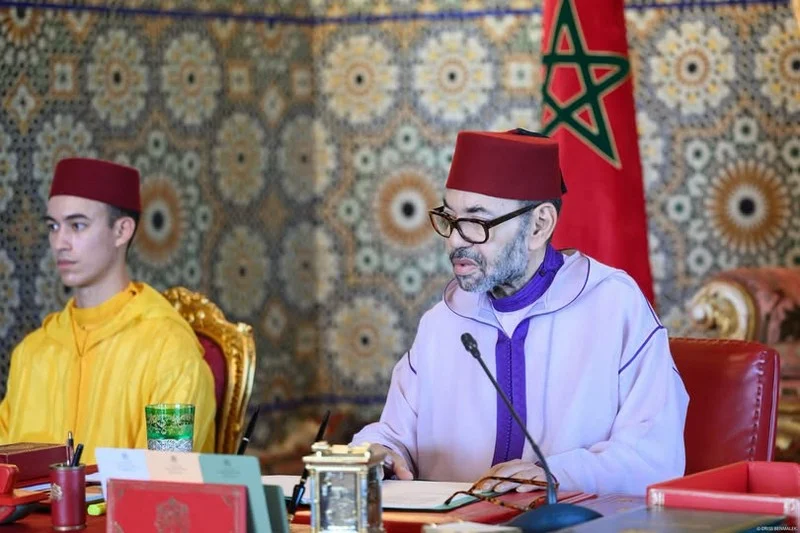
These campaigns, which are not without political backgrounds and clear agendas, have gone as far as targeting the royal institution by spreading falsehoods about King Mohammed VI’s health and questioning the stability of the security situation in the country.
In the midst of this hostile campaign, two highly significant royal initiatives came, reflecting King Mohammed VI’s proactive vision and his ability to extrapolate the national situation and respond directly to its challenges.
The first initiative was the royal message read out by the Minister of Endowments and Islamic Affairs calling on Moroccans not to perform the ritual slaughter of the Eid sacrifice this year. This initiative reflects the proactive nature of the royal institution and its ability to listen to the concerns of citizens, especially in light of the current social crisis. This decision, based on the objectives of the Islamic religion and the jurisprudence of necessity, reflects the humanitarian and social sense of the Royal Institution, which places the concerns of citizens at the centre of its duties, and aims to protect Moroccan families from the costs of Eid in a difficult and sensitive economic situation, and to protect Moroccan religious identity from external influences that may seek to impose jurisprudential interpretations that are far removed from the Moroccan context.
This approach also confirms the religious independence of our country, since Moroccans do not need to import fatwas from outside their legal and cultural context, but have a reference point rooted in the ‘’Maliki doctrine’’ of thought that takes into account their situation and respects their specificities.
The second initiative relates to the Royal Court’s statement on the health of His Majesty the King, which transparently revealed the details of the King’s ongoing medical rehabilitation sessions and their impact on his agenda during the month of Ramadan. This step, unprecedented in many monarchies, reaffirms the Royal Institution’s commitment to open communication with citizens, which strengthens the level of trust between the people and the King, cuts off the avenue for spreading false rumors and fake news, and closes the door to malicious interpretations that seek to exploit any information gap to sow doubt and discord.
In the face of these hostile campaigns, a key question is the position of the Moroccan elite, which should be the first line of defense for the country’s institutions and constants. However, we note with great regret a dramatic contrast in the elite’s response to these challenges: There are those who remain silent as if what is happening does not concern them, those who underestimate the seriousness of the situation, and those who have sunk into selfishness, preoccupied with their own interests within the institutions, without caring about the consequences of this campaign on the stability of the country.
This situation raises more than one question mark about the real role of the elite in defending national constants and countering all attempts to disrupt the country’s stability.
For its part, the public media has not risen to the occasion, as it has not taken the initiative to create a real public debate on these challenges, despite the fact that it is funded by public money. On the other hand, the virtual space is turning into an unequal media war zone, where the lack of legal frameworks is exploited to spread hate speech and defamation, without distinguishing between freedom of expression and political and media blackmail.
Today, social media has turned into a vast space and a major arena for spreading fake news and malicious allegations, which raises the necessity to reconsider the laws regulating this space, so that a clear distinction is made between freedom of expression, media blackmail, and incitement to chaos.
It is no secret that some parties, whether inside or outside Morocco, employ the technique of black propaganda by spreading rumors as a tool to undermine stability by spreading lies about the king’s health and claiming that there are threats to the country’s security and stability, allegations that exist only in their imaginations. These tactics are not new. They have been used in previous occasions, but Moroccans have proven time and again that they are too aware to fall victim to such overt maneuvers.
The Royal Court has always followed a transparent approach to major issues, which makes these campaigns lose their credibility quickly, but their danger lies in their ability to create a climate of tension, sway public opinion, and the wide spread of social media sites. Here, the pivotal role of political, media and cultural elites emerges, who must fill the vacuum and counter these attacks by defending the country’s image against waves of distortion and misinformation.
Targeting the royal institution is not just targeting the person of the king, but an attempt to hit one of the pillars of stability in Morocco and weaken the trust that Moroccans have in their institutions.
What is certain is that such campaigns will not succeed in achieving their goals, because the relationship between the king and the people is rooted in history, based on cohesion and popular legitimacy, and is stronger than any tendentious campaigns.
However, we believe that the responsibility lies not only on the state, but on all national actors, including politicians, media and intellectuals, who should be involved in the battle for the defense of the homeland.
It is also a media battle that requires a strong presence in the public sphere, a clear strategy to confront fake news, and the consolidation of a collective awareness of the importance of stability as a common national gain.
Thanks to its strong institutions and social awareness, Morocco will be able to overcome these campaigns, as it has done in the past. Only the truth can destroy all lies, and true patriotism is stronger than any misleading propaganda.



add your comment
Terms of publication : Not to offend the writer, people, sacred things, or attack religions or the divine self, and refrain from racist incitement and insults.