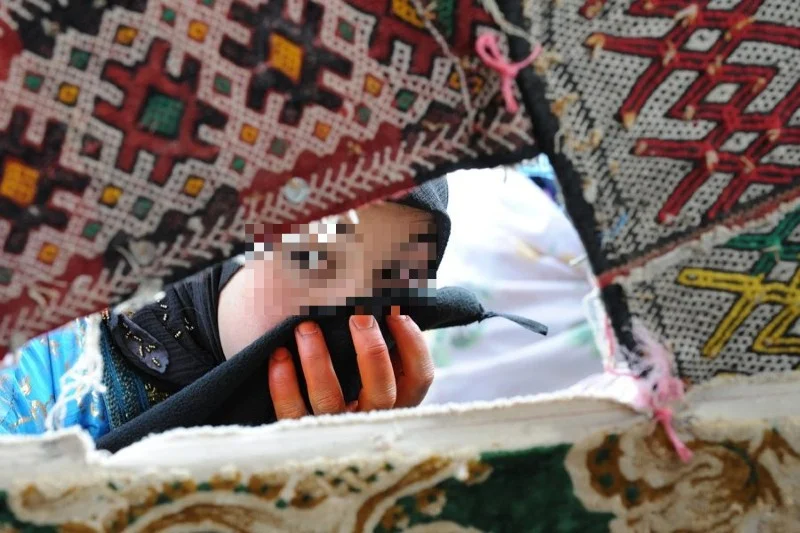
A recent field study has revealed striking findings about early marriage in Morocco, highlighting how traditional norms and economic factors contribute to the practice, particularly in rural areas.
Published in the African Studies and Nile Basin Journal by the Arab Democratic Center, the study states that 63% of mothers who arranged their daughters’ early marriages were themselves married at 15 years old, while 11% became grandmothers by the age of 34.
The research, conducted by Fatima Zahra El Khalouki, Hoda Kastal, and Ibrahim Hamdawi, underscores that poverty and limited education are major drivers of early marriage, with 77.8% of child brides having only primary-level education.
Key Factors Behind Early Marriage
The study finds that early marriage is closely linked to leaving school, with 22.2% of respondents marrying after dropping out. Education often serves as a protective factor against child marriage, and when young girls leave school, they are more likely to be encouraged or pressured into marriage.
Another significant factor is the desire for stability, as 38.8% of child brides cited marriage as a means to achieve security and fulfill social expectations. Many of these girls view marriage as a necessary step toward adulthood, believing that their true home is with a husband rather than their parents.
For 16.7% of respondents, marriage represents a path to independence and personal freedom. Some young girls see it as an escape from restrictive family environments, perceiving married life as a way to gain more control over their own decisions.
Additionally, the fear of remaining unmarried, often tied to cultural expectations, continues to play a role in early marriage. In many rural communities, the stigma associated with being an unmarried woman, or the fear of “spinsterhood,” leads families to encourage their daughters to marry at a young age.
Role of Technology in Changing Marriage Norms
The study also highlights a cultural shift in rural Morocco, where 16.7% of child marriages originated from online interactions via social media. This reflects a decline in traditional matchmaking and a growing freedom of choice for young girls.
The study, which focused on Rehamna province, concludes that early marriage remains deeply rooted in rural communities, driven by cultural traditions, economic hardship, and evolving social norms.







add your comment
Terms of publication : Not to offend the writer, people, sacred things, or attack religions or the divine self, and refrain from racist incitement and insults.