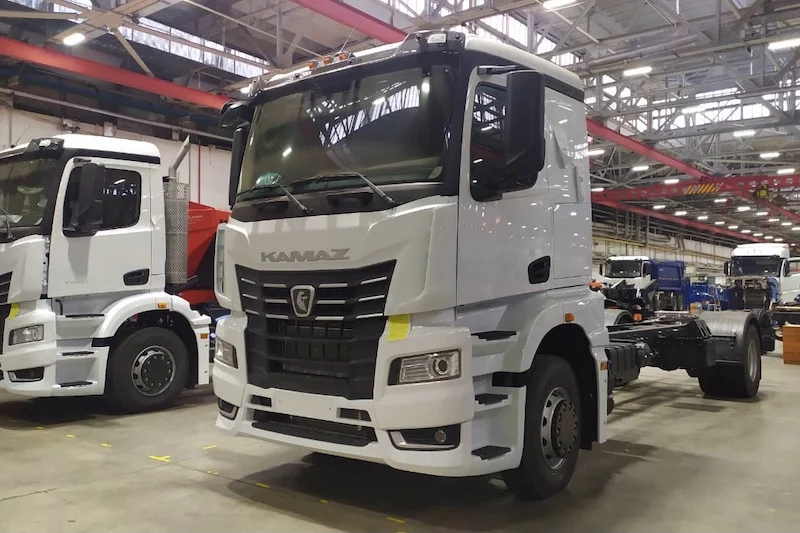
Russian truck manufacturer Kamaz has expressed a strong interest in entering the Moroccan market as part of its strategy to expand into African markets. According to the Russian news agency TASS, the company is actively working on establishing a presence in Morocco, a country that has become increasingly attractive to global automotive players.
The Russian newspaper Izvestia has also highlighted the growing popularity of Russian-made vehicles in Morocco, emphasizing Kamaz’s interest in exporting trucks and buses to the North African nation. Official data shows that in 2018 alone, Morocco imported more than 1,000 Russian vehicles.
Other major Russian automotive companies, such as GAZ, which is promoting commercial light vehicles through a local distributor, and AvtoVAZ, which is also seeking expansion in Africa, are similarly interested in penetrating the Moroccan market.
Economic analyst Rachid Sari believes that Morocco’s growing appeal to international car and truck manufacturers stems from several factors.
The country’s strategic trade location provides access to both European and African markets, making it an ideal hub for production and exports. Additionally, Morocco boasts a skilled workforce and strong industrial infrastructure, along with a business-friendly environment that encourages foreign investment, particularly in the automotive sector.
He noted that Russian manufacturers have already engaged in negotiations with Moroccan authorities to facilitate their market entry, particularly Kamaz, which has ambitious investment plans. However, some details still need to be finalized, including the type of vehicles that will be manufactured or assembled locally.
One of the major challenges for Russian automotive firms is their continued reliance on traditional fossil fuel-based vehicle production, while Morocco is actively transitioning toward renewable energy and electric vehicle (EV) production. The country has already launched multiple projects in the EV supply chain, including battery production, reinforcing its position as a leader in sustainable mobility. This shift could create obstacles for Russian companies looking to enter a market increasingly focused on green energy solutions.
Another key issue in negotiations is the currency for trade transactions. With Russia seeking to promote trade in local currencies instead of the US dollar, finding a suitable payment mechanism remains a significant factor in finalizing agreements.
Sari pointed out that the prolonged negotiations between Moroccan and Russian officials suggest that both sides are still working out key details.
This could indicate that Morocco has set specific conditions for entry into its market or that Russia is requesting additional trade facilitation measures. The final outcome of these discussions will determine the future of Russian vehicle exports and the potential for manufacturing partnerships in Morocco.






add your comment
Terms of publication : Not to offend the writer, people, sacred things, or attack religions or the divine self, and refrain from racist incitement and insults.