Morocco’s diplomatic strategy has evolved significantly in recent years, especially in its relations with France, Algeria, and its broader geopolitical ambitions. While Morocco and France have long shared close ties rooted in colonial history, the dynamics are changing.
Shifting Geopolitics that Led France to Renew Ties with Morocco
On January 13, 2025, during a news broadcast titled “France-Algérie: vers la rupture?” [France – Algeria: Towards Break-Up?] on French news channel France 24, French journalist and African studies expert Antoine Glaser argued — in a tone clearly critical of Morocco and supportive of Algeria — that France’s shift in position on Moroccan sovereignty over the Sahara occurred because French President Emmanuel Macron “noticed that Spain and Germany were now doing business with Morocco after recognizing its sovereignty over the Sahara,” while France was excluded.
Glaser explained that, after France’s expulsion from the Sahel and Algeria’s deteriorating relations with Mali, Macron turned to Morocco to explore business opportunities and reposition France geopolitically in Africa. He rightly noted that France no longer relies on Algeria for security cooperation in the Sahel, as Algeria’s support for Tuareg rebels has strained its relationship with Mali’s new leadership. Therefore, Macron sought to restore France’s influence in the region by aligning with Morocco. Glaser emphasized that Morocco is now offering an Atlantic route to the very countries that had previously expelled French forces.
Sahara as a Geostrategic Issue
In the same roundtable discussion, the French journalist concluded that the ongoing tension between France and Algeria is not primarily about bilateral matters. Instead, he highlighted that the core issue driving the discord is the Sahara. As he put it, “The elephant in the room is the Sahara.” He stressed that the Sahara is the key geostrategic issue in the region, with the potential to reshape the geopolitics of North Africa. Glaser also rightly pointed out that the Moroccans, prioritizing their own interests, would not place France’s agenda in Africa above their own. Despite his unjustified critical tone toward Morocco, one cannot deny the French journalist’s merit in offering an excellent analysis of the shifting geopolitical dynamics in the region, particularly the complex relationships between Algeria, France, and Morocco.
Morocco’s Push for Tangible Support
France’s shift became even more evident in October 2024 during Macron’s state visit to Morocco. During his address to the Moroccan Parliament, Macron delivered a powerful message of support for Morocco’s sovereignty over the Sahara, stating unequivocally: “For France, this territory’s [the Sahara] present and future fall under Morocco’s sovereignty.” This was a clear reiteration of the language used in his letter to his Majesty King Mohammed VI on July 30, 2024.
Macron’s speech marked a turning point in French-Moroccan relations, with Moroccan lawmakers giving him a standing ovation. The applause was not only for the symbolic backing of Morocco’s position but also for Macron’s commitment to tangible support—pledging investments, sustainable initiatives for the region’s development, and backing Morocco’s autonomy plan for the Sahara in international forums.
Macron pledged that French companies would support the region’s development and emphasized sustainable projects that could benefit local populations. This approach marked a pragmatic shift in France’s policy, showcasing its commitment to Morocco not just as a historical partner, but as a key player in Africa’s future. The agreements signed during this visit were worth up to €10 billion, covering a range of investment and economic partnerships, underscoring the growing importance of Morocco as a regional power.
Strengthening Ties with the US and Israel
Morocco’s renewed relationship with France, following a period of tension, has been forged on new terms. Morocco has emphasized a win-win approach and the diversification of its partnerships. This shift away from a French-dominated sphere of influence is reflected in Morocco’s growing ties with other global powers. Notably, Morocco has increasingly sought support from the U.S. and Israel on the Sahara issue. In December 2020, the United States officially recognized Morocco’s sovereignty over the Sahara, a decision that reverberated throughout the region. This recognition was followed by the resumption of diplomatic relations between Morocco and Israel, with Israel offering military support, advanced technology, and agricultural innovations—all critical to Morocco’s long-term strategy.
Engaging with Other Global Powers
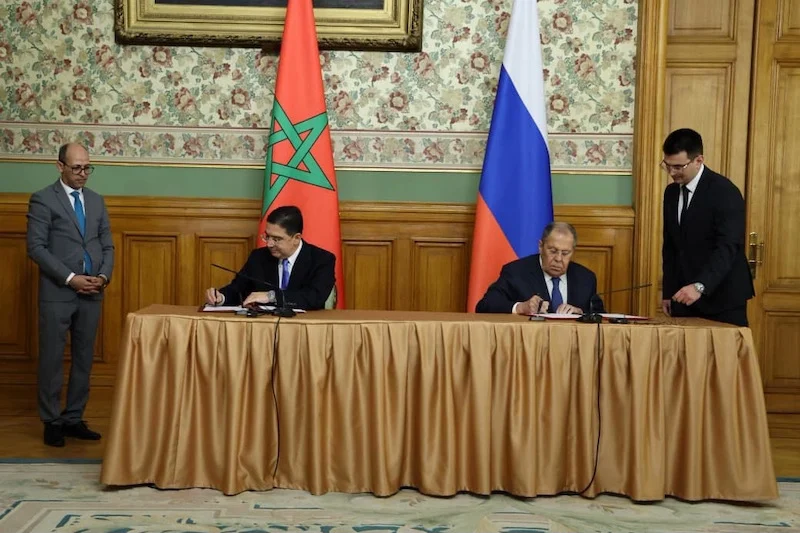
Morocco’s foreign policy diversification did not stop there. The kingdom has strengthened its ties with China and Russia, both of which have strategic interests in Africa. These new relationships reflect Morocco’s broader ambition to not rely solely on traditional Western allies. For instance, China’s Belt and Road Initiative has opened up avenues for economic collaboration, while Russia has become a key strategic partner since the king’s rare visit to Moscow in 2016. This growing partnership with both Russia and China underscores Morocco’s commitment to maintaining strong ties with all five permanent members of the UN Security Council, a crucial factor in securing favorable resolutions in the ongoing Sahara dispute.
Enhancing Partnerships in the Middle East and Reinforcing Leadership Role in North Africa
On another front, the kingdom’s growing partnerships with countries like Saudi Arabia and the UAE further illustrate Morocco’s ability to adapt to the changing geopolitical landscape of the Middle East. These relationships, once seen as dominated by royal family ties, have matured into more pragmatic and economically beneficial collaborations.
In North Africa, Morocco has positioned itself as a trustworthy and reliable leader. Morocco played a central role in the Libyan peace process, engaging with both the East and West factions of the country and successfully brokering discussions that led to a ceasefire. This diplomatic success was a clear demonstration of Morocco’s growing regional influence.
Economic Transformations: Strengthening Infrastructure and Diversifying Partnerships in Africa
Internally, Morocco’s economic landscape has undergone transformative change. Under King Mohammed VI, Morocco has focused on modernization and diversification. The country has invested heavily in infrastructure, such as high-speed rail networks, new ports, and airports, positioning itself as a critical hub in the African and Mediterranean trade routes. This infrastructural development, combined with a booming tourism sector, has attracted foreign investors looking to tap into the region’s vast potential.
Morocco’s economic diversification has extended to the financial sector as well. On January 6, 2025, Le Figaro highlighted what it calls “le Wall Street marocain” (the Moroccan Wall Street), describing Casablanca as a key financial hub for the African continent: [“A natural entry point for international businesses”]. The city has become a strategic destination for international banks and firms looking to expand in Africa.
The kingdom has taken a proactive approach in expanding its markets across the continent, particularly in regions that were previously more aligned with Algeria’s position on the Moroccan Sahara issue. By leading in sectors such as telecommunications, banking, and insurance, Morocco has successfully expanded its influence in sub-Saharan Africa. One of the most notable partnerships is the collaboration between Morocco and Nigeria on the ambitious Nigeria-Morocco gas pipeline project, which aims to connect Africa to Europe, passing through Benin, Togo, Ghana, Ivory Coast, Liberia, Sierra Leone, Guinea, Guinea-Bissau, Senegal, and Mauritania.
In addition to these new ventures, Morocco has strengthened its relationships with countries like Kenya, Ethiopia, Mali, Burundi, the Central African Republic, Equatorial Guinea, Eswatini, and Zambia. At the same time, it has maintained strong ties with its long-standing allies, including Senegal, the Democratic Republic of the Congo, Comoros, Sierra Leone, Somalia, Togo, Gambia, Guinea, Djibouti, Burkina Faso, Ivory Coast, and Gabon.
Looking ahead, Morocco’s economic vision lays out ambitious plans for continued growth. While challenges such as poverty and unemployment remain, Morocco’s strategic focus on economic diversification, infrastructure, and international diplomacy positions it well for the future. The kingdom has invested in renewable energy projects, making it a leader in the green energy sector in Africa. Furthermore, Morocco’s focus on expanding its role in global trade, alongside its soft power strategies, ensures that it will remain a key player on the world stage.
Leveraging Soft Power: Football and Cultural Diplomacy
One of the most impressive examples of Morocco’s transformation is its soft power strategy. The kingdom has leveraged its cultural and historical legacy to boost its global influence. From UNESCO recognition of Morocco’s intangible cultural heritage—including its rich culinary traditions and crafts—to its leadership in African football, Morocco has become a symbol of cultural pride. The country’s growing success in women’s football, a reflection of its ongoing progress in gender equality, is particularly notable.
The national football team’s remarkable performance in the 2022 FIFA World Cup, where Morocco became the first African nation to reach the semifinals, was widely celebrated, reinforcing the country’s influence both regionally and globally. Additionally, Morocco will co-host the 2030 World Cup with its neighboring European countries, Spain and Portugal, further solidifying its prominent role on the world stage.
The Role of Morocco’s Diaspora
Morocco’s relationship with its diaspora also plays a crucial role in this global strategy. Besides the Muslim diaspora, the kingdom has long maintained strong ties with the Moroccan Jewish diaspora, particularly in Israel, France and the United States. These communities play a pivotal role in promoting Morocco’s interests and facilitating diplomatic connections, offering valuable advice to the Moroccan leadership. Figures like Audrey Azoulay, the current Director-General of UNESCO and the French former minister of culture, daughter of the king’s Jewish senior advisor Andre Azoulay, exemplify the kingdom’s continued soft power in global institutions.
In conclusion, Morocco’s diplomatic and economic transformations have allowed it to emerge as a leading actor in Africa and the Middle East. Through strategic alliances, a diversified economy, and a keen focus on soft power, Morocco is charting its own path in a rapidly changing world. As the kingdom continues to assert its sovereignty over the Sahara and expand its global influence, its position as a rising power in the 21st century is becoming increasingly evident.






add your comment
Terms of publication : Not to offend the writer, people, sacred things, or attack religions or the divine self, and refrain from racist incitement and insults.