
Morocco’s national meteorological service has confirmed that unstable weather conditions will persist in the coming days, coinciding with the start of the holy month of Ramadan. A more active weather disturbance is expected to arrive from the Atlantic starting Monday, bringing continued cold temperatures.
Following rainfall and snowfall across various northern provinces on Friday and Saturday, weather patterns will be influenced by an upper-level low-pressure system accompanied by cold air and northwesterly winds.
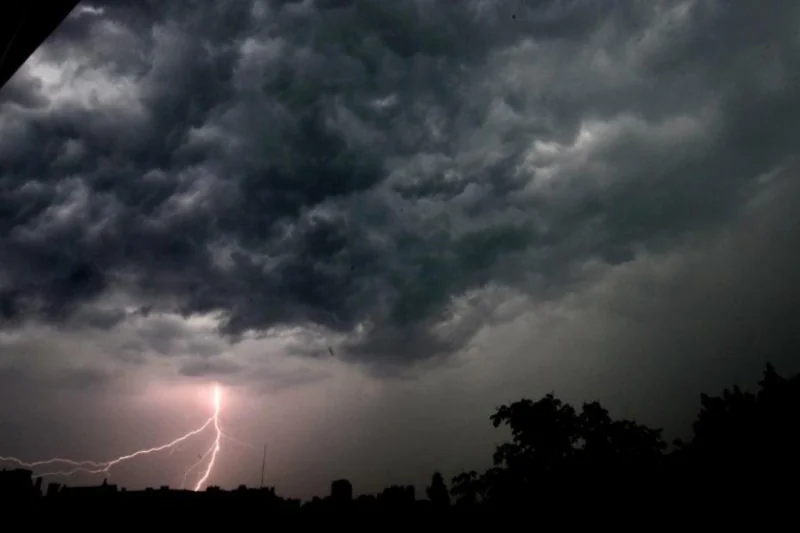
According to the General Directorate of Meteorology, this will result in thunderstorms along the Mediterranean coast, the Rif region, and eastern Morocco, as well as snowfall in the Middle Atlas.
Weather forecasts indicate cloudy conditions over the High and Middle Atlas, Saïss, the phosphate plateaus, Oulmes, and the northern and central Atlantic plains, with scattered showers expected.
Temperatures will remain cold to very cold, with frost and ice formation in mountainous areas, southeastern Morocco, and interior plains. Strong winds are also forecast for the eastern regions and southern coasts.
Houcine Youaabed, a spokesperson for the meteorological agency, explained that an incoming Atlantic disturbance has caused overcast skies and thick cloud cover in central Morocco and the High Atlas.
These conditions are expected to extend toward the northern and central plains, the Rif, the Mediterranean coast, the Middle Atlas, the southeast, and the eastern region, bringing rain and showers, particularly overnight. Snowfall is also anticipated in the High and Middle Atlas.
From Tuesday through the following Sunday, unsettled weather will persist due to the Azores High remaining distant from the region, allowing moist air masses from the Atlantic to flow in. As a result, Morocco is expected to experience periods of rain and snowfall, especially in the High and Middle Atlas.
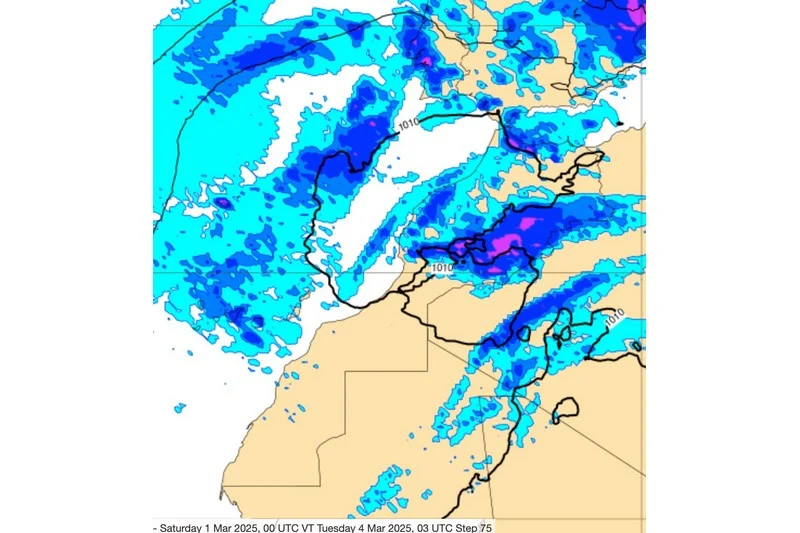
On Sunday, a temporary stabilization in weather conditions is expected, although light rain may continue in the Mediterranean and Rif regions.
Cold temperatures will persist, with frost and ice forming overnight and in the early morning in mountainous areas, the eastern region, the southeast, and interior plains. Fog is also expected in the eastern region and northern and central plains, along with strong winds in the southern provinces.
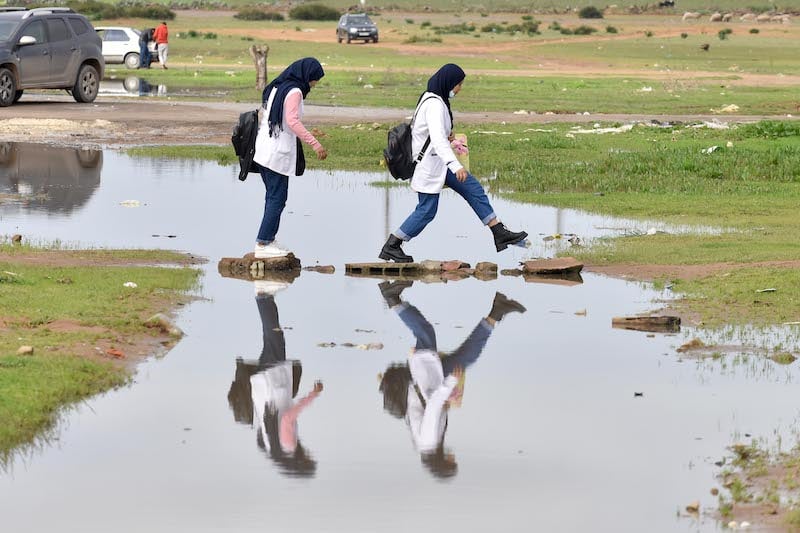
Official data from the meteorological service recorded varying amounts of rainfall across central and northern Morocco over a 24-hour period from Friday morning to Saturday morning.
The highest precipitation was recorded in Ben Guerir at 27 millimeters, followed by Settat at 21 millimeters and Nador at 19 millimeters.
Other cities, including Agadir, Nouaceur, Casablanca, and Tiznit, received between 10 and 14 millimeters of rain, while regions such as Tangier, Khouribga, and Chefchaouen saw around 8 millimeters. Smaller amounts were recorded in Oujda, Fez, Meknes, and other locations, with some areas receiving less than one millimeter.
According to the “Moroccan Dams” portal, the country’s water reservoirs have seen a slight increase in overall fill levels, reaching 27.82% as of March 1, marking a 0.15% rise from the previous day and an improvement over last year’s 25.14% on the same date.
Data from the General Directorate of Water Engineering indicates that total water storage in Moroccan dams now stands at 4.68 billion cubic meters, compared to 4.05 billion cubic meters a year ago.
Despite recent rainfall, all of Morocco’s river basins remain below 50% capacity, except for the Ziz-Kher-Ghris basin, which has reached a fill rate of 50.53% as of early March.





add your comment
Terms of publication : Not to offend the writer, people, sacred things, or attack religions or the divine self, and refrain from racist incitement and insults.