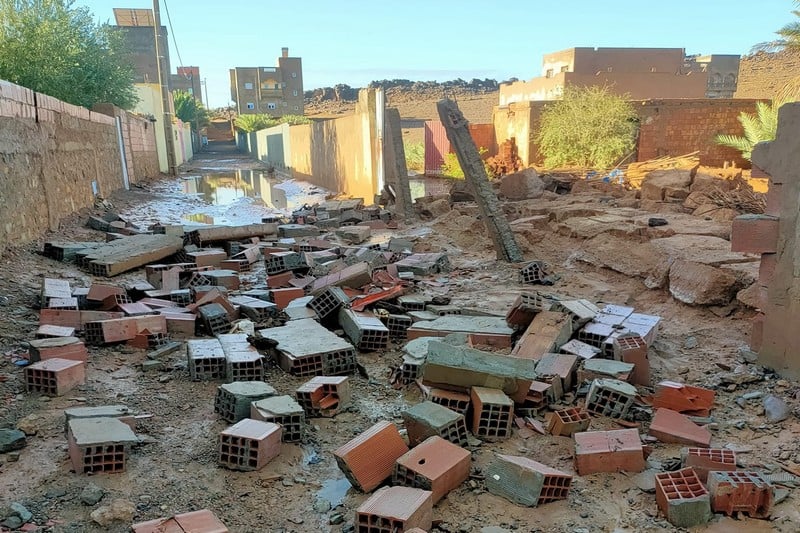
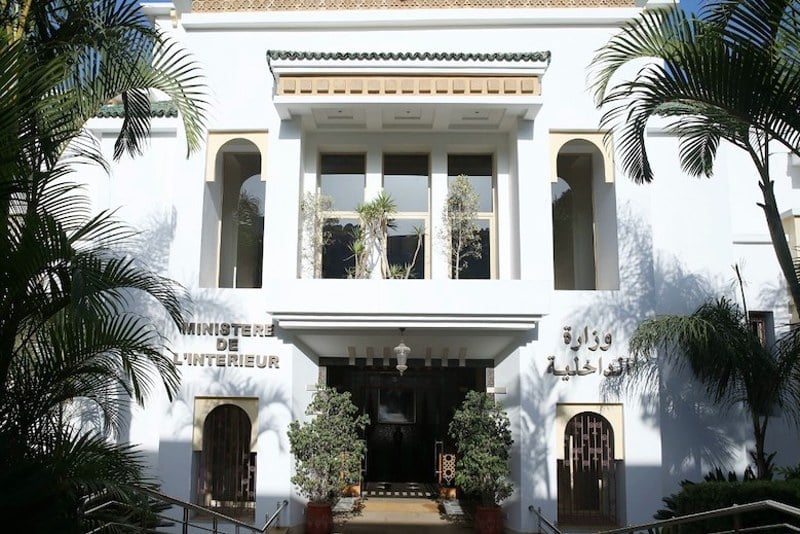
The Moroccan government has disbursed nearly 90% of financial aid to victims of the September 2024 southeastern floods, as part of a broader disaster recovery and prevention strategy, according to a written response from Minister of the Interior Abdelouafi Laftit.
The first phase of the program included financial assistance for home reconstruction, with 140,000 dirhams allocated for completely collapsed houses and 80,000 dirhams for partially damaged ones. This initiative falls under a 105 million dirham budget dedicated to flood-affected regions.
The second phase of the program focuses on investments in disaster prevention, particularly flood mitigation efforts, co-financed by the Natural Disaster Risk Management Fund. Since 2016, this initiative has helped fund 321 projects totaling 4.68 billion dirhams, with one-third of the financing coming from the disaster fund.
Among these projects are 139 structural flood protection initiatives in high-risk urban areas and 177 non-structural projects, including flood risk assessments and the enhancement of early warning systems.
To improve flood risk management, authorities have been working on urban development vulnerability maps, in collaboration with the Ministry of National Planning and Housing. These maps help identify high-risk areas and guide future urban planning. Additionally, national flood risk maps are being developed in coordination with relevant government sectors.
In coordination with the Ministry of Equipment and Water, the government is implementing Law 15-36 on water resources, including a national flood hazard atlas within three years and flood prevention plans within six years. Early warning systems will also be developed for high-risk waterways within six years and for medium-risk areas within ten years.
Furthermore, authorities are conducting a national assessment of disaster risks, including floods, and preparing a national framework to enhance the resilience of critical infrastructure and essential services.
The Moroccan government has significantly strengthened early warning and meteorological monitoring systems, which have proven effective in alerting citizens to extreme weather conditions.
Key advancements include the acquisition of a high-performance meteorological supercomputer to enhance climate forecasting, expanding radar coverage, and installing flood early warning systems in high-risk regions. Hydrological measurement and flood forecasting systems are also being upgraded.
A pilot project, Vigirisques Inondations, is being developed in four regions: Mohammedia, Al Haouz, Kenitra, and Guelmim, with local flood risk management centers set up in these areas. Authorities are also planning to establish a national flood forecasting and risk management center.
The Interior Ministry emphasized that Morocco has shifted from a reactive crisis response approach to a proactive and integrated disaster management strategy, prioritizing prevention, resilience, and preparedness over emergency interventions.








add your comment
Terms of publication : Not to offend the writer, people, sacred things, or attack religions or the divine self, and refrain from racist incitement and insults.