
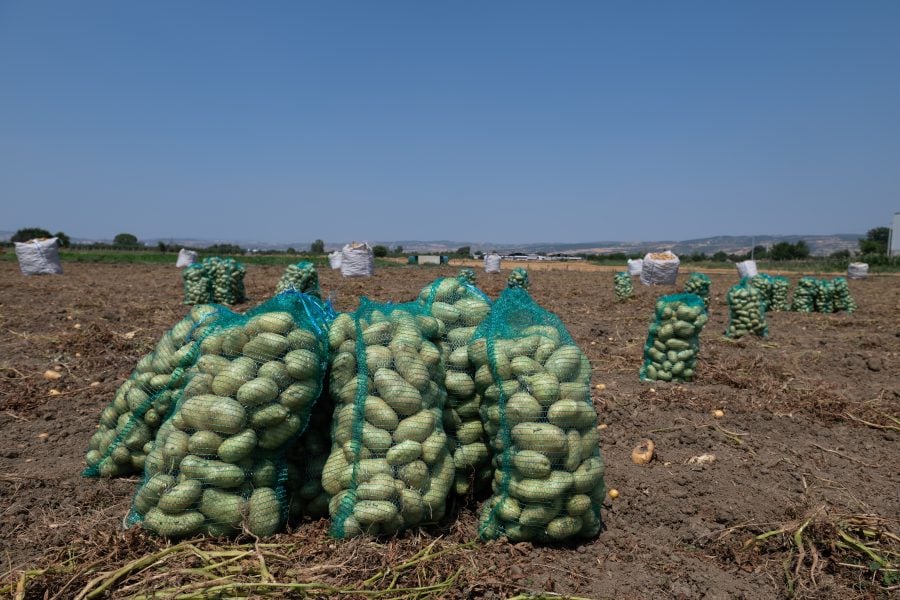
The African Center for Strategic Studies and Digitalization said that while Morocco grapples with persistent drought, water resources are being disproportionately allocated to commercial farms growing avocados, citrus fruits, and berries.
Meanwhile, staple crops like wheat and barley, crucial for local consumption, are being neglected.
The issue isn’t new. Morocco’s agricultural model has roots in colonial-era land use, where French authorities prioritized high-revenue crops for export.
After independence, instead of shifting toward a more self-sufficient food strategy, successive governments doubled down on this approach.
Under the Green Morocco Plan, vast farmlands that once produced grains and legumes were sold off to private investors, accelerating the shift to commercial orchards.
Water access is at the heart of the crisis. The report highlights how deep well drilling, especially in arid regions like Taroudant and Saïss, has led to excessive groundwater extraction.
Some wells now reach depths of 1000 meters, drastically depleting reserves. At the same time, small-scale farmers, who rely on surface water, are struggling to sustain their livelihoods.
The government’s current push for desalination is also coming under scrutiny. While desalination may provide temporary relief, the report warns of severe environmental consequences.
In areas like Chtouka Aït Baha, over-reliance on desalination has led to soil degradation, with saline waste contaminating both farmland and coastal ecosystems.
Marine biodiversity is also at risk due to the unchecked disposal of brine waste.
Despite efforts to address water shortages, the report criticizes authorities for focusing on technical fixes while ignoring deeper structural problems.
There has been little public discussion on water allocation, and the country continues to follow economic models that widen social disparities.
Rather than adopting sustainable solutions, decision-makers are reinforcing policies that exacerbate scarcity.
To counter these challenges, the report calls for a digital transformation in water management. Smart meters in households and industries could help regulate consumption and issue real-time alerts for excessive use.
The report also urges stricter regulations on groundwater exploitation. It suggests using smart sensors to detect illegal well drilling and imposing penalties on industries that consume excessive amounts of water.







add your comment
Terms of publication : Not to offend the writer, people, sacred things, or attack religions or the divine self, and refrain from racist incitement and insults.