
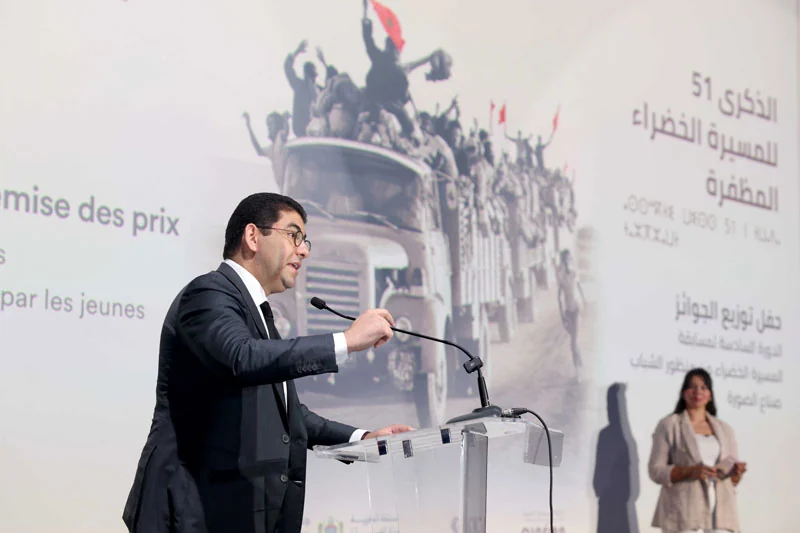
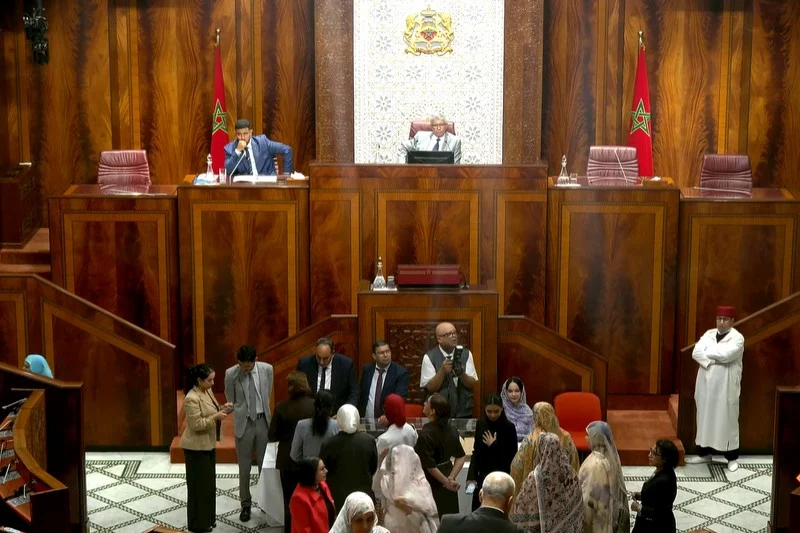
Speaking during the public oral question session in the House of Councillors on Tuesday, Bensaid stated that the ministry “renovates between 50 and 60 youth centers annually.”
The government has prioritized investing in the renovation of existing facilities, he said, adding that there are currently 807 youth institutions nationwide. This includes 667 youth centers, 53 reception centers, and 167 socio-sports centers, with 293 of these institutions located in rural areas, accounting for 43%.
The minister also highlighted the benefits of the newly launched “Youth Passport” initiative, which aims to enhance services for young people through digitalization.
He explained that the program helps address the lack of human resources, noting that most young people prioritize employment and training. Since these services are not necessarily tied to youth centers, the ministry has incorporated training opportunities into the passport application in partnership with other government sectors and private actors.
Responding to concerns raised by council members about the shortage of staff in youth centers, Bensaid noted that the ministry had increased staff numbers from zero to 160 and aims to reach 1,000. He urged lawmakers to support provisions in the finance law to address the ministry’s financial constraints, stating that “given these limitations, the ministry has opted for digital solutions.”
Bensaid asserted that the human resources of the Ministry of Youth, Culture, and Communication are in “good shape.” However, Lahcen Nazahi, coordinator of the Democratic Confederation of Labor group, painted a different picture, describing the sector’s resources as facing a “real crisis.”
He highlighted annual declines in staff numbers due to retirements and the limited availability of new positions, leading to an average of only one staff member per institution, regardless of size or services offered.
Nazahi criticized the weak training programs for staff development, inadequate incentives, and low bonuses, adding that these issues hinder the sector’s performance. He also called attention to the plight of employees on secondment, who face obstacles due to bureaucratic delays in obtaining approvals, depriving 80 employees of their allowances.
In response to Nazahi’s criticisms, Bensaid noted that the ministry maintains an open dialogue with unions and acknowledged the staffing shortages, particularly in youth centers. To address these issues, the ministry has pursued solutions such as digitalization and partnerships with regional and local authorities, signing agreements to empower regional directors to overcome these challenges.
On a related note, Bensaid pointed to the “Youth Passport” as a tool for addressing unemployment. He explained that the initiative aims to tackle the barriers young people face in accessing job opportunities, such as travel and accommodation expenses.
“For instance, a young person from Oujda with a job interview in Casablanca may struggle to afford transportation and lodging. The Youth Passport provides discounted travel and accommodation opportunities to facilitate such situations,” he said.
Responding to a question from the Moroccan Labor Union group about youth social exclusion, Bensaid emphasized that the initiative aims to leverage state resources to support Moroccan youth and address global challenges such as unemployment, compounded by factors like artificial intelligence. He also underscored the importance of cultural industries in this regard.
However, Fatima Idrissi, a representative of the same group, expressed dissatisfaction, criticizing the lack of legal protection for workers, particularly young trainees and those employed under temporary contracts. She argued that such conditions are a significant form of social exclusion, pushing many young people out of the labor market with severe financial and psychological consequences.



add your comment
Terms of publication : Not to offend the writer, people, sacred things, or attack religions or the divine self, and refrain from racist incitement and insults.