
Hespress observed a significant increase in advertisements for social media pages promoting sex toys, especially on Instagram, after previously being confined to Facebook.
These “commercial accounts” openly advertise a range of products, including sex dolls, restraints, and whips designed for sadomasochistic practices.
The proliferation of such services reflects a growing yet subtle demand, one that the Moroccan legislator restrains in a hazy, grey area.
While Article 483 of the Moroccan Criminal Code could be interpreted to include the criminalization of sex toy sales and distribution as an offense to public indecency, a potential crackdown could extend to personal possession of such toys.
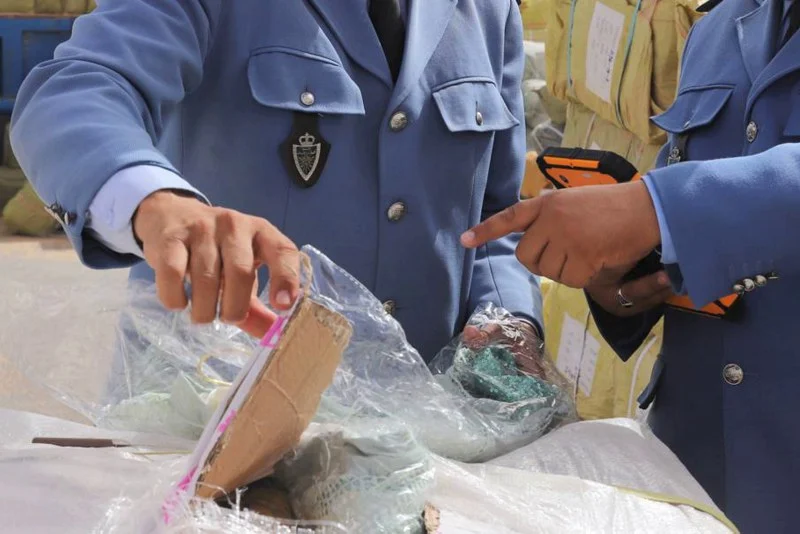
Customs authorities sometimes confiscate sex toys imported for personal use, despite the apparent lack of any legal prohibition against their purchase from abroad or even ownership.
In 2019, customs officials at Tangier Med port reportedly seized a sex toy from a couple traveling by car during a routine vehicle inspection, with no further legal repercussions.
Lawyer Mohamed Tahiri told Hespress English that he is unaware of any existing legislation that allows customs to seize such personal use items.
Abdelaziz Khalil, a lawyer and visiting professor at Mohammed VI University, told Hespress English that there is no legal issue with individuals purchasing or owning sex toys for personal use, as long as they do not cause public indecency by selling or distributing them, and advertising them publicly.
However, Khalil clarified that customs authorities have the right to seize any products intended for sale or pesronal use, lacking the necessary permits, and sex toys are no exception.
However, social media pages promoting and selling sex toys could be considered a form of public indecency under criminal law, as it falls within the framework of the sale and distribution of such items, and their advertisement on public platforms.
Ahmed Byoud, the founding president of the “With Consumers” association, told Hespress Ar that individual freedoms are important, stating that “a person who wants to buy sex toys has the right to do so within a clear framework, such as purchasing them from abroad and bringing them in.”
Byoud argued that random promotion on suspicious pages or instant messaging networks, exploiting legal loopholes, should not be allowed, adding that despite the importance of personal freedom, the retail of such products on a social and moral level “contradicts the culture of the country.”
The NGO president noted that “these products are prohibited from being sold in stores, so there is a tendency to promote them illegally through social media, given the possibilities offered by the digital world.” Byoud called for clear laws to regulate this activity and protect consumers.
The continued presence of these products, Biyoud added, reveals the ongoing nature of smuggling activities.
“These pages should be closed as they operate illegally, and Morocco, on the other hand, must decide on its consumer culture, whether to fully open up to the values of freedom or to crack down on the prohibited,” the president explained.
Byoud said that the presence of sex toys, some of which supposedly involve criminal practices like sadism and torture for pleasure, poses significant risks.
Abdelkrim Chafai, vice president of the Moroccan Consumer Protection University and president of the regional federation for consumer rights in the Souss-Massa region, told Hespress Ar that even well-known commercial platforms had exploited legal loopholes in e-commerce to promote sex toys.
Chafai raised the ethical dilemma, stating, “We are an Arab Islamic country, and this should not be prevalent among us. We are not Europe or America.”
Chafai expressed concern about the potential exposure of children to these pages and emphasized that some of these products allegedly promote disturbed “sexual practices based on torture and sadism, which is detrimental to Moroccan women.”
Chafai questioned how these prohibited products enter the country and are then openly promoted by the administrators of these pages.
Chafai called on the authorities to track these products to prevent the proliferation of similar pages that exploit existing loopholes.





add your comment
Terms of publication : Not to offend the writer, people, sacred things, or attack religions or the divine self, and refrain from racist incitement and insults.