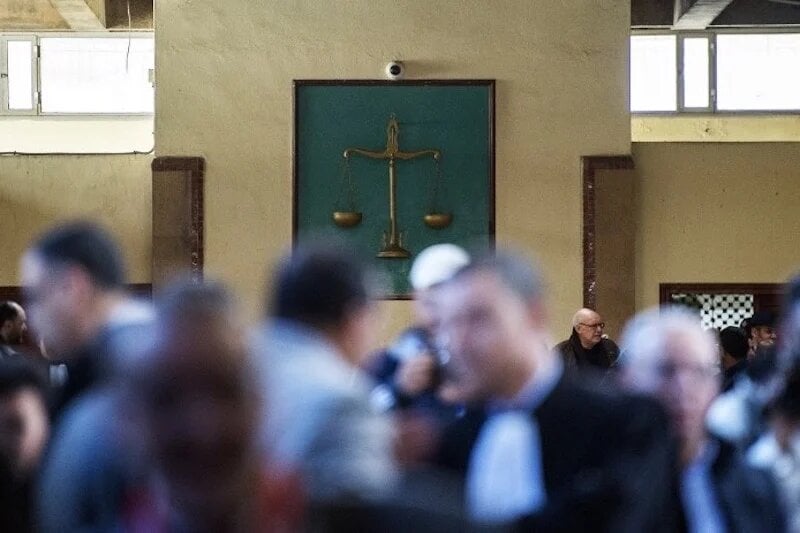
A Moroccan man is facing legal action after calling for a boycott of a major supermarket chain in the country, accusing it of supporting Israel and its illegal settlements in Palestinian Territories.
The individual, who has not been named, distributed leaflets in front of the Yousouffia branch of the supermarket chain, urging passersby to join the boycott and publicly expressing his stance.
Following the incident, the supermarket chain filed a lawsuit against the man, charging him with defamation and libel. The man was subsequently arrested and released on bail of MAD 5000, with the first court hearing scheduled for January.
The case has sparked a broader debate about the rights to freedom of speech and expression, as well as the right to boycott and advocate for boycotts without resorting to violence or illegal means.
In an interview with Hespress Ar, lawyer Abderahman Benamrou expressed surprise at the legal action, stating that he was unaware of any law criminalizing such actions.
“Crimes are defined by law, sometimes with supplementary decrees,” he said. “It never crossed my mind that this was a criminal matter.”
Political analyst Mohamed Shakir noted that boycotts can take various forms, including online campaigns and direct actions.
The analyst pointed out that while there have been previous instances of boycotts in Morocco, such as against McDonald’s, there are regulations governing public demonstrations and protests.
Shaqir argued that the man could face legal consequences for not obtaining a permit for his protest.
“He was individually attacking a project that had all the necessary legal permits,” he explained. “By what law does he allow himself to incite a boycott? At the same time, there are laws that prohibit obstructing commercial marketing or the flow of trade.”
Sion Assidon, a human rights activist and co-founder of the Boycott, Divestment and Sanctions (BDS) movement in Morocco, defended the legitimacy of the boycott, citing moral principles and international law.
“At the fundamental and legal level, a boycott is a means for citizens to express their opposition to a particular company’s practices, and it falls within the realm of freedom of expression. People cannot be condemned for it,” Assidon said.
He cited a case in France where BDS activists were initially convicted but later exonerated by the European Court of Human Rights.
Assidon said that boycotts have a long history in Morocco, pointing to the boycott of certain products during the colonial era as a form of national resistance. He also highlighted the international boycott of apartheid-era South Africa, which contributed to the dismantling of that regime.


add your comment
Terms of publication : Not to offend the writer, people, sacred things, or attack religions or the divine self, and refrain from racist incitement and insults.