
On the night of Jan. 14, bonfires will light up Morocco as millions of Amazigh people celebrate Yennayer, a time-honored tradition marking both the end of one year and the beginning of a fresh one.
Morocco’s Amazigh will turn the page on a year that saw them grapple with census results that they say misrepresented their linguistic identity, face racialized attacks like those from streamer Ilyas El Maliki, but also secure key achievemnts, including the inclusion of Amazigh in Wikipedia and Google Translate.
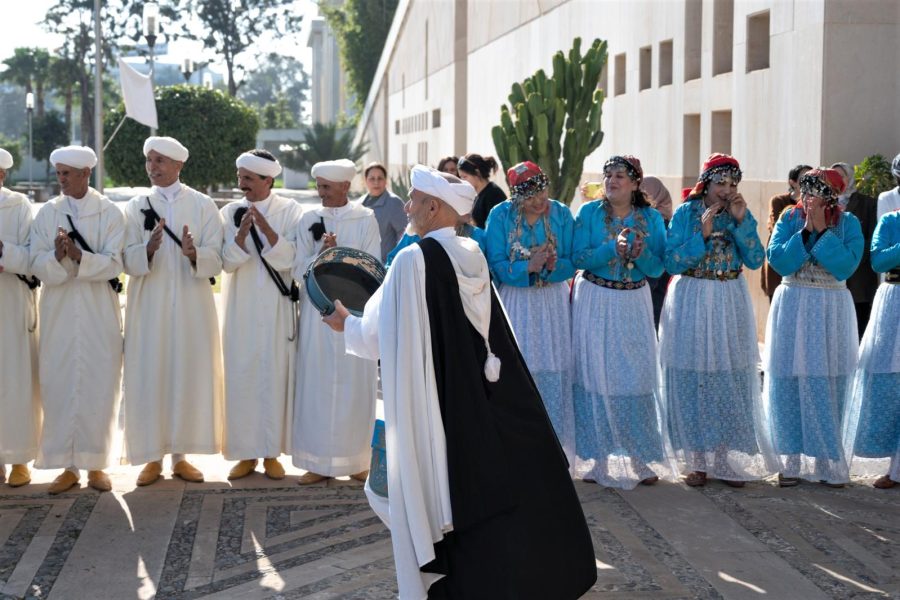
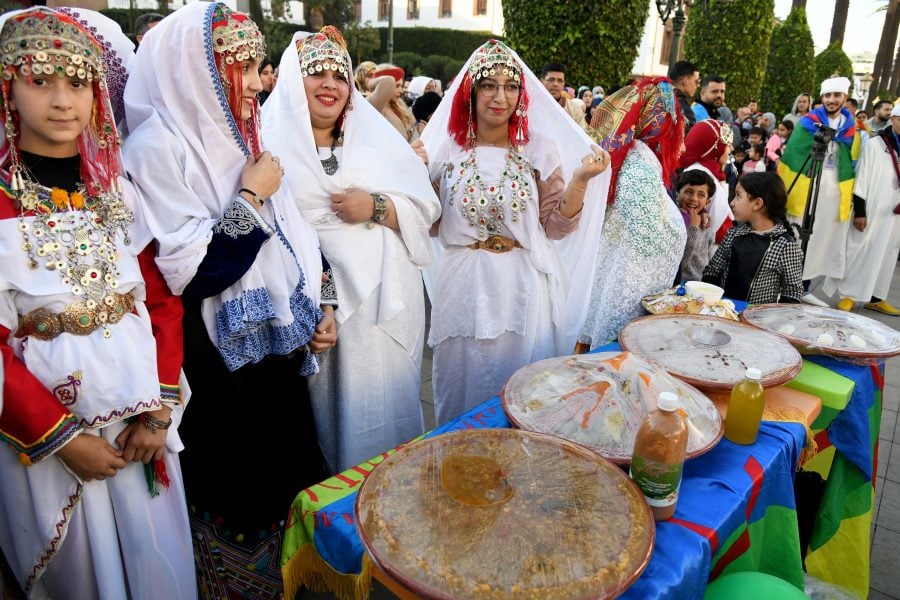
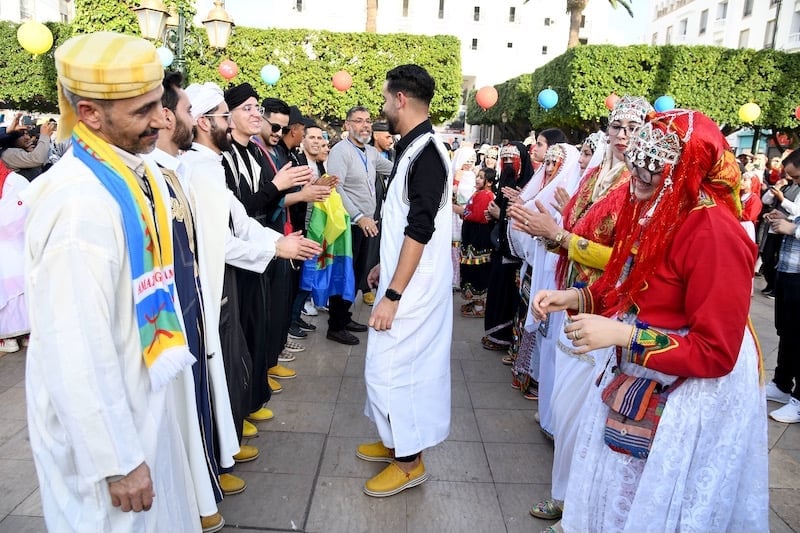
And they did so while preserving their community traditions through festivals, events, and gatherings celebrating the country’s indigenous roots, all the way to Yennayer, the ancient celebration that marks the end of the agrarian year and the beginning of a new one, rooted in the Amazigh calendar that stretches back to 950 BCE.
“The way people celebrate the Amazigh New Year, or Haguza, varies across North Africa, especially in areas where Amazigh communities live,” Abdellah Bouchtart, Historian and Amazigh activist told Hespress EN.
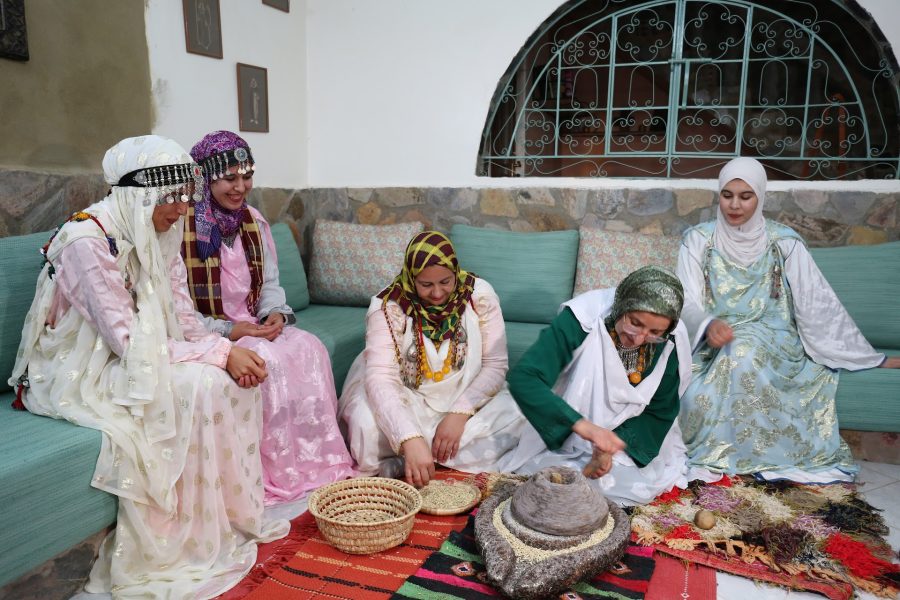
While the celebrations may look different, they all share a common focus on food tied to the land and agriculture.
The meals feature foods symbolizing abundance and fertility, with traditions that ensure a prosperous year ahead. The idea is to leave the table full to ward off hunger and ensure plentiful harvests.
According to Bouchtart, the Amazigh New Year is mainly about farming because the Amazigh, like many ancient peoples, used the seasons to mark time, particularly the start of the farming season.
He pointed out that the Amazigh people in North Africa, the Sahara, and the Sahel have always been agricultural and pastoral.
In places like Gharb, Doukkala, and Abda, where Tamazight is no longer spoken, people often cook dishes with seven types of vegetables, reflecting the area’s farming abundance.
In drier areas, however, Amazigh communities celebrate with tagoula, made from boiled barley or corn grits, served with melted ghee, olive oil, or argan oil, and honey. Hidden inside is a date pit called amnaz, which symbolizes good luck.
In some regions, the pit is replaced by an almond to avoid the risk of broken teeth, but the lucky symbolism remains the same.
Another one of the main dishes served is ourkemen, a filling, slow-cooked porridge made from a variety of dried legumes (like lentils and chickpeas) and whole grains such as corn, wheat, and barley.
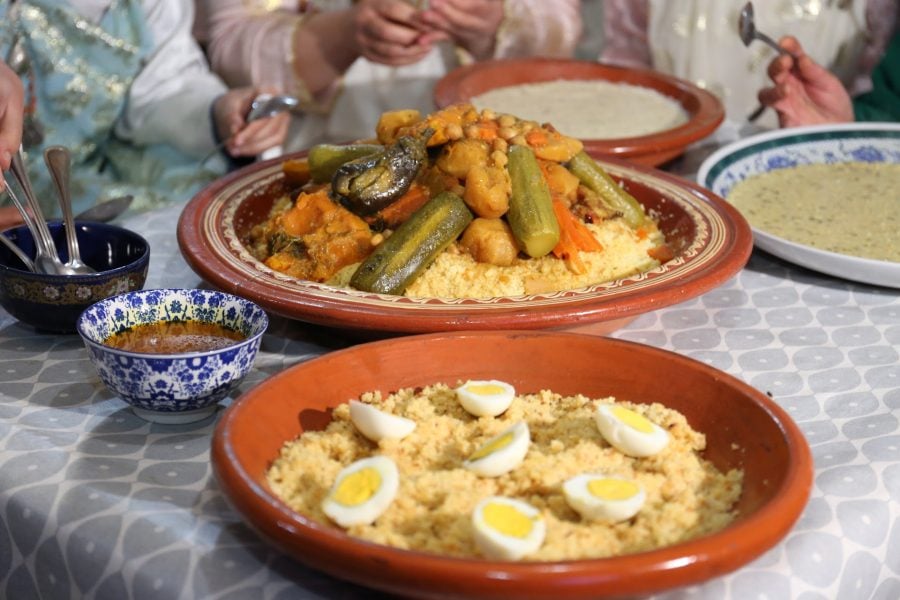
The dish often includes sheep’s or cow’s feet and is cooked to a thick consistency, representing the diversity of crops grown throughout the year.
Across North Africa, the Yennayer meal varies slightly from region to region, but the themes of honoring the harvest, celebrating nature, and fostering abundance remain the same, making the celebration a strong expression of Amazigh identity.
Bouchtart said that the Amazigh New Year is unique as it’s the only celebration in Morocco that doesn’t have a religious meaning, unlike the Gregorian or Islamic New Years.
“Before the advent of monotheistic religions, Amazigh people had local beliefs that honored the earth, sun, and rivers as sources of life and fertility,” says Bouchtart.
While Yennayer celebrations are gradually booming across Morocco, experts say this cultural upsurge hasn’t yet translated into real-world benefits for the Amazigh language. Despite many pledges of support, the language still struggles to gain ground in everyday life, education and politics.
Government neglect, tiny budget, and empty commitments
A major concern for Amazigh language advocates is the Ministry of Education’s treatment of the language, with historian Bouchtart denouncing its policies as a “mockery of the constitution and Morocco’s shared identity,” embodied in a recent directive that makes teaching Amazigh in private schools optional.
He describes this as “a blatant violation of the constitution,” saying that Amazigh is a national language and a constitutional right.
“This decision implies that Moroccans could demand not to teach Arabic or French in private schools, following the same ‘optional’ logic,” he argues.
Bouchtart also points out the hypocrisy in the government’s approach: “The ministry enforces Arabic and even French, which isn’t a constitutional language, in private schools, so why is Amazigh—the language of the land—treated differently?”
This disregard, according to him, violates not only Moroccan law but also international agreements.
“Morocco has signed treaties, like the International Convention on the Elimination of All Forms of Racial Discrimination, which obliges it to combat such discriminatory practices,” he notes.
The issue doesn’t stop there. Bouchtart slams the absence of Amazigh in early education, labeling it “an unjust and anti-educational policy.”
“Children need their mother tongue in early education to foster creativity and learning. Denying them this right is psychological harm and a form of symbolic violence,” he explains.
On the ministry’s claims of expanding Amazigh education, Bouchtart remains skeptical: “They claim 44% of schools teach Amazigh, but these numbers are questionable. Many schools listed as teaching Amazigh haven’t had a dedicated teacher for years.”
According to Bouchtart, the law requires full integration of Amazigh in public and private education by 2024, yet the ministry has only set a target of 50% for 2026 and remains entirely absent in secondary education.
“How can they reach their 2030 goals when they’re already behind schedule?” he asks.
For Adellah Baddou, a sociologist and member of the executive board of the Amazigh network for citizenship, part of the answer lies in scrutinizing the finance bill.
“Preparations for the financial budget always bring up real question of: where does Tamazight stand in this plan? What funds will be allocated to making it a formal language, as promised?” Baddou asks.
“Over two years, the government spent a mere MAD 500 million on Amazigh integration—200 million in 2022 and 300 million in 2023. Even with promises to increase this to MAD 1 billion by 2025, it’s still laughably small. This budget accounts for only 0.5% of Casablanca’s regional budget for 2022-2023.” In addition to the insufficient budget, the creation of the Amazigh Development Fund is riddled with issues.
“The government calls this a groundbreaking step, yet no documents detailing its roadmap have been published. What’s worse, the online platform set up for public consultations on administrative reform was made only in Arabic, excluding Tamazight entirely. This is from the ministry tasked with promoting Amazigh,” Baddou says.
Baddou accuses the government of stagnation, noting that the 2020 integrated plan to promote Amazigh developed under the previous administration has been shelved.

“The current government previously froze the work of the ministerial committee responsible for Amazigh implementation without any explanation. This blatant disregard for continuity wastes public resources and undermines years of effort.”
Baddou says that this isn’t just about broken promises; it’s about systemic neglect. Without clear goals, timelines, and measurable outcomes, the government’s actions amount to little more than empty gestures.
When asked about any real progress since Amazigh was made an official language in 2011, Baddou didn’t hold back, saying there’s been no improvement, except for Yennayer being declared an official holiday — a royal decision, not something the government actually pushed for.
A glimmer of hope for the Amazigh cause
Despite this bleak outlook and a long history of failed attempts, there’s a new spark of hope for Morocco’s Amazigh community.
Activists are once again pushing to create the first political party rooted in Amazigh identity and culture. This move comes on the heels of the Moroccan government rejecting the “Tamunt” party for liberties, but the push for a dedicated Amazigh party is far from over.
While Moroccan law bans parties based on ethnicity, language, or religion, Amazigh activists say that they deserve a political platform that reflects their heritage.
Bouchtarat says the new party won’t be based on ethnicity or religion, but will instead focus on representing Amazigh identity within Morocco’s constitutional framework.
He also slammed current political parties, accusing them of being dominated by Arab nationalism and leaving the Amazigh culture sidelined.



add your comment
Terms of publication : Not to offend the writer, people, sacred things, or attack religions or the divine self, and refrain from racist incitement and insults.