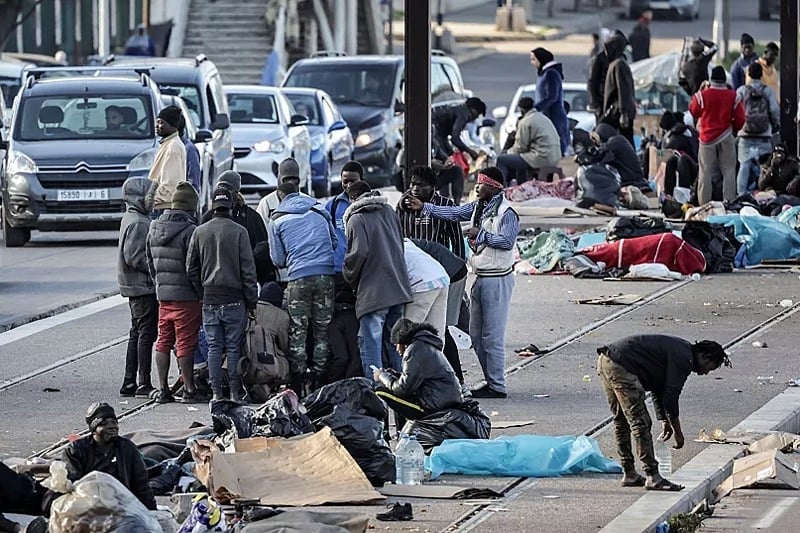
A new report by Caminando Fronteras says that women migrants face discrimination, racism, expulsion, and sexual violence on migration routes, especially between Agadir and Dakhla.
Their journeys often involve perilous crossings in overcrowded and unseaworthy vessels, leaving them vulnerable to exploitation and human trafficking networks.
The report also draws attention to the increasing number of women fleeing conflict, climate change, and poverty in Senegal, Gambia, and Mauritania, who are embarking on these perilous journeys.
Children and adolescents constitute a significant portion of those attempting these dangerous crossings.
The report emphasizes the complete lack of protection and support for these vulnerable minors.
Many are treated as migrants before their age is verified, leaving them exposed to exploitation and political manipulation.
The placement of unaccompanied minors in reception centers alongside adults in the Canary Islands further exacerbates their vulnerability and increases their risk.
The report also sheds light on the plight of families desperately searching for missing loved ones who have embarked on these perilous journeys.
Despite some progress in reporting mechanisms, families face numerous obstacles in accessing their rights, including difficulties in obtaining DNA samples and filing reports.
These hurdles re-traumatize families and leave them feeling marginalized and unsupported.
The report reveals a devastating surge in casualties on the western borders between Europe and Africa, with 10,457 lives lost in 2024.
This grim milestone marks the deadliest year on record, with an average of 30 deaths daily, according to the migrant advocacy organization.
Among the victims, 421 were women and 1,538 were children and adolescents.
The report says that the Atlantic Ocean is the world’s deadliest migration route, claiming 9,757 lives.
The Mauritanian route emerged as the most perilous, witnessing a dramatic spike in fatalities.
The Mediterranean route via Algeria followed closely, with 517 deaths recorded.
The Strait of Gibraltar and the Alboran route also saw significant losses, with 110 and 73 deaths respectively. Tragically, 131 boats vanished without a trace, leaving all passengers presumed dead.
The report attributes the alarming rise in deaths to several key factors, including the “neglect of rescue duty” by authorities, the “expansion of borders towards countries lacking the necessary resources,” and the “absence of effective rescue operations.”
The NGO criticizes the prioritization of migration control over the right to life and the criminalization of social organizations and families who assist migrants.
These factors, coupled with extreme poverty and a lack of opportunities, drive desperate individuals to undertake these life-threatening journeys.




add your comment
Terms of publication : Not to offend the writer, people, sacred things, or attack religions or the divine self, and refrain from racist incitement and insults.