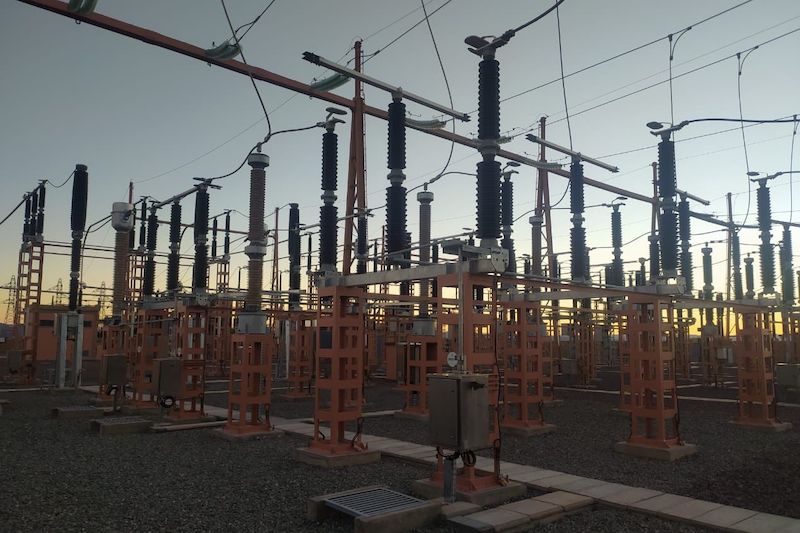
The National Electricity Regulatory Authority of Morocco has reported a significant decrease in the country’s hydroelectric power production, which dropped by 16.1% annually from 2010 to 2023. This decline is attributed to the water stress the kingdom has been experiencing in recent years. Meanwhile, Morocco continues to rely heavily on coal, which accounted for 64% of the country’s electricity production in 2023.
According to the Authority’s annual report, solar energy contributed only 5% to the national electricity production, amounting to 2,148 gigawatt-hours in 2022. However, in 2023, solar power’s contribution to renewable energy production rose to 23%.
Wind energy also showed growth, with 2,017 megawatts of installed wind capacity in operation in 2023, compared to 1,553 megawatts in 2022. This increase is largely due to the commissioning of the “Aftissat 2” wind energy project with a 200-megawatt capacity and the “Boujdour” wind energy project, developed by the National Office of Electricity and Potable Water (ONEE) with a 318-megawatt capacity.
The report also revealed a temporary halt in the “Abd Al-Khalek Al-Tariss” wind energy project, which has been operational since 2000. The project, which currently has a 50.4-megawatt capacity, is undergoing an upgrade to increase its production capacity to 100 megawatts.
On another front, the report highlighted the ongoing monitoring of hydrogen production technologies. The regulatory authority is studying potential impacts on the national electricity network, particularly concerning grid stability.
The report outlined three scenarios for hydrogen production in Morocco:
- Electrolyzers, the core technology for producing green hydrogen, may operate independently from the grid, powered directly by renewable energy projects and storage systems.
- Electrolyzers could draw some electricity from renewable energy sources and the rest from the grid.
- Electrolyzers could operate entirely on electricity from the grid.
Each of these scenarios would require proper organization to ensure a smooth transition and sufficient network development to handle additional loads and the variable injection of renewable energy sources.
In terms of national electricity production, Morocco generated 42.38 terawatt-hours of electricity in 2023, reflecting a 2.3% increase. Despite this growth, coal production fell by 6.6% compared to 2022. The report also noted that natural gas, which had been largely excluded from the energy mix, accounted for 10% of Morocco’s energy sources in 2023. This marked the highest level of gas consumption in four years, following Morocco’s entry into the international natural gas market and the signing of its first natural gas purchase agreement in 2022.





add your comment
Terms of publication : Not to offend the writer, people, sacred things, or attack religions or the divine self, and refrain from racist incitement and insults.