
Welcome to this week’s edition of our Weekly Risk Watch, offering insights into economic indicators, political shifts, and security updates that could impact your business or daily life, all in one concise package.
Economy and Markets:
- Younes Sekkouri, Morocco’s Minister of Economic Integration, reported on November 1, a net loss of over 54,000 jobs due to adverse climatic conditions despite the creation of 96,000 jobs in various sectors, adding to the burden of unemployment.
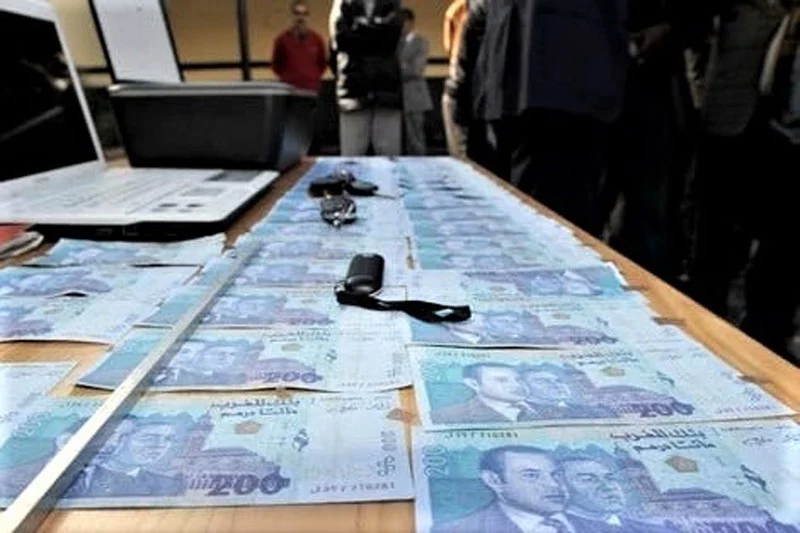
- A report from Bank Al Maghrib revealed a significant rise in demand for cash in Morocco, with the value of cash transactions reaching 412.8 billion dirhams—an 11% annual increase—prompting warnings from the bank’s governor about the potential economic risks, contributing to economic instability.
- the General Inspectorate of Territorial Administration launched new investigations into alleged corruption involving heads of territorial communities in Morocco, who are accused of manipulating public contract processes by leaking sensitive data to favored companies, prompting scrutiny from the Interior Ministry over suspicious contract awards.
- Morocco’s Ministry of Economy and Finance reported in its annual debt dynamics report that public sector debt rose from 880.5 billion dirhams in 2022 to 964 billion dirhams in 2023, reflecting a slight decrease in its proportion of GDP from 66.2% to 65.9%, contributing to fiscal instability.
- Bank Al Maghrib reported that Morocco’s money supply (M3) reached 1.851 trillion dirhams, growing by 6.7% in September 2024, primarily driven by an increase in loans to the non-financial sector and central government debt, while highlighting stagnation in savings account growth and a decline in holdings of collective investment securities, adding to the risk of economic instability.
- A local government head in the Berrechid region near Casablanca seized 30 million dirhams from the bank account of a major real estate company to recover 140 million dirhams in overdue municipal taxes, escalating to additional property seizures after the company failed to respond to earlier negotiation attempts for payment, adding to revenue collection challenges.
Political Stability:
- Opposition parties criticized a policy direction of the government reshuffle on November 1, 2024, claiming the new ministers, with backgrounds in finance and business, contradict the government’s “social state” focus and risk further commodifying essential sectors like education and health instead of addressing deep-rooted crises with experienced leadership.
- Members of the National Union of Labor in Morocco protested on October 27 outside of Parliament in Rabat, decrying government imbalances in social policies and rising prices.
- Head of the Progress and Socialism group in Parliament, highlighted ongoing negotiations regarding draft law No. 97.15 on the right to strike, noting that while a labor union leader claimed an 80% consensus, the remaining amendments must be addressed transparently before parliamentary approval, potentially leading to legislative deadlock.
- A survey by Afrobarometer revealed that trust in Morocco’s parliament and local councils is critically low, with only 25% and 22% of citizens expressing confidence in these institutions, while 72% trust the military and 67% trust the police, adding to the Institutional trust crisis.
- The opposition Socialist team in Parliament, criticized the 2025 Finance Law as lacking a comprehensive and practical approach to address the challenges faced by Moroccans abroad, noting the government’s brief mention of the diaspora in a 23-page document as indicative of insufficient commitment, flagging policy neglect.
- Opposition parties in Parliament disapproved of the 2025 Finance Bill, criticizing it for failing to address critical issues like the water crisis and corruption, potentially leading to policy ineffectiveness.
- Lawyers in Morocco announced plans for a comprehensive strike starting November 1, prompting human rights advocates to call on the Ministry of Justice to engage in dialogue to avoid disrupting court operations and impacting citizens’ access to justice, echoing concerns over previous strikes in health and education.
Cross-border stability:
- A delegation from the General Union of Mauritanian Miners met with local officials i to discuss issues facing the artisanal mining sector, particularly the encroachment of foreign miners, and announced plans for a meeting with administrative authorities to establish strict measures against Mauritanian miners exceeding national borders, amidst concerns over potential military confrontations with Moroccan forces.
Security:
- Security forces in Casablanca prevented a planned protest near the French consulate against President Emmanuel Macron’s remarks on Palestinian resistance, blocking access to demonstrators organized by the Moroccan Front for Support of Palestine and Anti-Normalization.
- Police in Tangier arrested three individuals, including two Moroccan brothers and an undocumented Uzbek national, on suspicion of involvement in hacking telecommunications systems and intercepting phone calls, following a complaint from a local mobile and internet service provider about criminal activities affecting their network, adding to the risk of cybercrime in Morocco.


add your comment
Terms of publication : Not to offend the writer, people, sacred things, or attack religions or the divine self, and refrain from racist incitement and insults.