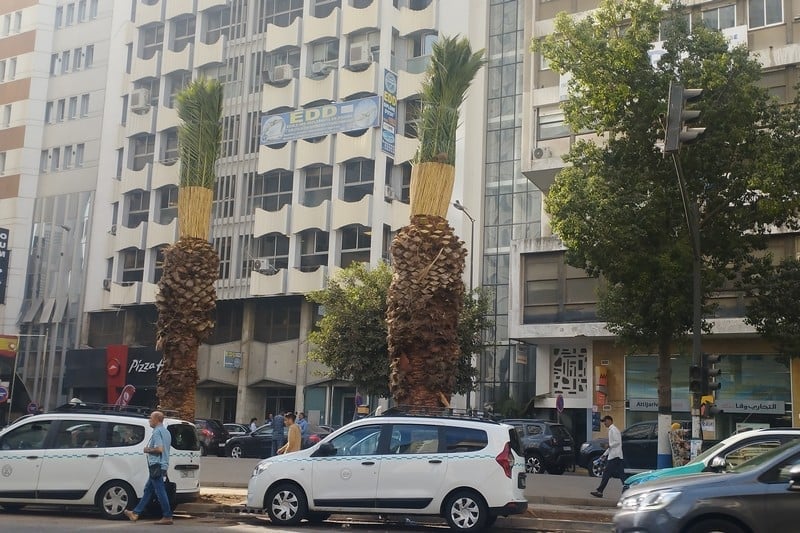
The Casablanca City Council has agreed to halt the planting of non-native palm trees, particularly the Washingtonia palm, across the city.
This decision comes after months of advocacy by the Morocco Environment 2050 movement, which has been campaigning against the widespread planting of these trees due to their negative environmental impacts.
The move follows a meeting between the movement’s president and the governor of Casablanca-Settat, Mohamed Mhidia.
The governor has pledged to implement a series of measures to address the concerns raised by the environmental group, including a ban on planting the Washingtonia palm and the removal of existing trees that obstruct pedestrian movement or hinder the planting of more suitable species.
The Morocco Environment 2050 movement said that the Washingtonia palm, commonly known as the Mexican fan palm, is not adapted to the Moroccan climate and offers little ecological benefit.
The trees have been criticized for their shallow root systems, which make them susceptible to toppling during strong winds, and for their inability to provide adequate shade or absorb pollutants.
The group has also expressed concern about the visual impact of the palm trees, arguing that they have detracted from the city’s aesthetic appeal.
The group advocates for the planting of a wider variety of native trees, which are better suited to the local climate and can provide a range of ecological benefits, such as improving air quality, reducing soil erosion, and supporting biodiversity.
The decision by the Casablanca City Council to halt the planting of non-native palm trees has been welcomed by environmentalists across Morocco.
Activists have warned that more needs to be done to reverse the damage caused by the widespread planting of palm trees in recent years.
They have called for the development of a comprehensive urban greening strategy that prioritizes the planting of native species and the protection of existing green spaces.
Activists from the Morocco Environment 2050 movement staged their first public protest since the group’s founding in 2020.
The demonstration took place outside the parliament building to denounce the government’s perceived inaction on environmental issues, which they labeled as a “crime against the environment.”
Protesters argued that the current approach not only negatively impacts citizens’ quality of life but also exacerbates the country’s already fragile ecosystem, which is under threat from drought and climate change.









add your comment
Terms of publication : Not to offend the writer, people, sacred things, or attack religions or the divine self, and refrain from racist incitement and insults.