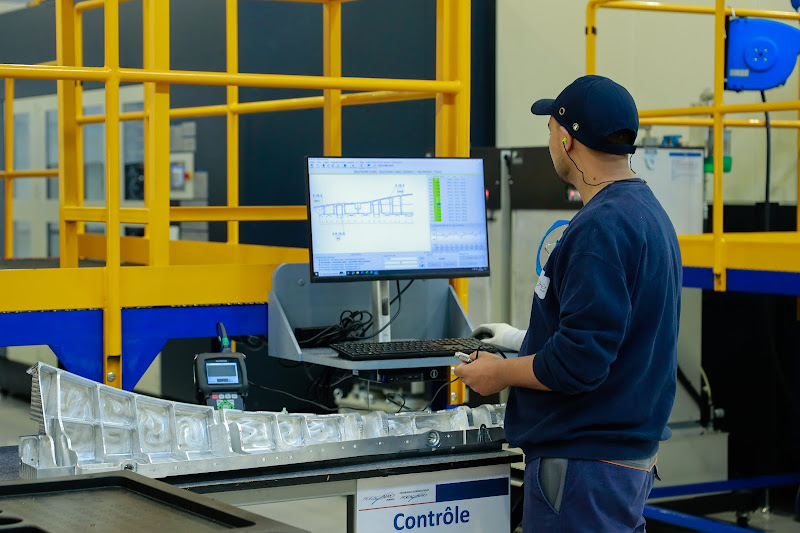
Alexandre Kateb, an economics expert and financial analyst, found that “Morocco’s trajectory over the past quarter century has been marked by an ambitious modernization program, a focus on sustainability, and integration into global value chains, despite enduring social and economic challenges.”
In his report, Morocco’s Long Road Toward Economic Transformation, published by the Carnegie Endowment for International Peace, Kateb notes that the Kingdom now faces a “middle-income trap,” similar to the paradigm of many countries.
He explains that Morocco’s export-led growth model grapples with rising competition from both low-income countries in labor-intensive industries and high-income economies in technology-driven sectors.
To escape this trap and transition toward a high-income economy, Kateb stresses the importance of greater investment in human capital and the pursuit of new growth drivers beyond manufacturing, such as knowledge-intensive services.
He further argues that Morocco could have ranked higher on the 2023 Global Innovation Index, where it placed 70th, if not for its poor performance in knowledge-intensive hiring, where it ranked 111th.
The report also notes that when it comes to supply, progress is hindered by the poor quality of education. For instance, only 18 percent of Moroccan students reached proficiency level 2 or higher on the PISA mathematics test, significantly below the OECD average of 69 percent.
As for demand, Kateb argues that the decline in knowledge-intensive employment is driven by a focus on profit at the expense of innovation. He stresses that for this to change, Morocco must take stronger action against the crony capitalism that undermines economic efficiency, as well as nepotism, corruption, and bribery which hinders social cohesion.
In this regard, Kateb praised the recent decision by the Competition Council to penalize the petroleum cartel, calling it a positive step, though he stressed that further efforts in this sense are necessary.
Kateb also highlights the sharp rise in Moroccan public debt—now exceeding 80 percent of GDP—and external debt, which has surpassed 50 percent of GDP, largely due to the COVID-19 pandemic. He notes that the International Monetary Fund has recommended strengthening public finances to return the debt-to-GDP ratio to pre-2020 levels.
However, Kateb warns that without fiscal reforms to create more fiscal space, this strengthening could jeopardize essential structural reforms and delay the critical investments needed for Morocco’s economic transformation.
Kateb cautions about geopolitical risks, particularly the tensions with Algeria and the ongoing conflict with the Polisario Front, which he describes as “wild cards” that must be managed carefully.





add your comment
Terms of publication : Not to offend the writer, people, sacred things, or attack religions or the divine self, and refrain from racist incitement and insults.