
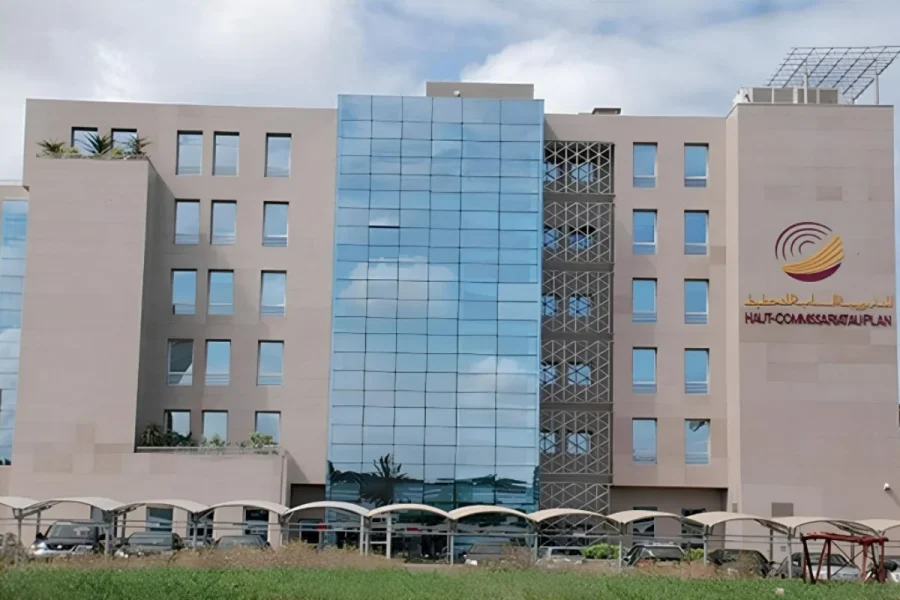
A recent controversy erupted in Morocco’s national population and housing census after the High Planning Commission (HCP) adopted two separate questionnaires—one short and the other detailed.
This decision drew swift criticism, particularly from experts in Amazigh language and culture. They contend that the dual approach is “inaccurate and unlikely to yield accurate results.”
For context, the HCP has decided to restrict the detailed questionnaire to only 20 % of households.
This move has been criticized by activists and observers, who argue that the detailed form, which includes questions about native and written languages, should be administered to all households surveyed.
Critics argued that “a 20% sample of households will never provide realistic results emphasizing that the HCP should have used a single, detailed questionnaire with questions about languages.”
“This imprecise and unscientific approach won’t deliver accurate data on linguistic and cultural realities, especially since the shorter questionnaire given to all households doesn’t address this sensitive issue.”
They asked the Commission to offer “urgent clarification on the seriousness of the situation.”
“The decision to use two different questionnaires in this year’s census is baffling. Including questions about languages only in the detailed form, which is limited to 20% of the population, while leaving them out of the shorter form that covers all Moroccans, is unfair and highly discriminatory against the Amazigh language,” said Abdallah Bouchtart, a member of the Al-Wafaa Amazigh Alternative Group.
Bouchtart urged the HCP to “offer clear explanations for the criteria behind including language questions only in the detailed questionnaire, which is limited to 20% of the population, and to specify the geographic areas targeted by this form.”
He added that “thousands of Moroccan households are keen to have their native Amazigh language, which is spoken daily at home, in public, and at work, reflected in the census, but they find themselves excluded from the detailed questionnaire.”
The same spokesperson said, “what further fuels our suspicion about the commission’s intentions to target Amazigh people and the Amazigh language in this census is the methodology adopted for classification, categorization, and the questions themselves.”
He said that the group previously denounced this methodology in two consecutive statements, but no one seems to pay attention to what they, as a civil society group dedicated to tracking the Amazigh language in public policies, have to say,” stressing that “even asking questions about languages read and written is unfair, as the Amazigh language has been marginalized in Moroccan schools since independence.”
Bouchtart explained that “these are fundamentally inaccurate and unscientific issues,” adding, “if the Commission fails to recognize the risks and errors contained in the form concerning the languages it included with illiteracy, it raises serious concerns about its competence and purpose.”
He continued, “if they aim to repeat the 2014 statistics portraying the Amazigh as a minority, they must take responsibility. We’ve warned from the start about the major flaws in their questionnaire and adopted methodology.”
Ali Mourif, a researcher in Amazigh language and culture, said, “using a sample for something as crucial and sensitive as language and culture is unscientific and unacceptable.”
Mourif proposed that “a unified questionnaire should have been used, following the constitutional guidelines, stressing that an accurate census requires precise and objective methods, and any flaws in these methods will lead to unreliable results.”
He argued, “the Commission’s approach has been unclear from the outset. They should have consulted the constitutional advisory bodies set up by the new constitution, especially the Royal Institute of Amazigh Culture, which specializes in Amazigh language and culture.”
The researcher added, “it’s unrealistic to expect accurate data from the 20% receiving the shorter questionnaire, which includes questions about languages spoken and read in Morocco, especially Amazigh.”
“Although truth is ultimately relative, relying on a sample in this case doesn’t make sense. The real issue now is not the decision itself, which has unfortunately already been made with the start of the census, but the reasons behind it,” he explained.






add your comment
Terms of publication : Not to offend the writer, people, sacred things, or attack religions or the divine self, and refrain from racist incitement and insults.