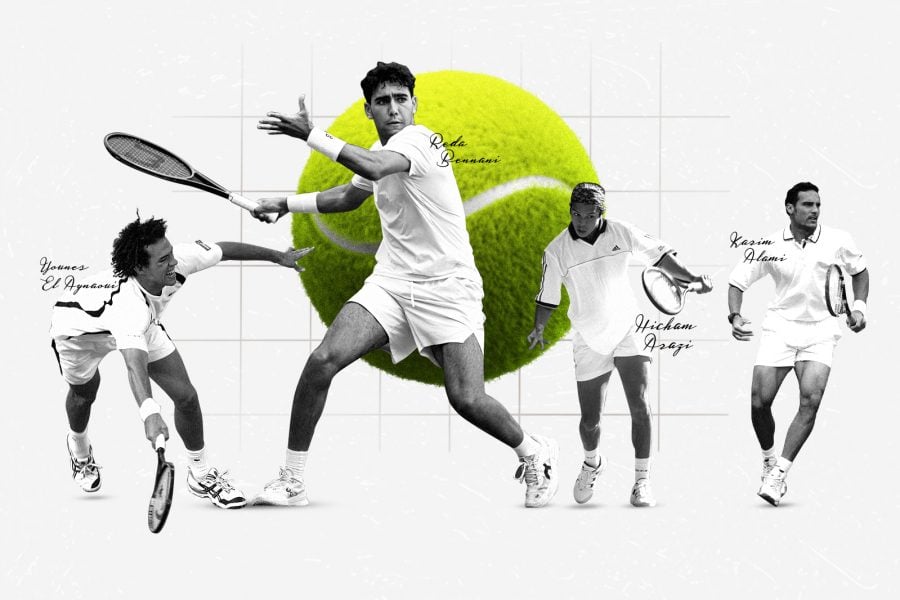
A recent victory at Wimbledon by Reda Bennani, a young Moroccan tennis player, ignited a wave of national pride. Bennani’s triumph marked a historic milestone –the first Moroccan boy in 20 years to claim victory in a junior main draw match.
This achievement, documented by the International Tennis Federation, placed him amongst a select group of Moroccan players to achieve such success at the prestigious SW19.
But many people grumbled about Moroccan tennis being in a slump for a decade and a half under the current technical administration, which has failed, according to many, to produce new Moroccan champions to succeed the legendary trio of El Aynaoui, Hicham Arazi, and Karim Alami, who competed at the pinnacle of the sport—the Grand Slams.
Let’s not forget the success of the generation before them in the 1970s and 1980s, including players like Chkrouni, Saber, Dislam, Hizaz, Laaroussi, and Chadli, among others.
Asking what’s holding Moroccan tennis back, for years, the first answer has been financial support. As many see tennis as a sport for the privileged, financial barriers prevent talented young players from reaching their full potential.
“The sport has evolved into a comprehensive industry, demanding extensive training in various aspects, such as technique, physical fitness, tactical skills, and mental preparation,” a Moroccan coach focused on coaching high-performance players told Hespress EN.
The coach acknowledged that despite the challenges facing Moroccan tennis, the federation’s efforts in supporting young players deserve recognition.
He highlighted that over the past 48 years, Morocco has won 13 cups as the Best Tennis Nation in Africa, with a 50% success rate in the last 6 years alone.
“This achievement demonstrates that the federation is doing a commendable job in nurturing and training young talent. Many Moroccan players have also achieved recognition by entering the top 100 junior players in the world,” said the coach.
But he acknowledged the need for improvements to unlock Moroccan players’ full potential. the coach suggested establishing more tennis academies and exploring homeschooling options due to limitations in the current educational system that hinder practice time.
The coach explained that the sport requires global travel (35 weeks/year), pushing costs for coaches, equipment, tennis camps, and lodging to 1 million MAD annually.
He detailed that “travel alone consumes roughly half the budget, with estimated costs of €24,500 for hotels and €18,000 for flights (assuming 18 trips).”
For this reason, parental support, sponsorships, and additional resources, he sees, are often necessary to bridge the gap left by federation assistance.
When it comes to sponsorships, their importance in covering the costs for tennis players can’t be overstated.
Take Reda Bennani, for example. His father, Ali Bennani, shared with Hespress EN that Reda receives €100,000 in sponsorships from international sources, without the federation’s support. The 17-year-old made it to the round of 16 at Wimbledon and Roland Garros this year.
“We question the federation’s annual billion-dirham budget for junior tennis preparation when an independent player like Reda, without federation support, achieves such feats,” said Reda’s father.
Building a champion requires a complete support system, from start to finish, emphasized the father. He criticized the federation’s approach, suggesting they “might invest in a promising player initially, but fail to provide long-term, sustained support.”
“The technical direction of the federation, established 16 years ago, has placed up well within Africa,” acknowledged Bennani, but emphasized that “we have yet to excel on the global stage in tennis.”
For context, the African Tennis Confederation awarded Morocco the “Best Nation Trophy” with 2010 points in 2023, surpassing Egypt and Tunisia for the fifth consecutive year.
The final Nations Ranking for 2023 was based on the total points each country earned in singles and doubles events for boys and girls during individual youth competitions in 2023.
This ranking includes results from the African Championships for U18, U16, and the first AJC for U14 in 2023, plus bonus points from the second CAJ for U14 held in the fourth quarter of 2022.
Junior wins are no doubt a great sign, but where are the Moroccan tennis stars? This question hangs heavy over the sport, especially considering the current administration’s long tenure.
The Moroccan coach acknowledged a significant hurdle in transitioning players from junior to professional tennis but expressed confidence that “the federation is aware of the issue and actively seeking solutions.”
On the other hand, critics, pointing to the administration’s lengthy-term, argued that these efforts fall short of producing professional players after 16 years.
Another issue plaguing the sports is the lack of performance scrutiny, Reda’s father said. Unlike football, where despite Regragui achieving historic success at the World Cup, he still faced criticism at AFCON, tennis, lacks such scrutiny, he said.
International headlines in 2021 detailing the disqualification of six Moroccan players for match-fixing offenses, also disappointed many.
The International Tennis Integrity Unit (ITIA) found the players guilty of various infractions, including “fixing elements of matches, receiving money for fixing, and failing to report corrupt approaches.”
The 2021 disqualification of six Moroccan players ignited a fierce public outcry. Facebook, and maybe other platforms, became a forum for criticism, with many lamenting the decline of Moroccan tennis.
One Facebook user said, “we used to witness miracles from Moroccan tennis, with stars like Younes El Aynaoui and Karim Alami. Now, we are known for scandals, the latest being the suspension of 6 players for match-fixing offenses.”
Adding to the frustration, Casablanca’s once-illustrious Amal Tennis Complex, former host of the prestigious Hassan II Grand Prix, now lies in a state of neglect and marginalization.
In recent years, the Casablanca Council allocated a budget of around 20 million dirhams to renovate Complex Amal, the largest tennis complex in Africa spanning around 6 hectares, as part of an urgent program targeting sports, culture, and social projects.
It is worth mentioning that the large sport complex includes 14 clay tennis courts, a central court with 6,000 seats, two hard courts, and an outdoor swimming pool for club members.
However, now its former glory has faded as major tennis events have shifted to other cities like Marrakech and Tangier, where new tennis complexes have been inaugurated, while the once-vibrant Amal Complex now resembles a relic of the past, its courts and facilities in disrepair.
Speaking of infrastructure and facilities,the coach told Hespress EN that traditional Moroccan tennis clubs, teeming with over 500 members and 200 young players, struggle to offer specialized treatment to individual players due to limited resources.
“The high demand for court time and coaching results in full courts and coaches, making it difficult for players to have ample practice opportunities,” he said.
However, academies, with a smaller player pool, offer a more personalized approach to player development as well as focused attention and guidance, argued the Moroccan coach, thanks to a lower player-to-coach ratio.
The coach suggested establishing more tennis academies and exploring homeschooling options due to limitations in the current educational system that hinder practice time.
The coach emphasized creating a well-structured and competitive domestic tournament circuit. This would allow local players to test their skills against top international players without the burden of constant travel.
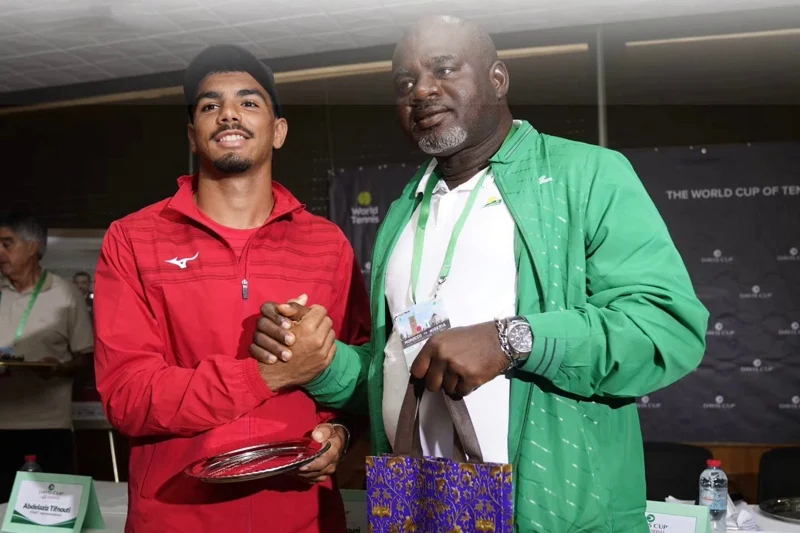
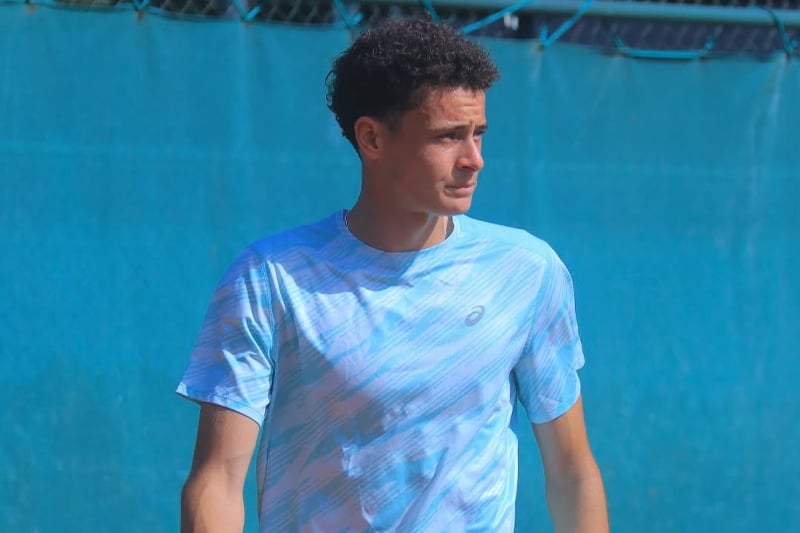
Again, despite the challenges, optimism remains for the future of Moroccan tennis. Young talents like Aya El Aouni, Malak El Allami, and Reda Bennani have showcased their abilities on prestigious international stages, including the Junior Grand Slams (Austrian Open, Roland Garros, Wimbledon, and US Open).
Their success ignites hope for a brighter future in Moroccan tennis if the right opportunities, support, and development are provided.





add your comment
Terms of publication : Not to offend the writer, people, sacred things, or attack religions or the divine self, and refrain from racist incitement and insults.